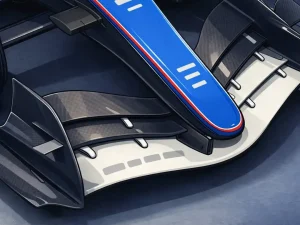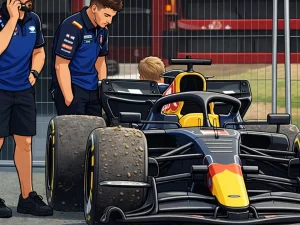
In the high-stakes world of Formula One, every decision counts, and for Williams at the Belgian Grand Prix, bold choices became a double-edged sword. As the team introduced fresh upgrades to their FW47, aiming for a competitive edge, they encountered unforeseen challenges during the practice sessions.
Carlos Sainz Jr., reflecting on the team’s strategic moves, candidly acknowledged that their efforts to innovate might have inadvertently compromised their speed. Initial performance in FP1 showed promise, with Sainz and his teammate Alex Albon securing respectable positions. However, as FP2 unfolded, their standings slipped, hinting at the complexities of their new setup.
Sainz, not one to mince words, admitted that the search for performance gains had led Williams astray. “We’ve made ourselves slow,” he remarked, pointing to the need for overnight adjustments as they sought to regain their competitive edge. The team, aware of the challenges posed by the Hungarian circuit, had anticipated some struggles, but the extent to which their experiments impacted performance was unexpected.
Meanwhile, Albon maintained a positive outlook despite the setbacks. He noted that the initial setup in FP1 had shown potential, suggesting that their alterations in FP2, though misguided, offered valuable insights. His pragmatic perspective highlighted a willingness to embrace risk in pursuit of points, recognizing that playing it safe might not yield the desired results.
The weekend’s trials have not deterred Williams; rather, they have provided a platform for introspection and tactical recalibration. As the team prepares for the next sessions, the lessons learned could be pivotal in refining their approach—not just for the remainder of the season, but with an eye toward the 2026 regulations.