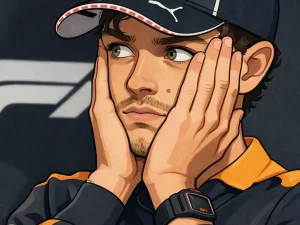
Mercedes didn’t ease Kimi Antonelli in; they hurled him straight into the deep end. And according to F1 TV’s Alex Jacques, that was no accident—it was Toto Wolff refusing to be burned by history a second time.
The Mercedes boss still carries the scar tissue from 2015, when Red Bull beat Mercedes and Ferrari to a teenage Max Verstappen by promising him an immediate F1 seat. The rest is painfully familiar: Verstappen’s gone on to dominate, and Wolff’s never quite shaken the what-if. Speaking to F1 Oversteer, Jacques reckons that episode, plus the Esteban Ocon loan saga—when a deal collapsed and left Ocon on the sidelines as a Mercedes reserve—hardened Wolff’s stance. No more outsourcing development. No more losing control.
So Antonelli, 18, skipped the traditional finishing school. No Williams apprenticeship like George Russell had. No F3. One year of F2 and straight into the works team for 2025.
The step-up has been as savage as you’d expect. After a tidy opening phase, the European leg exposed the raw edges. Spa was the low: a Q1 exit, another non-score, and a visibly emotional Antonelli dealing with the noise. He did cling onto something before the break with P10 in Hungary, a much-needed point and a reminder of why the industry’s been buzzing about him since karting. But the swing from promise to pressure has been sharp enough to draw commentary from all sides—Helmut Marko accusing Mercedes of piling on too much too soon, Guenther Steiner hoping the kid isn’t “broken.”
Wolff’s calculation, as Jacques frames it, is longer-term and ruthlessly pragmatic. Mercedes signed the most coveted junior of his generation; academy logos don’t guarantee loyalty these days, and rivals would’ve pounced at any hint of hesitation. Put Antonelli in now, give him the bruises, and let 2026 arrive with a driver who’s already lived a year in the storm. With the rules reset and new power units on the horizon, that’s a far cleaner runway than debuting him cold when everything changes at once.
It’s also very Toto: control the variables you can. Mercedes have backed that up with extensive private testing in older machinery and a tightly managed environment around their rookie. The trade-off is clear—every misstep happens in the harshest glare.
Is it too much, too soon? The summer’s reset will tell us plenty. If Antonelli steadies, Wolff’s gamble looks shrewd. If the slide continues, the questions will only get louder. But after Verstappen and Ocon, you can see why Mercedes chose the uncomfortable option. In their world, the bigger risk was letting someone else decide Kimi Antonelli’s future.