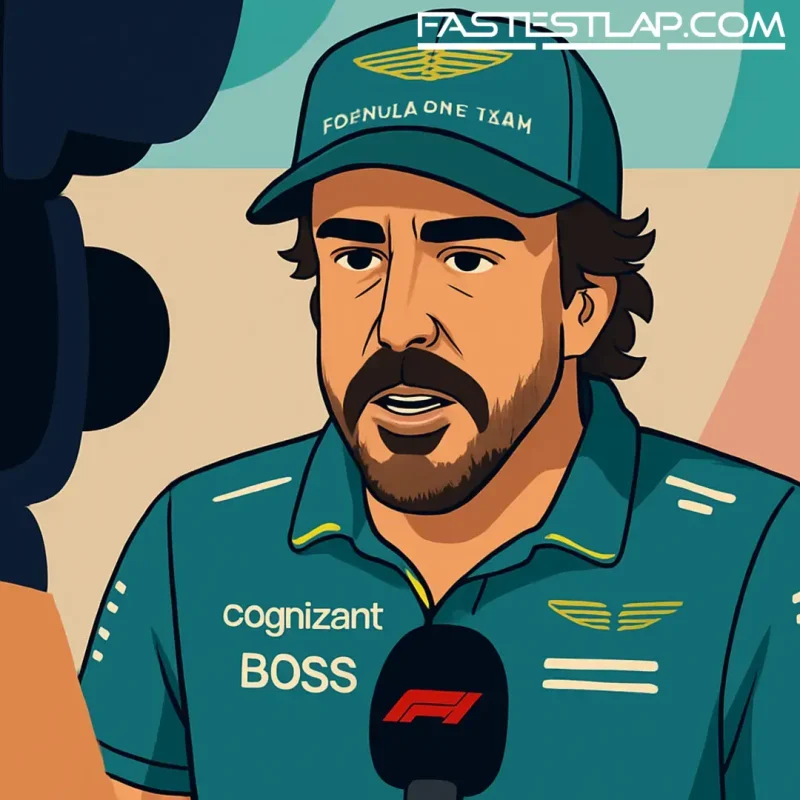
Fernando Alonso isn’t buying the idea that Formula 1 has to shrink itself to fit modern attention spans.
As Stefano Domenicali floats more sprints and a tighter weekend structure to satisfy highlight-hungry viewers, Alonso’s take is very… Alonso. The Aston Martin veteran reckons the problem isn’t the length of a grand prix — it’s the way we consume everything now.
“It’s not the sport,” he said at Monza. “It’s society and the kids.” He compared it to watching football: you dip in and out, you don’t sit laser-focused for 90 minutes — and no one’s demanding 60-minute matches. In other words, F1 doesn’t need to reinvent itself to chase a scroll.
Domenicali, for his part, has been open about the data. Highlights are booming. Friday sessions, he says, mostly appeal to the “super-specialists.” So the sport is exploring more sprints, potentially a standardized format across the calendar, and less of the dead air. This isn’t a sudden swerve; sprint weekends have been on the menu since 2021, growing to six per season, and the boss has hinted at a steady evolution rather than a MotoGP-style full send.
The trouble is, the sprint product hasn’t always delivered. Too many processions. Too much risk calculated out of it, with qualifying sitting just hours later. Drivers aren’t exactly queuing up to throw elbows for eighth in a 30-minute run when a bent front wing could ruin the rest of the weekend.
Alonso’s view is pragmatic: he doesn’t think change is necessary, but he trusts Domenicali to steer F1 in the right direction if it comes. “Stefano knows better than anyone,” he said. It’s a veteran’s stance — open-minded but unconvinced — and it lands with the authority of someone who’s seen F1 twist itself into new shapes more than once.
Esteban Ocon, Alonso’s former teammate, sits somewhere in the middle. He’s lived through all the format tweaks and thinks the sport’s instinct to experiment is fine, provided it doesn’t go too far. Sprint at every round? “Too extreme.” Big, wholesale changes? Not needed. He did concede there’s a conversation to be had about the true endurance tests on the calendar — the outliers that tend to creep past two hours, like Singapore. Trim those and you probably don’t lose any drama. But touch Spa or Monza? No thanks.
It’s the classic tug of war: spectacle versus substance. There’s an appetite for more “moments” — little spikes of dopamine to plug into social feeds and recap shows — but the essence of a grand prix is the strategic arc, the slow burn, the odd mid-race lull that makes the final 20 laps bite. Not everything needs to be a sprint to the punchline.
What Domenicali seems to be nudging toward is consistency: fewer variables from weekend to weekend, more predictable blocks of action for fans to plan around, and a framework that keeps the energy up on Fridays. There’s logic in that. Just don’t confuse “tidier” with “shorter.”
And that’s really where the paddock lands. Drivers want more racing, sure — nobody’s against the idea of fans getting a fuller fix — but the danger in trimming the core product to chase attention is you lose the thing that keeps people invested in the first place. Alonso’s right about one thing: it’s not a crisis of sport. If anything, it’s the opposite. Grand prix racing asks you to commit. It pays you back over distance.
If tweaks are coming — and they always are in F1 — expect them to be incremental, not revolutionary. More qualifying-heavy Fridays? Likely. The odd format refresh? Possibly. A wholesale move to sprint-everything? Don’t hold your breath.
By the time the next big change drops, Alonso jokes he might be watching it from the sofa. If so, he’ll probably still let the kettle boil mid-race — and won’t demand they cut it to 60 minutes.