Brundle doubts Horner fancies the modern team boss gig — and hints at a different kind of comeback
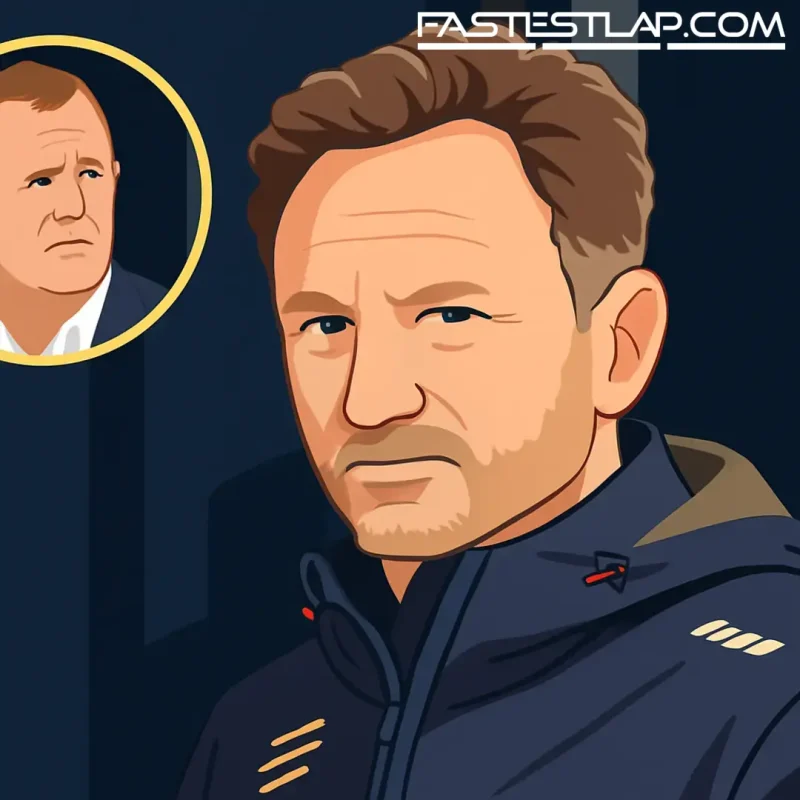
Martin Brundle doesn’t see Christian Horner walking back into Formula 1 wearing a team principal badge. Not because the appetite isn’t there, but because the job isn’t the job he left.
Horner’s abrupt July exit from Red Bull has left a vacuum and a swirl of speculation. He’s been out of the paddock since, but very much on the radar. The whispers are loud: Ferrari links, Alpine chatter, even Aston Martin’s name thrown into the pot. And beneath all of that, the idea that if he does return, it won’t be to run the pit wall as we used to recognise it.
“We’re seeing a new type of team principal these days, aren’t we? That’s why Christian wouldn’t want to come back as a team principal,” Brundle said, offering a tidy snapshot of how the role has mutated. When Horner took charge at Red Bull in 2005, the modern sporting CEO was born. Twenty years on, the pendulum has swung towards the technical leaders — the people who can braid together aerodynamics, vehicle dynamics, power unit integration and a thousand micro-departments into a race team that doesn’t trip over itself.
Look around the grid and it’s obvious. Haas moved from the celebrity-fronted era of Guenther Steiner to engineer-in-chief Ayao Komatsu. At Red Bull, Laurent Mekies — a career sporting/technical operator — has the keys. Brundle’s been impressed: “Very impressed and he’s handling it in a very mature way. Ego, absolutely non-existent.” He added that this hybrid of deep engineering literacy and calm personnel management is exactly what’s required to “tie together these vast quantities of highly specialised people in a team.”
It’s a subtle but important point. The modern team principal needs fluency in the language of CFD and tyre energy management as much as boardroom politics. At Red Bull, that latter piece still has elder statesmen in the wings — Helmut Marko’s presence remains a factor — but the day-to-day is increasingly technical. Brundle even suggested Red Bull’s 2026 driver line-up decision will be broader and more “collaborative” among senior figures than it might’ve been in the past, a nod to how decisions are now made by committees of experts rather than a single domineering boss.
So where does that leave Horner? The strongest rumour has him chasing influence with equity attached — a model not unlike Toto Wolff’s at Mercedes. Ownership or part-ownership brings different leverage, different accountability, and a different kind of power. It also keeps you above the daily grind of brake ducts and budget caps.
Ferrari has been the headline link, though the Scuderia publicly closed ranks around Fred Vasseur as the rumour mill spun. Alpine’s name keeps popping up, not least because Flavio Briatore’s return put a certain type of operator back in orbit. Asked directly whether Horner had made contact, Alpine’s newly appointed team principal Steve Nielsen said at the Singapore Grand Prix: “As far as I know, no. But Flavio and Christian are old friends, that’s no secret. What they’ve talked about, I don’t know. But everything I see and everything I know, there’s no truth in Christian coming to Alpine. But, that doesn’t mean it won’t happen. This is Formula 1 after all.”
And that’s the crux. In F1, denials are often just chapters, not endings. Horner’s track record — the titles, the talent identification, the political trench warfare — isn’t easily parked. But parachuting into a team principal role that’s evolved into a more technically-biased cockpit? That’s not the same sport he dominated. The smarter play is the one Brundle’s hinting at: come back higher up the tree, with skin in the game and the ability to shape a project without being the one holding the headset every Friday.
Meanwhile, Red Bull under Mekies has a very different texture. The tone is cooler, the edges softer. You can see why Brundle calls him “the right man for the right time.” If 2026 is the new ground zero — fresh power unit regs, chassis shifts, a reset that always exposes who’s built the right structure — then teams increasingly want a systems thinker in charge, not just a headline act.
That doesn’t close the door on Horner. It just reframes it. If he returns, expect something more Wolff than Wolff-like: an investment stake, a board seat, heavy sway over the sporting direction and commercial posture, and a capable engineer running the race team Monday to Sunday. That’s the way this era is going.
And if you’re wondering whether the paddock would welcome that? Look around. Even as rumours get swatted away on record, nobody’s truly ruling it out. Because nobody ever rules anything out in Formula 1.