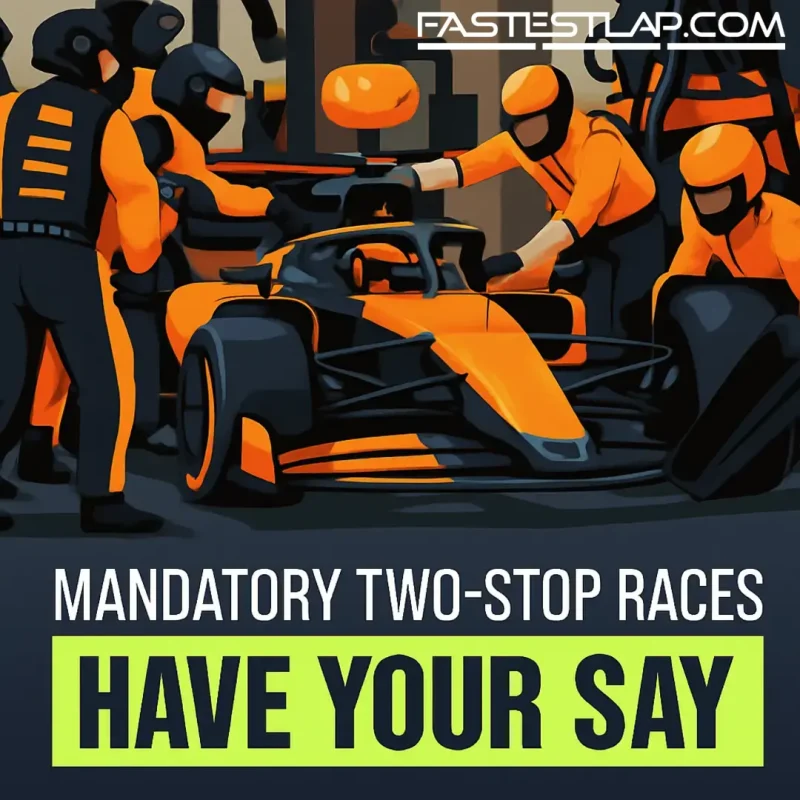
F1 mulls mandatory two-stop races after Monaco experiment — but does it fix the show or flatten strategy?
Formula 1’s rulemakers are kicking the tyres on a simple-sounding idea with messy implications: make every dry race a mandatory two-stopper.
Early conversations have quietly landed on the F1 Commission’s desk, with stakeholders weighing whether to move from today’s minimum of one pit stop (and the requirement to use two dry compounds) to a hard two-stop rule in the dry. It’s part of the never-ending search to liven up Sundays without blowing up the sporting DNA in the process.
On paper, more pit stops means more jeopardy. In reality, it’s complicated.
We’ve had a taste already. Monaco’s two-stop mandate earlier this year didn’t produce a grand strategy chess match so much as a new form of gamesmanship. A few teams used their trailing car as a moving roadblock, deliberately backing up the pack to create the pit window their leader needed. It was legal. It was clever. It also wasn’t quite the overtaking bonanza anyone had sold.
The nub of the issue is where the time’s made and lost. Pit box choreography has never been sharper, but the pit lane itself has become more punitive. Speed limits have trended down — from 60mph to 50mph in places, and even tighter elsewhere — so the total in-and-out time remains chunky. In that world, the cold logic of a one-stop often wins: track position is king, and the clean air tax is expensive.
Even under today’s rules, there’s still some strategic texture. You’ll see an aggressive extra stop to flip to fresher tyres and attack late, or the brave long-run merchants who hang on for dear life to protect track position. That’s tension. That’s choice. Lock the field into two stops and you risk sanding off some of those edges.
There are upsides. Forcing two trips through the lane could let drivers push harder for longer, rather than hovering in tyre-management purgatory. It might also create more divergence in compound choice within that framework — assuming the compounds are distinct enough and the degradation curve rewards the extra stop. And yes, more stops mean more chances for something to go wrong under pressure: a sticky wheel nut, a slow release, a bunched-up pit lane — the human element we all secretly watch for.
But there’s a flip side. Mandated two-stoppers might amplify raw performance spreads. If the quickest car gets to live on fresher rubber more often, it can open the taps and disappear sooner. The midfield, robbed of the option to gamble on a one-stop or stretch a stint into a Safety Car, might find fewer levers to pull against superior pace.
Then there’s enforcement and behaviour. Monaco showed how quickly teams will game any new boundary. If two stops become compulsory, the FIA may need stricter anti-backing guidelines or minimum sector deltas to prevent “rolling roadblocks” that neutralize the race. Every new rule spawns a dozen new edge cases.
None of this is decided. What is happening, quietly, is a real debate about the shape of the sport as it heads toward the 2026 reset, where so much else — power units, aero emphasis, energy management — will change. If F1 leans into two-stoppers, it should be because they add genuine sporting value, not just because the highlight reel needs more pit cams.
There are cleaner ways to juice Sundays, and the paddock knows it: circuit tweaks that create real passing zones; tyre allocations that widen viable strategies instead of funnelling them; smarter Safety Car and VSC procedures that avoid locking the order. Two-stop mandates sit in that toolbox, but they’re a blunt instrument.
The fairest assessment? This idea could work in the right circumstances, and it could backfire in the wrong ones. F1 has always been at its best when choice, risk, and driver craft intersect. If a two-stop rule enhances that triangle, great. If it turns races into synchronized service intervals, less so.
The Commission will kick it around. Teams will model it within an inch of its life. And if it does show up on a 2025 or 2026 agenda, expect robust guardrails to follow.
For now, file it under “live conversation.” And if Monaco taught us anything, it’s this: when you change the rules in F1, the teams will play the new game — ruthlessly, quickly, and to the letter. The question is whether fans will enjoy the result.