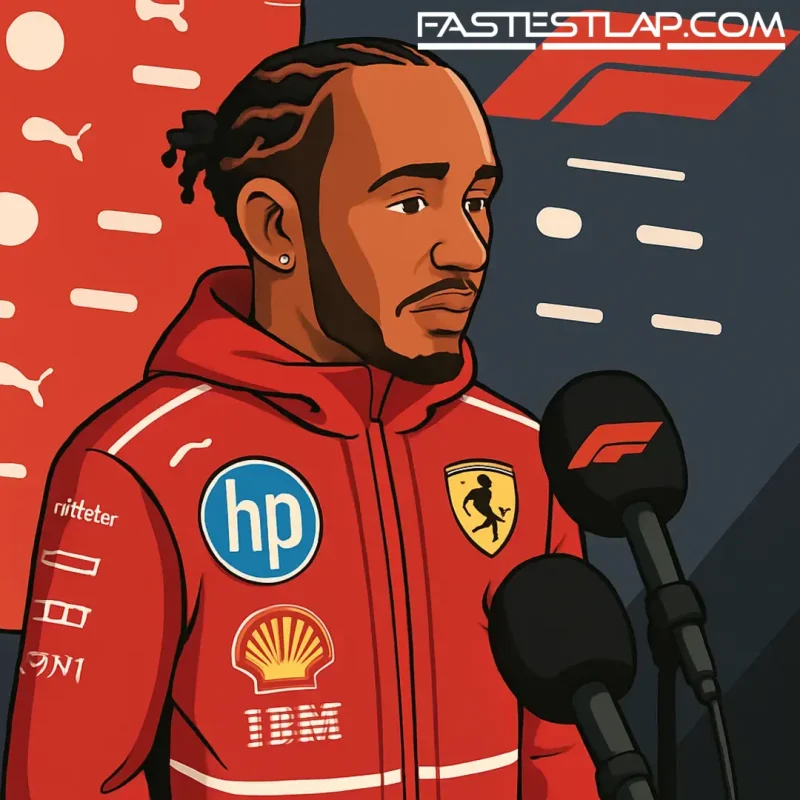
Lewis Hamilton isn’t done talking about Mexico. Standing in the Interlagos media pen on Thursday, the Ferrari driver questioned the way FIA stewards make their calls, doubling down on a theme that’s dogged F1 for years: why does it all feel so opaque?
Hamilton was the only driver to receive a time penalty for leaving the track and gaining an advantage in Mexico City, hit with 10 seconds after skimming across the Turn 4 run-off. Others who cut the opening complex avoided sanction, in part under the usual early-lap leniency if places are handed back. That split outcome didn’t sit well.
“There isn’t any clarity,” Hamilton said, when asked if the FIA had explained the logic. “That’s probably part of the bigger issue — transparency and accountability. And also, the secrecy that the decisions are made in the background.”
No one needs reminding how much power those calls carry. Hamilton didn’t: “I don’t know if they’re aware of the weight their decisions hold. They ultimately steer careers, can decide results of championships, as you’ve seen in the past.”
He stopped short of calling for public show trials, but his point was sharp. “It’s something that definitely needs to be tackled,” he continued. “Probably something that needs to be done in the background, I would imagine.”
The tension here is familiar. Race control and stewarding live in the gray, they always have, and on a weekend like Mexico — frantic start, escape roads everywhere — the gray gets busy. But when one driver gets penalized and a handful of others don’t, the optics write their own headline. Hamilton’s frustration isn’t only about points lost; it’s about precedent, and who sets it.
Zoom out, and the bigger picture is Ferrari hunting its first win of the season, with Hamilton still chasing his first full-distance podium in red. There’s intent behind the words, but there’s also optimism. For all the noise around stewarding, he sounded upbeat about the work Maranello has pushed through recently.
“We’ve definitely made a lot of progress over the last couple of months and the last race, obviously, Charles got a great result,” he said. “That’s going to vary from race to race depending on the track we’re at. It’s my first time driving a Ferrari here; their car looked pretty good here last year. I don’t know what it’s going to feel like, but I’m definitely hoping.”
Interlagos has been resurfaced in places, a subtle variable around a circuit that’s already all about rhythm and risk. And then there’s São Paulo’s famously mischievous weather, which tends to invite chaos and punish predictability — exactly the kind of weekend where a driver of Hamilton’s craft can turn irritation into execution.
“Hopefully, with the nice Brazil weather interchanging, maybe we can have a good weekend,” he added, smiling.
If nothing else, the sight of Hamilton in Ferrari red chasing a result at Interlagos is pure theatre. The place has history, the kind that lingers. And if the paddock’s chatter drifts back to penalties and process between sessions, that’s because the sport still hasn’t found a way to make decision-making feel consistent and clear when the stakes are highest.
Hamilton’s message wasn’t a rant; it was a reminder. Drivers need to know where the lines are. Fans need to trust how they’re drawn. The stewards don’t need to become TV stars, but some daylight on the how and why would go a long way. As Hamilton put it, the calls “steer careers.” Interlagos will take care of the drama. The FIA can handle the rest.