Piastri bristles at Brazil penalty after three‑wide flashpoint with Antonelli and Leclerc
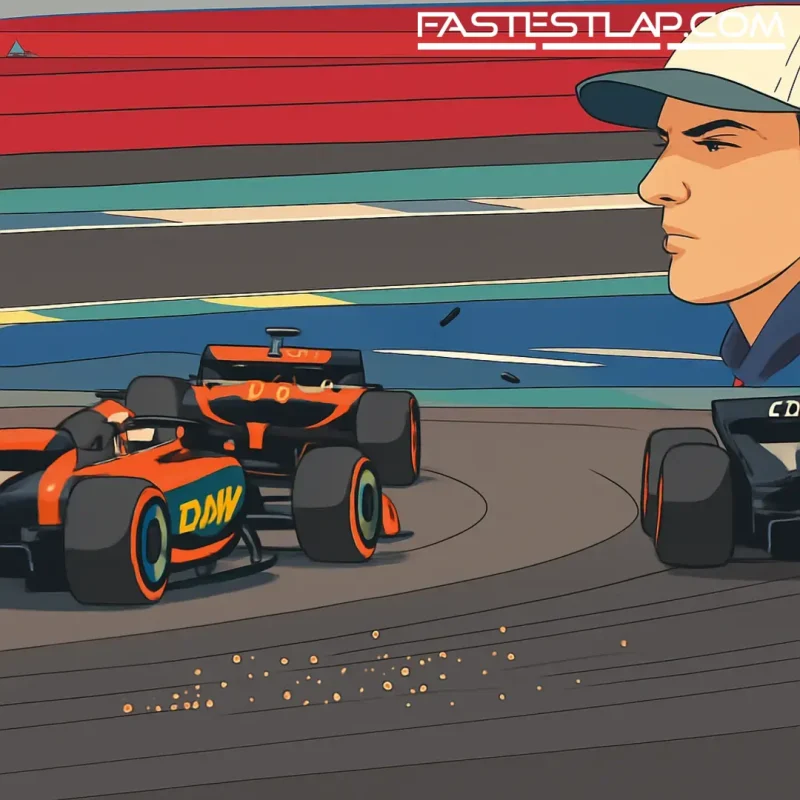
It took six laps for the Brazilian Grand Prix to erupt. Safety Car in, cool tyres, one damp line on the inside at the Senna S — and three cars trying to occupy it. Oscar Piastri dived for the apex, Kimi Antonelli held firm in the middle, Charles Leclerc trusted the outside. The next frame: a locked front from the McLaren, a nudge to the Mercedes, and a Ferrari with a front-left wheeling itself down the hill. The stewards’ verdict was swift: Piastri caused the collision. Ten seconds added.
“Tough to take,” Piastri admitted afterward, arguing he’d earned the right to the corner and, crucially, stayed glued to the inside. “I can’t just disappear,” he said, pointing out he’d been right on the white line, nowhere left to go once he’d committed.
The sequence followed an opening-lap crash for Gabriel Bortoleto that brought out the Safety Car. On the restart, Lando Norris led; behind him, Antonelli got the run and Piastri latched onto a gap that was there… until it wasn’t. Piastri pinched a brake, the McLaren’s nose met the Mercedes’ flank, and Antonelli ricocheted into Leclerc. The Ferrari’s race ended on the spot, its detachable front-left a brutal – and expensive – punctuation mark on an avoidable moment.
From race control’s perspective, it was clear: the initiating contact came from the inside car. From a driver’s eye, it’s messier. The inside at Interlagos is notoriously dirty and was still a touch damp; the outside lets you brake deeper and float the car across the apex. Piastri argued both Antonelli and Leclerc braked later than he could on that line, and despite the lock-up, he still kept the MCL39 on the paint. In his mind, that equals control. In the stewards’ world, a lock-up leading to contact tends to equal culpability.
There’s also the geometry of the Senna S to consider. Three-wide into Turn 1 is motorsport’s version of a coin toss — you might get away with it, but you probably won’t, and the inside car carries the highest bar to prove it can make the corner cleanly. Margins are razor-thin, and on a cold restart they’re thinner still. Piastri didn’t think he overreached. The panel thought he did, by just enough.
The penalty dropped him into recovery mode, but he still salvaged P5. Up front, Norris completed a near-perfect weekend by backing up his Sprint win with the grand prix victory, nudging his championship lead over his teammate to 24 points with three rounds to run. Not the headline Piastri needed as the season heads into its final act, though his pace — and his refusal to back down in big moments — is hardly in question.
Leclerc, meanwhile, left with nothing but frustration after being turned into collateral damage. For Ferrari, a one-lap DNF at Interlagos stings doubly: points were on the table, and the car looked happy in the Sunday conditions. As for Antonelli, the Mercedes rookie was the unwilling middleman in a championship fight’s sharp edge — exactly the awkward place you don’t want to be when two rivals are trading inches.
If there’s a broader takeaway from Brazil, it’s the line the current stewarding continues to draw. Aggression is still allowed; accountability is increasingly firm. Commit to the inside, you must make the corner without contact. It’s a standard that cleans up restarts and squeezes the romance out of elbows-out lunges in equal measure.
Piastri won’t change his approach — and you wouldn’t want him to. That instinct is why he’s in this title hunt at all. But on Sunday in São Paulo, the difference between an inspired grab and a penalty was a few centimeters of white paint and one protesting front tyre. On this track, that’s all it ever takes.