São Paulo debrief: Did the stewards get Piastri’s penalty right?
Interlagos rarely does subtle. On Sunday it put Oscar Piastri’s title chase under the hard lights, then handed him a 10‑second penalty that turned his race — and maybe this championship narrative — on its head.
After a scruffy Saturday sprint, Piastri’s brief on Sunday was simple: reset and chip away at his team‑mate’s advantage at the top of the standings. For a few laps he looked on the right side of that mission. Then came the lap‑six restart and a three‑car chain reaction that left Charles Leclerc out, Kimi Antonelli bruised, and Piastri with a time penalty that wrecked his afternoon.
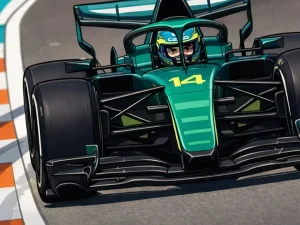
Let’s start with the scene-setter. Coming off the VSC, Antonelli — on the softer tyre and leading that little train — lit up the rears just enough to check his momentum on the run to Turn 1. Piastri saw it, tucked into the tow and drew almost alongside into the braking zone on the inside. That’s the move at Interlagos: commit early, own the apex, and trust the other car gives you the racing room the rulebook promises.
Only Antonelli eased left. Not a chop, but a squeeze — the kind of millimetric drift that turns a brave lunge into a calculus problem. With the pit wall and that unforgiving inside barrier rushing up, Piastri stamped on the brake earlier than he had the lap before. The front-left snatched. Contact. Antonelli’s Mercedes pinballed into Leclerc’s Ferrari, and the red car ended up parked, race over.
The stewards’ read was brisk and by the book: Piastri hadn’t slowed sufficiently and triggered the collision. Ten seconds.
But the data story is messier. Piastri’s approach speed down the straight was higher thanks to the slipstream, but his brake trace shows he was actually into the pedal early for Turn 1 once the squeeze began. His throttle pick-up timing on the incident lap mirrored the next tour; this wasn’t a Hail Mary. The front-left did lock momentarily, yet not a full plank — more a snap-and-release that points to a driver still within the limits of control, trying to keep a car inside a strip of asphalt that was disappearing by the metre.
Crucially, there’s nowhere to bail on the inside of Interlagos’ Turn 1. The barrier hugs the line; if the door closes while you’re already committed, the escape options are few and ugly. In that context, “causing a collision” starts to feel like a harsh simplification of two cars converging into a shrinking piece of real estate.
Could Piastri have been more conservative given the title picture? Probably. Could Antonelli have left a sliver more space once he’d registered the orange-and-blue front wing inside him? Also yes. That’s why so many in the paddock landed on 50:50. Even Leclerc, the innocent bystander, suggested both held a share of the blame — one optimistic, one turning as if the other wasn’t there — and he’s the one whose race ended on the spot.
None of this rewrites the regulations. The stewards don’t arbitrate vibes; they look at angles, overlaps and responsibility. From that lens, a car locking a front and hitting another in the braking zone isn’t a hard call. But the nuance matters when you zoom out to championship scale. Without that 10 seconds, Piastri’s Sunday ceiling looked a lot higher than the points he carried out of Brazil, and that’s the bigger bruise: a weekend that started under pressure ended with even more of it.
McLaren won’t say it out loud, but this is the kind of moment that lingers in a title fight. Your lead driver keeps banking, the chaser can’t afford thin returns, and Interlagos doesn’t forgive the tiniest misjudgment — from anyone. The telemetry paints a driver who’d read the moment and tried to make a proper move, boxed in by geometry and a rookie on the defensive. The paperwork says penalty. Somewhere between those two truths sits the championship’s latest pivot point.