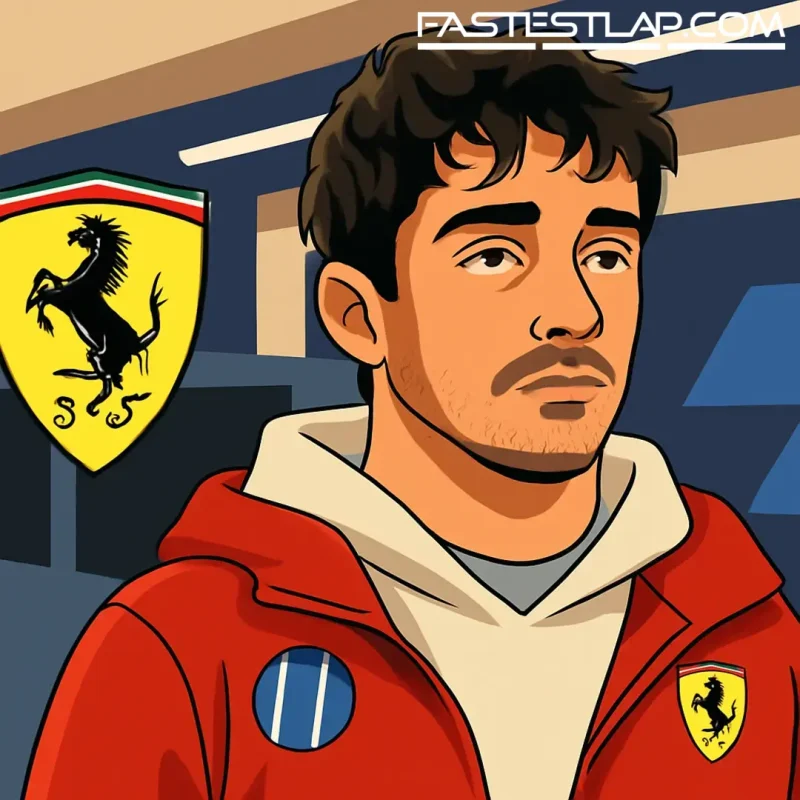
Leclerc calls Ferrari’s season “not good enough” — but insists the recovery was real
Charles Leclerc didn’t dress it up in the Interlagos paddock light. “It’s not good enough,” he said of Ferrari’s 2025 campaign so far. And he’s right: seven podiums for the Monégasque, plenty of speed in flashes, and yet not one Sunday with a scarlet car on the top step.
Ferrari left Brazil fourth in the Constructors’ Championship with three rounds to run, stung by a heavy Mercedes and Red Bull haul at a circuit that exposed as much as it rewarded. The math is tight and unpleasant: 36 points to make up on Mercedes, another four to Red Bull. And unless Leclerc or Lewis Hamilton lands a grand prix win before the lights go out on 2025, Ferrari will chalk up its first winless season since 2021 — sprint success aside.
That sprint caveat matters. Hamilton delivered a P1 in Shanghai’s Saturday dash, the team’s lone taste of victory in any format this year. Over a race distance, though, Ferrari’s been a study in near-misses and the grind between promise and payoff. Leclerc has been the one repeatedly toeing the line to a proper win, only to find a little too much tire, a little too little straight-line punch, or a little too much of someone else’s pace.
It’s why John Elkann’s frustration after the São Paulo weekend landed with a thud in Maranello. Expectations at Ferrari are oxygen; they fill every corridor and conversation. Leclerc, now one half of the team’s most high-profile lineup in years, didn’t run from that.
“When you drive for such a team, the only thing that is good enough is to win,” he said. “We are against very, very strong competition… it’s not easy, but I think, as Ferrari, when you work for such an incredible brand, it’s not good enough, and you’ve got to target for winning.”
There’s a second truth living alongside the first: for all the public impatience, Ferrari did claw its way back from a muddled start with a new-spec car that ran hot-and-cold early doors. Correlation, set-up windows, aerodynamic load versus balance — the usual buzzwords were painfully relevant through the spring. Somewhere in the mid-season trudge, the team tidied up. The car stopped surprising its drivers. Weekends stopped getting away on Fridays.
“Considering where we started the season and where we are now, it’s a good season,” Leclerc added. “A very good improvement throughout the season… To now be fighting still for the second constructor should be our target and, for next year, we will target higher for sure.”
The line between realism and resignation is thin, and Leclerc isn’t crossing it. Asked to pick between a late-season win or P2 in the championship, he didn’t blink: both. The calculus is obvious enough — snag a victory and you probably bank the points that make second place possible anyway — but the sentiment cuts deeper inside a team that measures itself by silverware, not spreadsheets.
“I would love to win,” he said. “It’s really important to at least be winning once in a season where everything has been so tough for everybody. The second place needs to be our target, and we need to target both of the two things.”
That dual aim defines these last three rounds. Ferrari must be clinical on Saturdays and braver on Sundays, because the gaps that matter now aren’t giant — they’re made of strategy calls at Lap 18 and out-laps after the final stop. They’ve been leaking points in those cracks while Mercedes and Red Bull have cashed in on execution.
The bigger picture? The stepping stones are there. The driver pairing is formidable. The car, finally, is more predictable than it was. But Ferrari seasons aren’t judged on trends — they’re remembered for trophies. A hard-earned late win would change the winter’s mood in an instant. Miss both the podium’s top step and P2 in the standings, and the off-season gets long and loud in a hurry.
Ferrari knows which version it needs to take home. So does Leclerc. Now it’s about finding the last tenth — and making it count when it matters, not just when it hints.