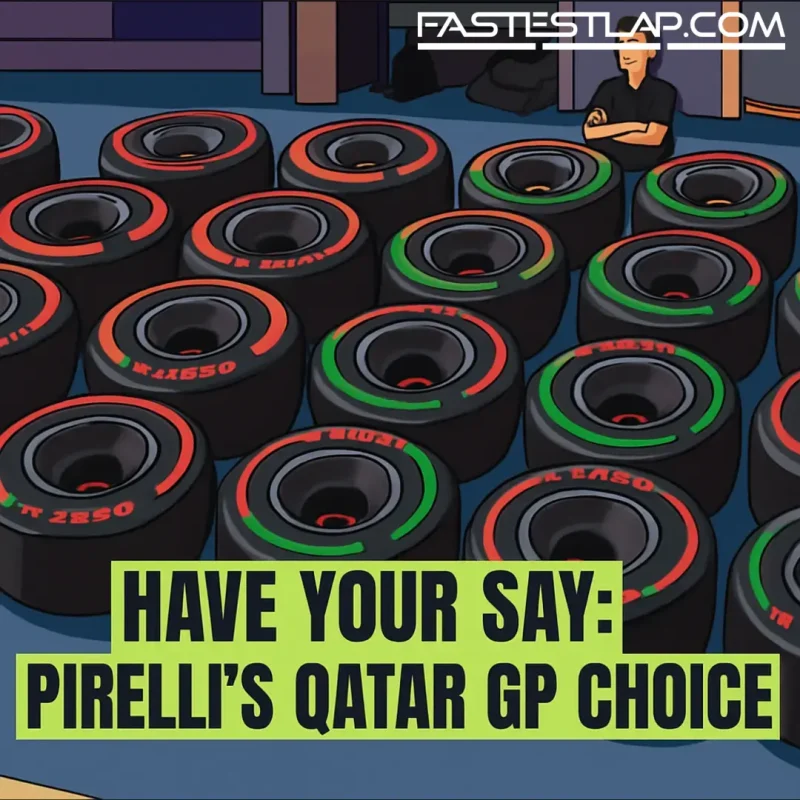
Pirelli imposes 25‑lap stint cap for Qatar, lighting up a fresh strategy fight
Pirelli has moved early for Lusail, confirming a maximum 25-lap stint limit for the Qatar Grand Prix and effectively locking teams into a minimum two-stop race. It’s a preemptive safety play that echoes 2023’s late scramble, but this time it’s been agreed in advance with the FIA and F1 after a deeper look at last season’s data.
Even with the three hardest compounds on the truck, Qatar remains a tyre-killer. Long, loaded right-handers in Sectors 2 and 3, abrasive runoff edges and the circuit’s relentless energy demand combine to lean mercilessly on the left-front. Pirelli’s analysis of 2024 running showed several tyres hitting maximum wear — particularly that left-front — and the company’s technical directive now caps any race stint at 25 laps per set.
The upshot? Less guesswork, more flat-out windows. With drivers freed from the purgatory of extreme tyre nursing, expect short, aggressive stints and ruthless out-laps, with undercuts back in fashion. The downside, depending on your persuasion, is that the rule pins strategy to a narrow lane. There’ll still be room to gamble — early Safety Car timing will be a headache — but the long-shot one-stop is out. Teams will be threading their pit sequences around the cap rather than around how kindly they can treat the rubber.
We’ve been here before. In 2023, micro-cuts from kerbs and the track’s load profile forced a last-minute 18-lap limit and a pit lane circus that left strategists exhausted and mechanics busier than a Monaco Saturday. The difference now is timing: the call has come with enough runway for teams to plan, model and choreograph. It’s a sensible step. It’s also a reminder that, at Lusail, the circuit is the boss.
Is this the right way to handle it? That depends on whether you prize safety belt-and-braces over strategic freedom. On one side, the argument is straightforward: safety trumps everything. Set a hard cap and remove the temptation for anyone to stretch a set past the cliff edge and risk a delamination. On the other, you could say: warn the teams, make the data clear, and let them choose whether to roll the dice and nurse tyres as needed. Some will point the finger at track design and kerb profiles rather than the compounds.
Our view? It’s not romantic, but it’s rational. Lusail’s layout and loads are unique; the left-front takes a shellacking; and this cap prevents a 2023-style fire drill. It won’t please everyone, yet it should hand us a cleaner fight on track, where drivers can push harder in defined bursts — and that’s rarely a bad watch.
What to watch for:
– Undercuts: With shorter stints, warm-up and out-lap execution will be decisive. Expect teams to pull the trigger early if they smell traffic.
– Traffic trains: A congested pit window can spit cars into midfield pockets. Track position may trump raw pace in the middle stint.
– Safety Car roulette: A poorly timed neutralization could strand teams off-sequence, and with stint caps, recovering the plan won’t be trivial.
– Tyre spread: Even on C1–C3, the delta between compounds will frame how aggressive teams can be on their first stop. Don’t be surprised if the medium becomes the workhorse.
Have your say in our quick poll — did Pirelli get Qatar right?
– Yes: Safety comes first and the racing will be better for it.
– No: Let teams manage risk and strategy without a hard cap.
– Fix the track: Address kerbs and loads, not the stint length.
Drop your verdict below or tag us on social — we’ll feature the best takes in our mailbag.