Las Vegas stewards probe puts Sainz’s hard‑won P3 under threat after near‑miss with Stroll
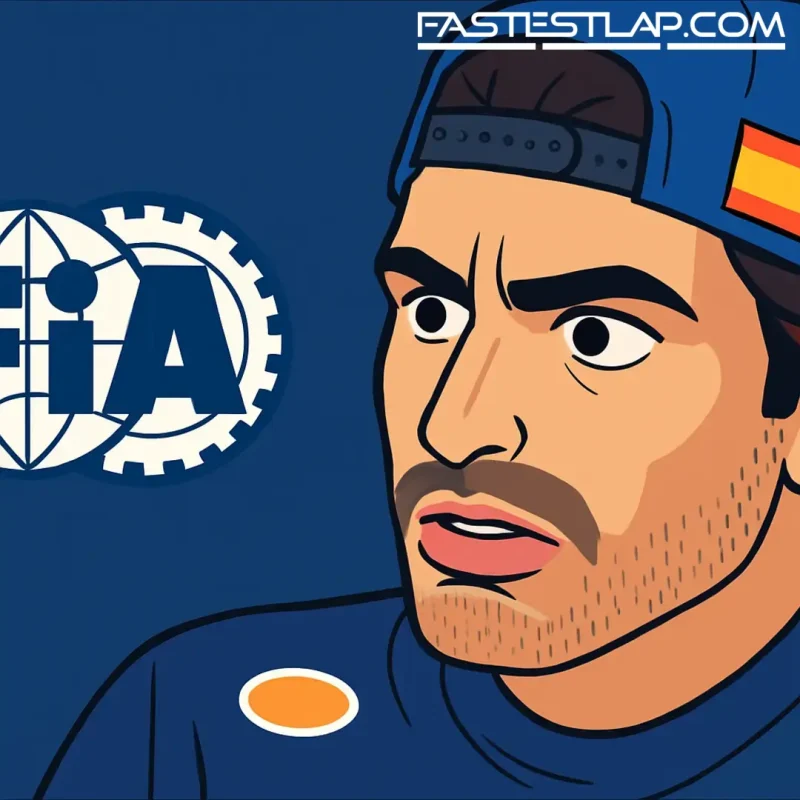
Carlos Sainz’s sharp, rain‑soaked qualifying lap around the Strip may not hold up under the floodlights for long. The Williams driver, who stuck his FW47 third on the grid for Sunday’s Las Vegas Grand Prix behind Lando Norris and Max Verstappen, has been summoned to the stewards over an alleged unsafe rejoin during Q1 after a close call with Aston Martin’s Lance Stroll.
The flashpoint came at Turn 5, the tight 90‑degree right‑hander that caught out a handful of drivers in treacherous conditions. Sainz overshot and ducked down the escape road, then rejoined as Stroll arrived on the scene. The two came uncomfortably close to trading carbon, and that’s all it takes to trigger an investigation these days. Both drivers have been called to see the stewards at 21:25 local time.
It’s a gut‑punch moment for Sainz, whose late‑season form has been one of the year’s genuine bright spots. Since joining Williams, he’s helped drag the team back onto the podium for the first time since 2021 with a third place in Baku, then matched the result in the sprint at the United States Grand Prix. The Vegas lap — precise, patient, ruthless in the wet — looked like another well‑timed statement from a driver who’s rebuilt momentum in deep water.
Whether he keeps that P3 is now in the hands of the officials. The possible outcomes range from a reprimand to a grid drop, depending on how the panel weighs the “unsafe rejoin” element and how much they feel Stroll was impeded. We’ve seen stewards clamp down on rejoin etiquette all season; visibility, rain and narrow runoff zones don’t change the letter of the law.
From Williams’ point of view, the stakes are obvious. A third‑place start in Vegas is a launchpad for a big Sunday — especially on a circuit that punishes hesitation, rewards straight‑line efficiency and tends to produce intervention-prone races. Knock Sainz back a couple of rows and it changes the complexion of their evening entirely.
The qualifying picture around him only heightens the tension. Norris nailed pole in the wet with the kind of commitment that’s become his calling card, while Verstappen hustled the Red Bull onto the front row. Sainz tucked in behind them, making the most of the changing grip. Elsewhere, Charles Leclerc’s spin compromised Oscar Piastri’s lap in the shuffle. Strip nights can be chaotic, but the Spaniard had made them look orderly — until that Turn 5 moment from earlier in the session resurfaced.
Sainz has had his share of run‑ins with officialdom over the years, and it’s rarely dented his conviction. He tends to argue his case well in the room, and he’ll need to here. Was there a clear gap? Did he check his mirrors? Did Stroll have to change line or speed in a way that cost time? Those are the questions that will decide how many grid places, if any, he keeps.
There’s also the human factor. In changeable conditions, drivers are constantly calibrating risk: maximizing track position, keeping tyre temps, and threading the needle on sightlines blurred by spray. That’s not a defense in the regulations, but it is the reality in which these split‑second decisions are made. The line between smart improvisation and an “unsafe rejoin” can be painfully thin.
If the penalty comes, it’ll sting — not just because of the lost starting spot, but because this weekend had all the hallmarks of another Williams step forward. The car’s been kinder on its tyres in cooler conditions, Sainz has been razor‑clean when the grip is scarce, and the team has embraced the scrap. If it doesn’t, he’ll be exactly where he planned to be: prowling behind Norris and Verstappen, ready to make the race awkward for both.
Either way, Las Vegas has already given Williams and Sainz another headline. Now we wait to see if it’s the kind they wanted.