FIA unveils refined 2026 F1 car concept as Tombazis bats away ‘F2 pace’ chatter
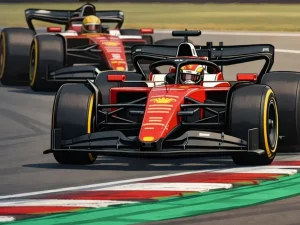
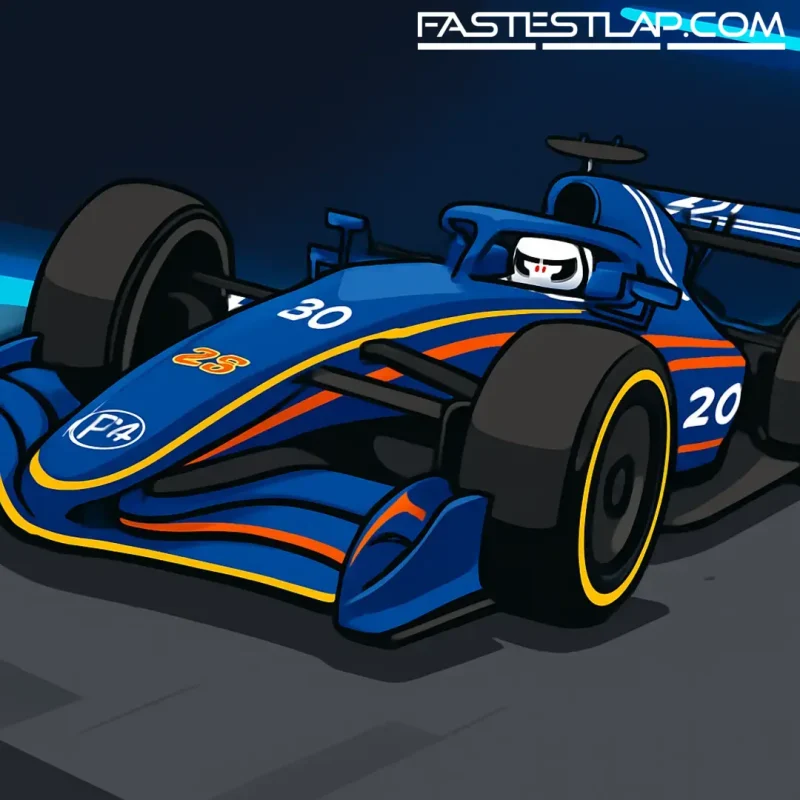
The FIA has dropped a fresh set of 2026 F1 car renderings and, alongside them, a clear message: next year’s cars won’t be crawling. Talk that the new generation could end up lapping like Formula 2 has been dismissed as wide of the mark by the federation’s single-seater chief, Nikolas Tombazis.
With F1 set to flip the script in 2026—new power units, new chassis rules, active aerodynamics—the paddock has been buzzing with what-ifs. Drivers have had early pokes in the sim, and not all of the feedback has been glowing. Isack Hadjar even suggested the first cut felt closer to F2 than F1. That’s the kind of line that sticks, especially in December when speculation fills the silence.
Tombazis isn’t having it. “Comments about Formula 2 pace are way off the mark,” he said in Las Vegas. “We are talking about lap times, overall, which are in the region of one or two seconds off where we are now, depending on the track, depending on the conditions.”
Two months out from the first Barcelona running in late January, the FIA’s tone is measured but firm. Next year’s cars will be different, yes—rougher around the edges at first, inevitably a touch slower—but not so much that the sport loses its identity. “Obviously, at the start of a cycle, it would be silly to be faster than the previous cycle,” Tombazis added. “It would be very easy to make the cars go faster. But one has to gradually claw back what is gained by natural development… I don’t think we are anywhere near the ‘it’s not a Formula 1’ discussion.”
That chimes with the technical outline. The 2026 engines push the hybrid split toward a near 50/50 balance between the MGU-K and the internal combustion engine, which is a different beast entirely for engineers and drivers. The electrical side steps up dramatically, but the FIA insists the energy management will be smart enough to avoid the nightmare scenario—drivers lifting or even braking on the straights just to charge the battery. Corner exit punch and intelligent deployment are the buzzwords, not limp home modes.
On the aero side, the cars will carry active wings with two broad configurations—informally dubbed X-Mode and Y-Mode—designed to help load the car up in the corners and then shed drag on the straights. It’s a complex system, and it will take teams time to master. That’s part of what drivers are feeling in the sim: early assumptions, incomplete maps, lots of knobs to turn.
Tombazis hinted as much, pointing out that drivers are stepping straight out of ultra-refined current machinery into early-stage 2026 models that are still evolving week by week. “If a driver gets out of one car and goes into a slightly slower car, he’s not going to say, ‘Wow, I’m really happy here,’” he said. “The process of refining the regulations is still ongoing… their comments are factually right, but probably a bit premature, because you don’t take into consideration the final product.”
Red Bull’s chief engineer Paul Monaghan, sat alongside Tombazis, put some shape around where the lap-time swings might show up. Expect “energy-rich” circuits—where recovery is easier—to look better than “energy-poor” ones. There are still unknowns, too: how close aero models are to reality, and what Pirelli’s final tyres add or subtract from the equation. “Yes, they’ll be a little bit slower,” Monaghan said. “I don’t think we’ll be Formula 2-paced. I hope not.”
There’s also the human side to digest. The 2026 cars won’t just be new for the engineers; drivers will be juggling more variables behind the wheel, adapting styles to match a power unit that behaves differently corner to corner and a car that literally changes its aero state down the lap. That doesn’t scare the teams—quite the opposite. Aston Martin sporting director Andy Stevenson sounded genuinely energised by the challenge ahead.
“I think they’re going to be really interesting,” he said. “There’s a lot to learn, which is why these pre-season tests are so important… We’re talking about the cars maybe being a bit slower than they are now, but what we mustn’t forget is what we’re introducing. A new form of hybrid, which is really exciting, and we’re powering the combustion part with sustainable fuels. It’s fantastic news.”
If the FIA’s refined images hint at the future shape, the more important work is invisible—the rulebook tweaks, the software smarts, the calibration that separates a car that flatters in a CFD render from one that flies through Turn 3. And, as ever in F1, whatever gap exists in February tends to shrink by summer. No one inside the system seems to be bracing for a wholesale step back. A reset, yes. A rethink, certainly. But not a retreat.
So file the F2 talk under silly season leftovers. The 2026 cars will ask different questions. The field will find different answers. And once Barcelona rolls around, we’ll finally stop guessing and start measuring.