FIA defends marshal handling after awkward Turn 1 scenes in Las Vegas
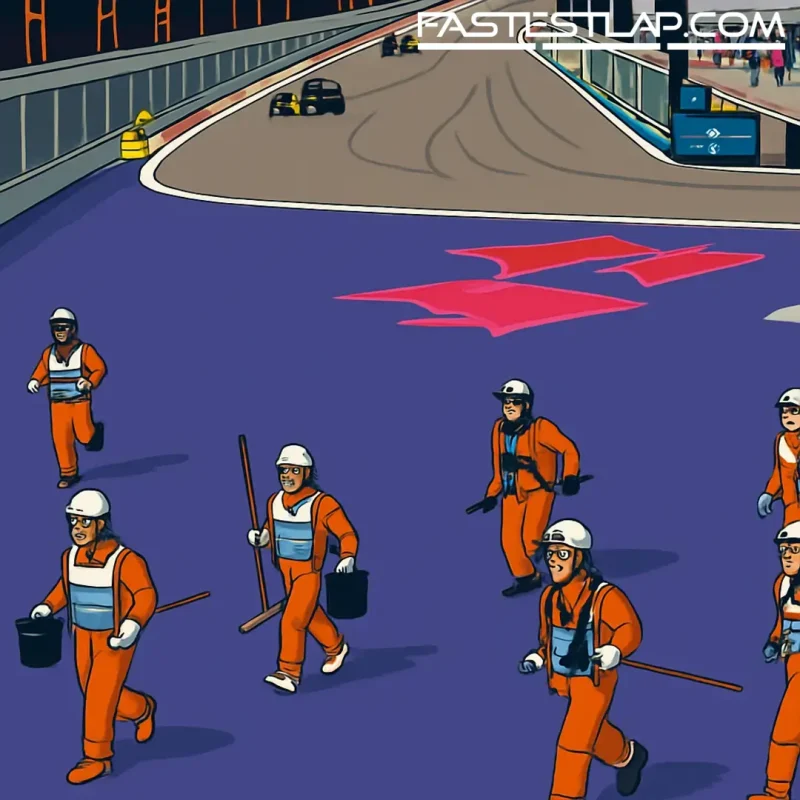
The opening laps in Las Vegas delivered the kind of TV shot nobody wants to see: marshals hustling out of the Turn 1 run-off as the leaders flew onto Lap 2. Uncomfortable? Absolutely. Unsafe? The FIA says no.
Following Saturday night’s messy start—think carbon fiber confetti after separate contacts involving Liam Lawson with Oscar Piastri, Gabriel Bortoleto with Pierre Gasly, and Alex Albon nudging Franco Colapinto—debris littered the Turn 1 escape road. With the pack clear, marshals were sent in to clean up under double-waved yellows. As the front-runners came around to begin Lap 2 of 50, broadcast cameras caught track workers retreating from the run-off. The FIA, approached after the race, was satisfied the situation was “appropriately managed” under standard procedures.
It didn’t look pretty on the world feed, but that doesn’t automatically mean race control got it wrong. The key here is the distinction between marshals inside a protected run-off with the corner neutralized, and marshals stepping onto live racing asphalt. In Vegas, Turn 1 remained under double-waved yellows while the cleanup took place. Workers did not enter the racing line and were already pulling back as the leaders arrived. That scenario, per the FIA’s operating framework, does not automatically trigger a Virtual Safety Car.
The VSC is reserved for two situations: prolonged worker exposure in a given area, even if it’s off the live track, or any instance where a marshal must enter or cross the racing surface. We saw both flavors over the past two rounds. In Mexico City, one high-profile flashpoint came as workers ran across the track at Turn 1 with Liam Lawson arriving—exactly the kind of moment that’s meant to prompt immediate neutralization. Later in that race, a VSC was deployed when Carlos Sainz retired in a seemingly secure spot late in the lap; that one, PlanetF1.com understands, was down to how long marshals would be operating beyond the final barrier. Over-cautious to some, but within policy.
Las Vegas offered its own case study. At Turn 1 on Lap 2, the double yellows managed the run-off cleanup. But once debris was identified on the actual racing line and a marshal needed to retrieve it, the VSC came out. Elsewhere, a separate Turn 4 moment that required entry onto the live track saw the field immediately neutralized—again, per the book.
A recent FIA note—issued in the wake of Mexico’s near-miss—acknowledged the optics and the stakes: any time workers are visible in front of oncoming cars, it will “provoke concern,” and the governing body is reviewing its processes to find improvements. That review is ongoing alongside the investigation into the Mexico Turn 1 incident.
It’s worth a reminder of how this is structured on a race weekend. Marshals are directed jointly by the race director and the clerk of the course, the latter appointed by the national sporting authority and typically deeply familiar with the venue. From there, it’s about layers of risk management. Double-waved yellows cover a known hazard off-line. The VSC arrives when the risk or exposure extends or escalates. The Safety Car steps in for heavier debris fields, multiple zones, or any situation where pack control is needed while intervention happens on the racing surface.
None of that changes the fact that the Las Vegas images jarred. Television tends to flatten distances; a marshal sprinting away from a gravel trap looks terrifying at 200 mph. But the procedures in play at Turn 1 matched what’s written down and drilled before each event.
The weekend did have another head-scratcher, this time in support action. During Friday night’s first F1 Academy race, a large crane rolled toward the back-straight racing line under the Safety Car before reversing out of the way. The safety car bunch was slowed to a crawl and moved to the extreme right as the crane backed off. It ended without drama, but it was undeniably odd viewing and exactly the sort of scene the FIA will want cleaned up on the operational side.
As Formula 1 continues to thread the needle between green-flag urgency and absolute safety, expect more of these micro-decisions to be scrutinized in public. The takeaway from Vegas: not every marshal in a run-off means neutralization, but any step onto the live track does. The system worked as designed—even if the television pictures made everyone’s pulse spike for a few seconds.