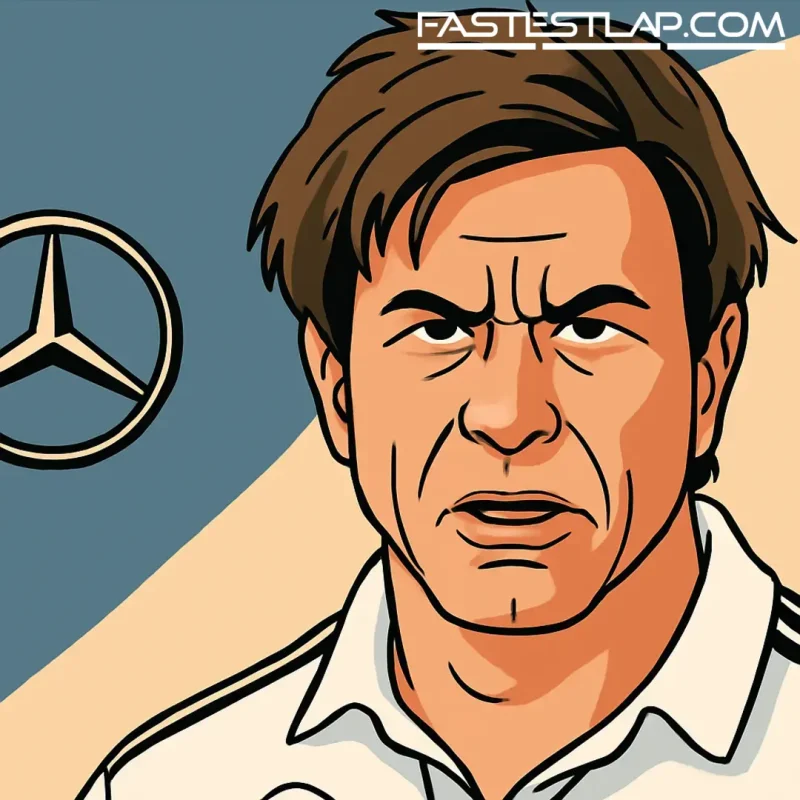
Toto Wolff isn’t going anywhere.
After a flurry of paddock whispers in Las Vegas about his future, the Mercedes team boss moved quickly to shut down any talk of an exit following the sale of a slice of his stake in the team. The Austrian has offloaded part of his interest to CrowdStrike CEO George Kurtz in a deal understood to be around $300m, handing the American tech entrepreneur a 5% piece of the F1 operation.
It’s easy to see why some read it as the start of an exit plan. Wolff is a rare beast in modern F1: team principal, CEO and co-owner rolled into one. But the message from his side of the garage was blunt. He’s not selling the team. He’s not stepping down. He’s not even eyeing the door.
“I’m in a good place and I’m enjoying it,” he said after the Vegas weekend. “As long as I’m contributing — and others feel I’m contributing — there’s no reason to think in that direction.” The sale, he stressed, came from his personal investment holding and was driven by a strategic opportunity: bringing in a racer-turned-entrepreneur who can help Mercedes extend its reach in the United States.
Kurtz is already a familiar name in the paddock through CrowdStrike’s long-running partnership with Mercedes. Now he’s on the ownership ledger. And in putting a price on that 5%, the transaction pegs Mercedes-AMG Petronas’ valuation in the region of $6bn — a staggering number for a team that, a decade ago, was still defining its dynasty.
Strip away the headlines and it’s another sign of how the cost cap has quietly remapped the sport’s finances. Since its arrival in 2021, teams have been forced to spend smarter, not bigger, and the balance sheets have followed. “Our business case changed fundamentally,” Wolff said. “Rather than outspending each other no matter what, we protected ourselves from ourselves. We were able to increase revenues and free cash flow — and the multiples did the rest.”
He’s bullish on the wider picture, too. The NFL analogy came out as he pointed to the Dallas Cowboys’ explosive valuation growth in recent years, a reminder that even mature sports properties can still scale. The caveat was classic Wolff: growth is only sustainable if F1 keeps listening to its audience and putting on a compelling show.
All of this lands at a pivotal moment for Mercedes. The team is deep into a new chapter with George Russell and highly rated rookie Andrea Kimi Antonelli leading the line in 2025, while Lewis Hamilton has taken the bold leap to Ferrari. Stability at the top matters in a transition like that, and Wolff’s steady hand is part of the sales pitch to sponsors, staff and fans alike: this is an evolution, not a reset.
For those keeping score on the ownership side, Mercedes’ modern structure has long been a three-way split between Mercedes-Benz, INEOS and Wolff. This latest move doesn’t change the balance of power so much as it broadens the tent — a minority piece carved from Wolff’s holding, with a strategic partner invited inside. It’s the kind of deal that would have sounded bizarre in the open-chequebook era, yet makes perfect sense in a sport finally designed to make money.
Will there be more to come? That’s the question paddock deal-watchers will keep asking. For now, Wolff’s answer is a shrug. He’s still on the pit wall, still in the boardroom, and still very much in the fight. In a season where the competition continues to tighten and the margins keep shrinking, Mercedes is betting that continuity — plus a little extra American muscle — is exactly what it needs.