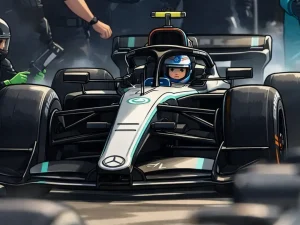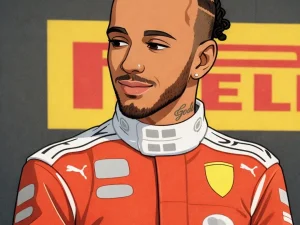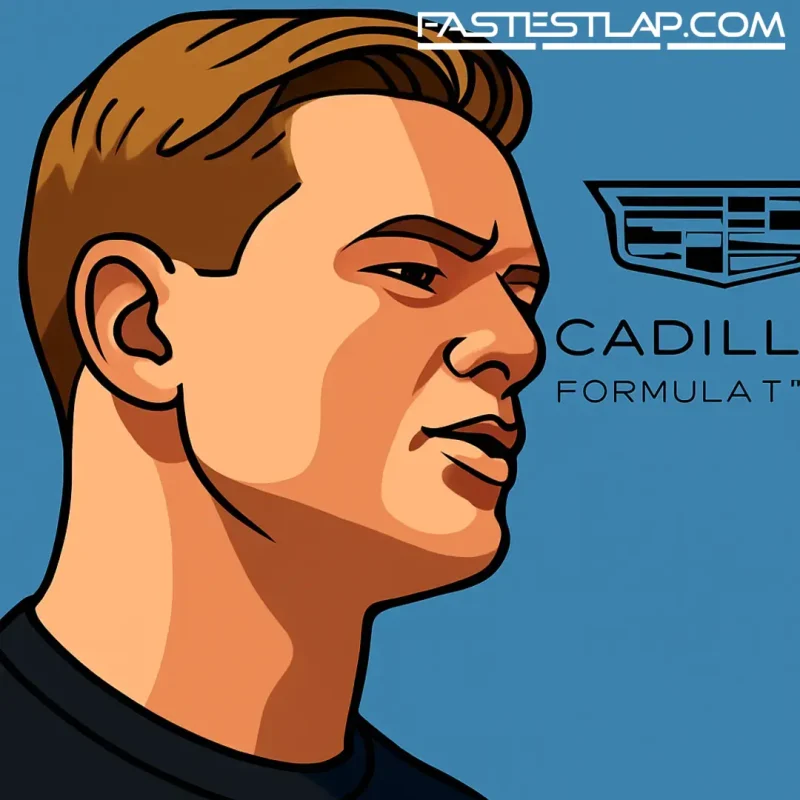
Mick Schumacher says Cadillac F1 talks went “right to the end” before the new entrant chose the safer, star-power route: Valtteri Bottas alongside Sergio Perez.
Cadillac, gearing up for its 2026 debut as Formula 1’s 11th team, has opted for a launch lineup carrying 16 grand prix wins and a mountain of know-how. For a manufacturer launching into a regulation reset, that’s hardly shocking. Bottas plus Perez gives you reference speed, development feedback, and precious calm when the garage is on fire in year one.
Schumacher, meanwhile, has pivoted. The former Haas driver will head stateside for a full-time IndyCar program with Rahal Letterman Lanigan Racing in 2026, and he’s at peace with how the F1 door closed this time.
“We were in contention pretty much up to the end,” he said of the Cadillac seat, noting the team “went in a different direction.” That line tracks. For all the romance of taking a chance on youth, rookie mistakes are expensive under a new rule set. And 2026 is the biggest shuffle of the pack in a decade: cars smaller and around 30kg lighter, active aero set to replace DRS-era thinking, a beefed-up hybrid component, and sustainable fuel for the ICE. The field will learn on the fly — and an expansion outfit will be learning most of all.
Schumacher’s been the comeback headline since he left Haas after 2022. He’s had conversations across the paddock over the last two seasons, but this was his closest crack at returning to a race seat. When Cadillac passed, he took it as a moment to reset the compass.
“Do I want to keep trying for the F1 grid? Or do I want to do racing that I enjoy — single-seaters?” he said. IndyCar ticked the box. He’ll share the RLL stable with Graham Rahal and Louis Foster in 2026, and the fit feels right: a driver who thrives on momentum and seat time, going to a series where mileage is currency and elbows-out racing is the norm.
Does this close the F1 chapter? Schumacher doesn’t think so. “No,” he said flatly when asked if the IndyCar move is a final goodbye to Formula 1. The door only truly locks in F1 when your phone stops ringing — and his hasn’t. History’s not exactly overflowing with IndyCar-to-F1 transitions, but it’s not a one-way street either. Keep your helmet handy, keep your name hot, and strange things can happen when the driver market spins.
Cadillac’s choice of Bottas and Perez is as pragmatic as it is predictable. Bottas’s reputation as one of the grid’s cleanest benchmarks and Perez’s race-craft and tire feel scream “day-one competence.” When the spreadsheets at a new team are full of unknowns, you control the controllables. Experience is one of them.
The other major 2026 storyline sits in parallel: Sauber’s full transformation into Audi works colors. That makes two fresh factory badges on the grid for the same rule reset — the kind of convergence that tends to scramble expected orders and create career inflection points. If you’re Schumacher, those are the years you keep nearby on the calendar, even from across the Atlantic.
For now, though, IndyCar will get the sharper end of his attention. The cadence of those weekends — practice, qualify, race, repeat, with street circuits and ovals thrown in — will do him good. It’s a proper driver’s series. If he stacks results and reminds everyone why his surname once filled junior-series grandstands, the next phone call won’t be hard to place.
Cadillac, for its part, will sleep well. Bottas and Perez are a plan. Schumacher’s found one too. And the 2026 reset is coming fast enough that everyone’s about to find out who bet correctly.