Sources: Red Bull tells Helmut Marko his time is up ahead of 2026 reset
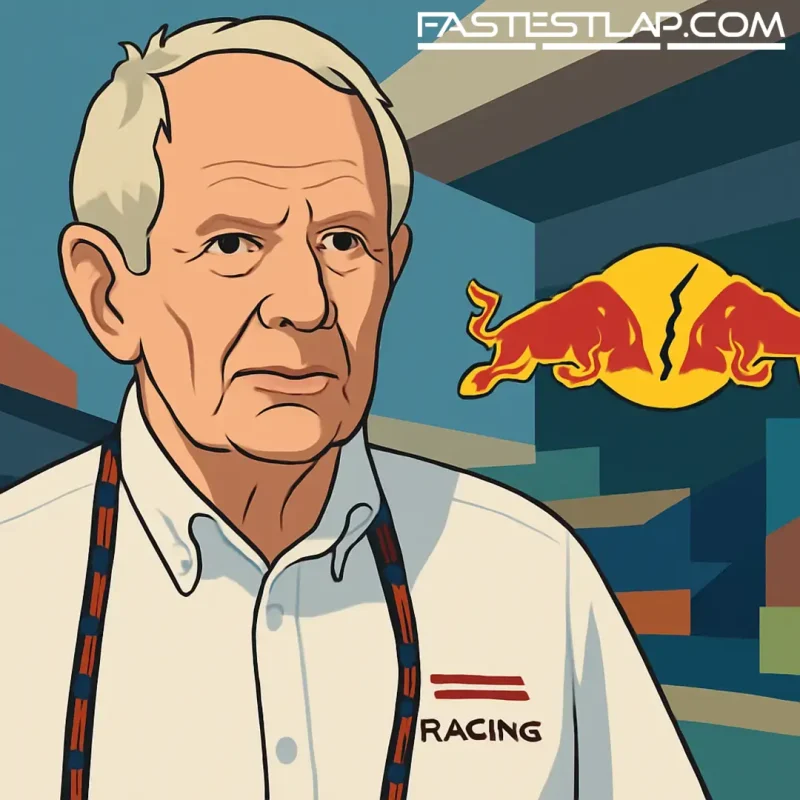
Helmut Marko, the combative architect of Red Bull’s ruthless driver pipeline and the last heavyweight link to the Dietrich Mateschitz era, has been told he’s out. That’s the word from well-placed sources, who indicate the 82-year-old was informed in Abu Dhabi that his services are no longer required, despite having a year left on his deal with Red Bull GmbH.
Marko’s departure would close a two-decade chapter that began with Red Bull’s F1 entry in 2005 and ran through four titles with Sebastian Vettel and three (and counting) with Max Verstappen. For years he was the unfiltered voice and roaming enforcer of the old regime: a director at Red Bull Racing, a talent spotter with a fearsome hit rate, and the man who could swing a junior driver’s career with a phone call.
But power at Milton Keynes shifted after Mateschitz’s death in 2022. Oliver Mintzlaff moved into a top role at Red Bull GmbH, and the guard changed again this season when Christian Horner was removed from his positions, with Laurent Mekies elevated to run Red Bull Racing after his stint heading Racing Bulls. Marko survived that first storm. It appears he didn’t survive the second.
The flashpoints have been building. Marko has always spoken on his own terms, often dropping sensitive tidbits into the media stream with little sign-off. That autonomy was largely tolerated in the Horner years. Not anymore. Under Mintzlaff and Mekies, the leash tightened, and Marko’s independent streak became a liability rather than an asset.
One episode in particular jarred. As reported elsewhere this week, Marko struck a deal on his own to bring Irish youngster Alex Dunne into the Red Bull programme — with no input from Mekies or Mintzlaff. When that contract was subsequently terminated, a penalty clause is said to have been triggered, leaving Red Bull on the hook for a six-figure sum that could now end up underwriting parts of Dunne’s 2026 F2 campaign with Rodin, along with his exit from McLaren’s junior ranks. For the current leadership, it was a flashing red line: unilateral decisions, corporate bills.
The temperature rose further around Singapore, where Chalerm Yoovidhya — who represents the powerful Thai shareholding in Red Bull — was understood to be unimpressed with aspects of Marko’s behaviour in the paddock. The final straw, sources say, arrived in Qatar. On live television, Marko suggested that 18-year-old Mercedes rookie Kimi Antonelli had effectively opened the door for Lando Norris late in the Grand Prix. Antonelli was already dealing with a wave of social media bile; the insinuation poured petrol on it. An apology followed from the team, with Mekies personally involved. Bridges don’t burn easily at Red Bull, but that one was well alight.
There was a time when Verstappen’s camp made it clear Marko was non-negotiable. The world champion’s trust in the structure now in place — Mekies running the team, Mintzlaff overseeing from the GmbH side, and a tighter corporate grip overall — appears to have softened that stance. For a driver focused on winning under the looming 2026 regulation reset, stability trumps nostalgia.
If this is indeed the end, it’s a blunt one. Marko’s contract with Red Bull GmbH was due to run another season, yet the message — according to multiple sources — was delivered before he’d even left the UAE after the Abu Dhabi finale. No gold watch, no farewell fanfare. Just a line under an era that defined Red Bull’s rise and shaped the careers of countless drivers, from Vettel, Ricciardo and Sainz to Gasly and, above all, Verstappen.
Red Bull declined to comment when approached regarding Marko’s position. Marko has also kept his counsel in the days since Abu Dhabi.
What happens next inside Milton Keynes will matter. Red Bull is preparing for the 2026 ruleset with its own power unit project and a leadership group keen to centralise control and messaging. Removing Marko would complete the consolidation that began with Horner’s exit. It also removes a lightning rod — and a proven, if polarising, talent scout who never minded being the bad guy if it meant the right driver wound up in the right seat.
For a team that’s always thrived on sharp edges, smoothing one of its sharpest could signal a very different Red Bull ahead of F1’s next era. Whether that’s cleaner or blunter on track, we’re about to find out.