Active aero sneaks into Abu Dhabi as FIA signs off tweaks; Verstappen tops pay list; Sainz keeps it classy; Antonelli’s quiet ‘sorry’
Abu Dhabi’s post-season test is usually a soft landing after the title fight. Not this time. With 25 drivers circulating and a raft of prototype parts bolted onto the cars, we got our first meaningful whiff of 2026.
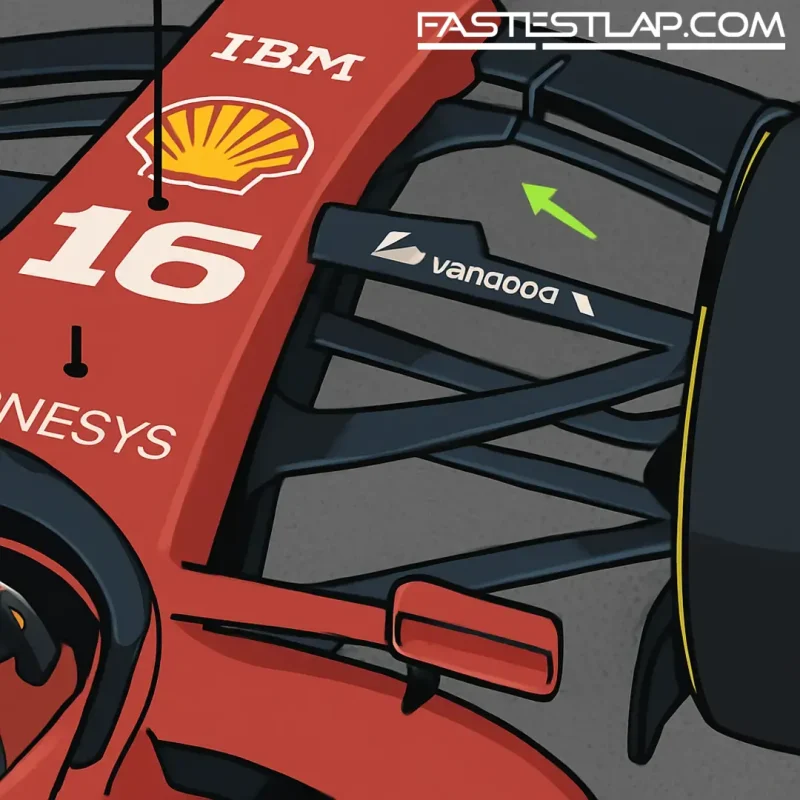
At the heart of it: Ferrari and Mercedes experimenting with front-wing trickery clearly intended to mimic the active aero concepts arriving with the next rules reset. The hardware looked rough-and-ready in places — think hydraulic linkages and unconventional adjusters — but the message landed. Teams aren’t waiting for the calendar to flip before getting serious about 2026.
From trackside, the changes were visible. As the cars flicked through Yas Marina’s slower sections, those front wings appeared to “breathe” with the load, a sign of the control systems teams are calibrating. It’s still just simulation of what will be legal in 2026, but the test was a window into how aggressively the big players are already pushing. Expect more of this in private running before the covers come off next winter.
While teams played with the future, the FIA set some of it in stone. The World Motor Sport Council signed off a batch of updates, including a revised Super Licence points structure that gives IndyCar more weight. Put simply, it should be easier for standout IndyCar drivers to qualify for F1 from next season. The council also nodded through further 2026 clarifications — the dull but crucial housekeeping that decides what clever ideas survive and which get lawyered into oblivion.
Money never stays far from the conversation in the off-season, and Forbes’ latest estimates have Max Verstappen edging Lewis Hamilton as F1’s best-paid driver. No great shock there, but the eye-catcher is the McLaren camp. After a double title haul in 2025 — Lando Norris’ Drivers’ crown and the Constructors’ trophy back to Woking — both Norris and Oscar Piastri are said to be on significantly improved terms. Titles change everything, including payroll.
Hamilton’s first year in red didn’t produce a podium, which has invited the predictable shots from the cheap seats. Carlos Sainz, the man who vacated that Ferrari seat and delivered two Grand Prix podiums for Williams instead, isn’t taking them. “I’m satisfied with my two podiums,” he said when asked if Hamilton’s struggles offered any satisfaction. “I’m not at all satisfied with the evil of another.” It’s a tidy line, and it tracks with the year Sainz had: third in Baku, third in Qatar, plus a Sprint podium in Austin — headline days for a team that’s turned hard graft into tangible results.
The human side of this championship surfaced again in a clip from Abu Dhabi that never made the broadcast. On the cool-down lap, Kimi Antonelli — the teenage Mercedes newcomer who’s been thrown straight into the deep end — asked his race engineer, Peter Bonnington, how many points Norris had won the title by. “Two,” came the answer. Silence followed. Antonelli’s late error in Qatar had been living rent-free in his head, and he sought out Verstappen in the media pen to apologise, as if the title swung entirely on that one moment. Verstappen dismissed it with a shrug. He’s been around too long to pin a season on one slip.
For context, the 2025 season ended with Norris edging Verstappen by those two points — McLaren’s first Drivers’ title since 2008 and a championship that truly went to the wire. That’s partly why the Yas Marina test felt restless. The top teams want to start 2026 faster than they started 2022. The midfield can smell opportunity. And everyone knows that front wings with a mind of their own are about to reshape how these cars are driven and raced.
So we leave Abu Dhabi with three certainties. One: the 2026 playbook is already being written on real asphalt, not just in CFD. Two: the FIA’s door is open a bit wider for top-tier talent from IndyCar. Three: the numbers in F1 — points, dollars, and marginal gains — still carry the same weight they always have. The rest will be decided the old-fashioned way: in the wind tunnel, on the factory floor, and when the visor goes down in Melbourne.