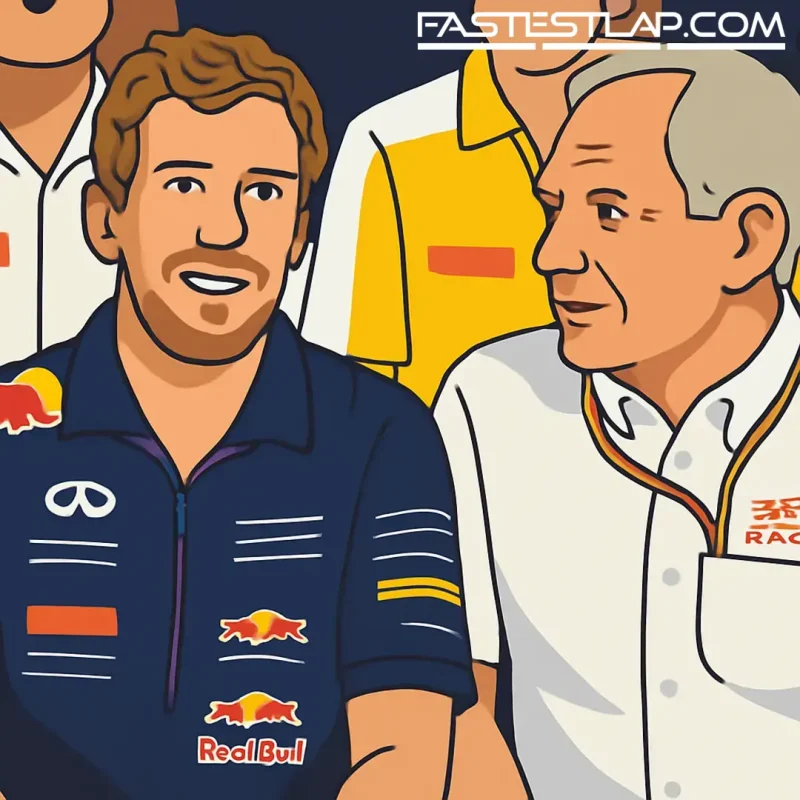
Sebastian Vettel hails Helmut Marko as Red Bull’s ‘architect’ after shock split
Sebastian Vettel didn’t see it coming either. News that Helmut Marko has severed ties with Red Bull after more than two decades sent a ripple through the paddock this week, and the four-time world champion — arguably Marko’s greatest find — was quick to underline the Austrian’s legacy.
“I was just as surprised as everyone else,” Vettel said, offering well-wishes and a nod to a “well‑deserved” retirement. Then he went further: “He is the architect of the success of Red Bull Racing and Toro Rosso.” It’s hard to argue.
Marko’s fingerprints are everywhere on Red Bull’s rise. He built the junior driver conveyor belt that fed Vettel into Formula 1, nurtured him through the mid-2000s, and watched him become Red Bull’s first drivers’ champion in 2010 — the first of four straight. The same system later ushered in Max Verstappen and a generation of race winners who defined an era. Driver selection was only part of it, as Vettel pointed out; Marko’s voice carried weight on strategy, structure and the kind of personnel calls that turn a drinks company’s racing dream into a ruthless, winning operation.
The end, when it came, was brisk. Marko, 82, informed Red Bull chief Oliver Mintzlaff of his decision after the Abu Dhabi Grand Prix. He’s pushed back on suggestions he was forced out, framing it as his call: had the team clinched the championship, he said, it might’ve felt like a natural time to step aside — but losing it made the timing just as clean. “It’s always a good time to stop,” he said with typical bluntness.
There’s no grand return plan, either. Marko’s made it clear other businesses and interests — including ventures back home in Austria — will take priority. At most, you might catch him at a couple of races. “You’ll never see me running around with a microphone,” he quipped.
The obvious question, as ever with Red Bull, is what (and who) fills the vacuum. Whisper it, but Vettel’s name has inevitably been floated. He’s been out of the cockpit since the end of 2022, dividing time between family and sustainability projects, and he’s never been one to chase a desk. But the idea of a role focused on people — the human machinery of a racing team — does tug at him.
“It depends on the challenge,” he admitted recently, reflecting on how the psychology of teams grabbed more of his attention towards the end of his career. He’s not on a charm offensive, knocking on doors, or rushing into anything. Still, he’s not ruling it out. If the right opportunity appears, he’ll listen.
That possibility alone will set some hearts racing in Milton Keynes. Vettel knows the Red Bull culture as well as anyone who wasn’t on the pit wall, and he carries the authority of a driver who’s felt both the weight and the lift of a fully aligned team. His presence around young drivers would carry real gravity — and Red Bull’s entire model, from F1 to its junior ladder, is built on finding the next one before anyone else does.
For now, though, this moment is about Marko and what he built. He wasn’t always subtle, rarely soft, and occasionally controversial, but he was consistent in one thing: he bet big on talent and backed his instincts. The scorecard speaks for itself — championships, race wins, and a steady stream of drivers who made it to the top because Red Bull kept the door open, even when conventional wisdom wouldn’t.
If this is indeed the last chapter of Marko’s F1 story, it closes a defining era. The task for Red Bull is to maintain the ruthlessness without losing the edge. The task for everyone else? Work out how to spot the next Vettel before the next Helmut Marko does.