Mohammed Ben Sulayem secures second term as FIA President after unopposed vote in Tashkent
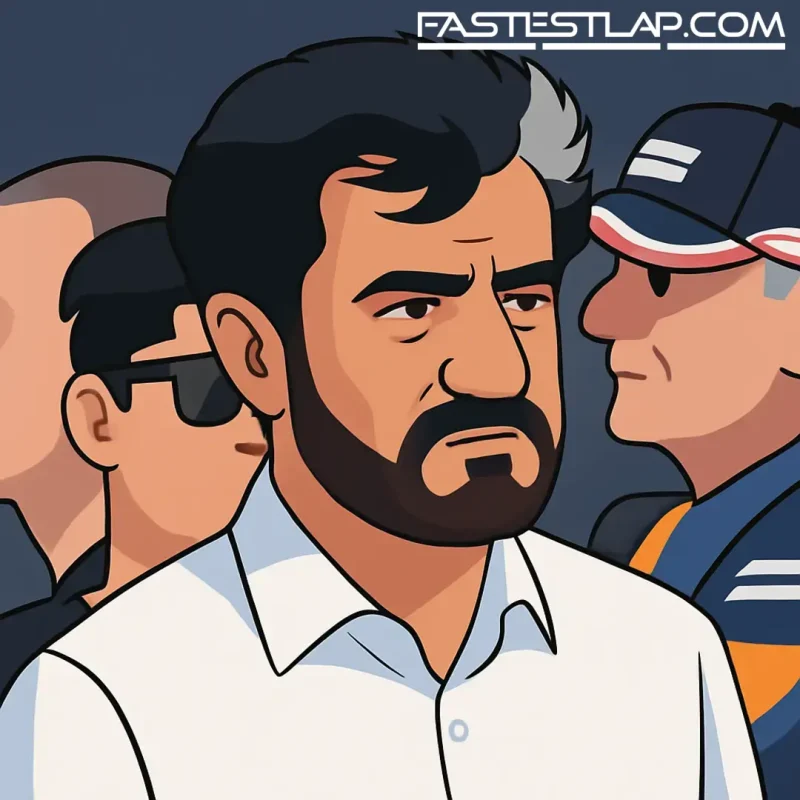
Mohammed Ben Sulayem will lead the FIA through to the end of 2029 after being re-elected for a second four-year term at the federation’s General Assembly in Tashkent, Uzbekistan.
The Emirati, who in 2021 became the FIA’s first non-European president when he succeeded Jean Todt, ultimately ran unopposed. Initial challengers Tim Mayer, a former FIA steward, and Swiss racer Laura Villars withdrew their bids after failing to secure the required support from the FIA’s Member Clubs.
The leadership slate remains intact around him. Malcolm Wilson OBE continues as Deputy President for Sport, Tim Shearman stays on as Deputy President for Automobile Mobility and Tourism, and Carmelo Sanz de Barros has been re-elected as Senate President. Their mandates, like Ben Sulayem’s, carry through to the end of the decade.
“Thank you to all our FIA Members for voting in remarkable numbers and placing your trust in me once again,” Ben Sulayem said after the vote, praising a membership he believes has “overcome many obstacles” and emerged “stronger than ever.” He called it an honour to keep serving “motorsport, mobility, and our Member Clubs in every region around the world.”
Ben Sulayem’s first term has been framed by the FIA as a reset. The governing body says it has reversed a significant operating loss into a surplus under his stewardship, while pushing through a raft of institutional reforms. On the motorsport side, the World Motor Sport Council has finalised the regulatory framework for Formula 1 from 2026 onward — the biggest single rules transition on the horizon — with the FIA positioning itself as the architect of that new era.
He’s also been a conspicuous figure on Sundays, handing out a President’s Medal on Grand Prix podiums alongside the trophies — a new flourish that’s become part of F1’s post-race ceremony.
The reappointment lands at a delicate moment for the sport’s rulemakers. 2026 is approaching fast, and while the FIA has set the framework, there will be a lot of real-world shepherding to do as teams translate regulations into cars and power units. In a paddock where politics is a contact sport, the federation’s next four years will likely be judged on three things: how cleanly that transition unfolds, how consistently the rules are applied, and how credibly the FIA continues to manage its own governance and finances.
Ben Sulayem arrives at this second term with a claim of stability — the same deputies, the same Senate President, a continuation of the project. Continuity should help, not least because the 2026 changeover touches everything from power units to chassis and the way F1 races are officiated in a more complex hybrid era.
For the clubs that voted him back in, the pitch was straightforward: keep the financial recovery on track, keep modernising the institution, and keep a firm hand on the regulations. Whether it’s the headline act of Formula 1, the ladder series that feed it, or the broader mobility mission the FIA pursues away from the racetrack, that’s the brief for the next four years.
Ben Sulayem’s first term didn’t lack for visibility. His podium presence and public-facing style were unmistakable, and his second term will test whether the same energy can be converted into quietly competent execution during a period of significant technical and sporting change. On balance, that’s what most teams — and most fans — will want: less noise, fewer surprises, and a smooth run-up to 2026.
For now, the politics are settled. The FIA has its leadership locked until 2029, the regulatory compass is set, and the long run to the sport’s next big rules reset is underway. The hard work, as always, begins the morning after the vote.