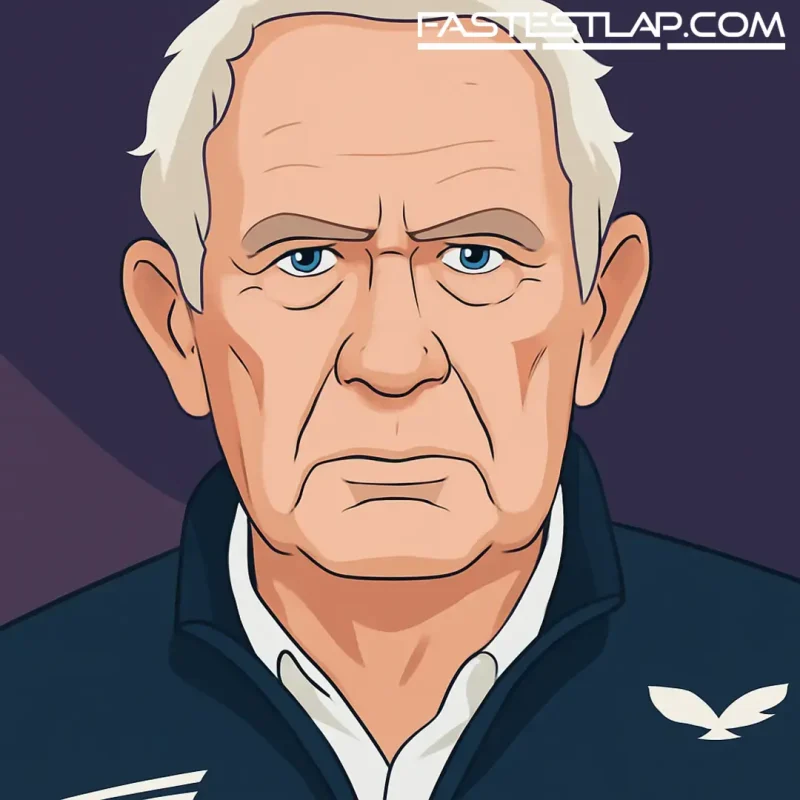
Red Bull’s kingmaker bows out: Marko set for €10m “golden handshake” as era ends
Helmut Marko, the uncompromising talent spotter who shaped Red Bull’s Formula 1 empire for more than two decades, is stepping away — and he won’t leave empty‑handed. According to a report in Germany’s BILD, the 82-year-old is in line to receive his full 2026 salary, believed to be around €10 million, as part of a golden handshake following his exit as senior motorsport adviser.
Red Bull GmbH confirmed Marko’s departure on Tuesday, calling time on a partnership that stretched from the team’s early years to its reign as a modern superpower. The move follows weeks of uncertainty after the season finale in Abu Dhabi, where, by Marko’s own admission, missing out on this year’s world title “moved [him] deeply” and helped convince him that “now is the right moment” to walk away. He reflected on a six-decade motorsport life — and a 20-plus year Red Bull chapter — as “extraordinary,” adding that what the team built together “fills me with pride.”
It’s hard to overstate Marko’s influence on Red Bull Racing and the wider paddock. The former Bonnier and BRM driver — a Le Mans winner with a razor-edged approach to decision making — became the constant in Red Bull’s churn of junior prospects, the North Star of a program that unearthed Sebastian Vettel and Max Verstappen and refused to apologize for the occasional ruthlessness along the way. Mid-season swaps? He practically wrote the book.
If the reported payoff feels hefty, it’s also entirely in character for a company acknowledging the scale of an era. BILD frames the payment as a gesture of appreciation for the successes Marko helped deliver: the raw scouting instincts, the conviction to back youth, and the spine to make hard calls under pressure. Red Bull doesn’t do sentimentality for long, but it does reward impact — and few figures have had more.
Marko’s story has always carried a steeliness. His F1 driving career ended in 1972 after debris pierced his visor at the French Grand Prix, costing him the sight in his left eye. He reinvented himself as a team owner, manager and, ultimately, Red Bull’s most influential consigliere — the man who could pick a champion out of a karting paddock and then yank the ladder if the climb stalled. That directness made him polarizing. It also made Red Bull, well, Red Bull.
Oliver Mintzlaff, who oversees corporate projects and investments at Red Bull, paid tribute by underlining how pervasive Marko’s fingerprints are on the operation. He called Marko “decisive” in the strategic calls that turned Red Bull Racing into “a multiple world champion” and praised his eye for exceptional talent that “left a lasting impact on Formula 1.” Behind the corporate tone was a clear message: removing Marko from the org chart leaves a gap you don’t fill overnight.
What this means for Red Bull’s pipeline is the next big question. The team’s junior structure has always been more than one man, but it moved at Marko’s speed and carried his edge. The pathway from F2 to F1 — and the sink-or-swim policy that came with it — defined careers and, at times, whole seasons. Without him, the machinery will keep running, but the calibration may change. Red Bull says it hopes he’ll remain close to the team; the paddock will read that as both courtesy and contingency.
For all the headlines, Marko cuts a figure at peace with the decision. He sounded reflective as much as resolute: grateful for a winning run, frank about the sting of a title that got away, and insistent that the timing is right. Beyond racing, the Austrian has long had one foot in business — among other interests, he owns hotels in his hometown of Graz — and he’ll hardly disappear from the European motorsport scene.
The legacy is straightforward. Under Marko, Red Bull discovered and developed two drivers who defined separate eras — Vettel the youngster who blitzed records, Verstappen the phenom who redefined the ceiling — and built a culture that prioritized pace, youth, and boldness. It wasn’t always pretty. It was usually effective. And it changed how teams think about talent.
So yes, a €10 million goodbye is eye-catching. It’s also a postscript to a story that was already written in world titles, audacious calls, and a paddock presence that commanded attention. Red Bull will move forward — it always does — but the silhouette at the back of the garage, arms folded, expression unreadable, won’t be so easy to replace.