Vasseur shrugs off Hamilton’s “anger and rage” as Ferrari eyes a cleaner reset
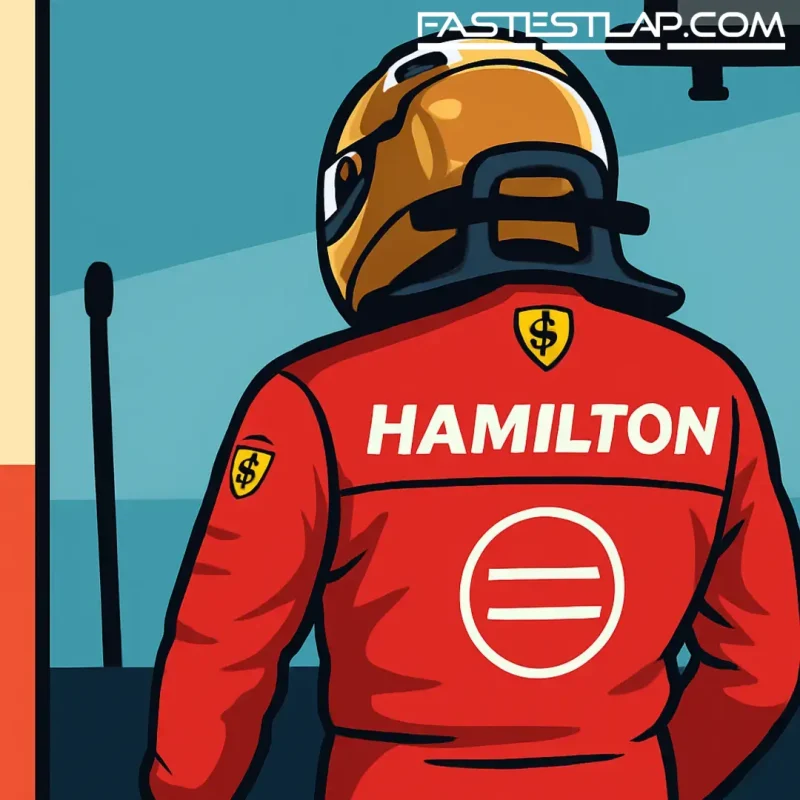
Fred Vasseur isn’t losing sleep over hot-mic outbursts. Not from Lewis Hamilton, not from Charles Leclerc, not from anyone. The Ferrari team boss was unflustered in Abu Dhabi when asked about Hamilton’s stark admission that he’d been consumed by “an unbearable amount of anger and rage” at the end of a bruising first season in red.
Vasseur’s view: TV pens and team radio are pressure cookers, and treating those soundbites as gospel is missing the point.
“I don’t pay attention to what they say five minutes after jumping out of the car,” he said after the finale. Drivers get asked big questions on tiny margins, emotions flare, and the only conversation that matters, he insists, is the one back in the engineering office. What he wants is simple: a driver who comes in, pushes, and helps make the car and the team better.
Ferrari could use the shove. Hamilton’s debut campaign in Maranello red never caught fire. He didn’t stand on a podium all year and slipped into a late-season slump that included four straight Q1 exits. Las Vegas was the nadir: last on merit in qualifying, something no Ferrari driver had managed since 2009. He finished the year well adrift of Leclerc in the standings, and the radio traffic with new race engineer Riccardo Adami often sounded like two people trying to fix a leaking boat with one bucket.
Public critique hasn’t gone down especially well in the halls of power. Chairman John Elkann recently urged Hamilton and Leclerc to “focus on driving” and keep the debriefs internal. Earlier in the season, Vasseur himself called out Hamilton’s “extreme reactions” in the media, arguing those messages can make things worse when the team needs calm. Yet in Abu Dhabi, he pivoted back to a more pragmatic tone: emotion is part of elite sport; the key is the conversion rate from frustration to lap time.
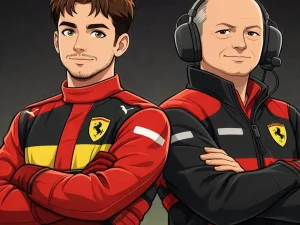
Leclerc, Vasseur said, is the model for that “positive dynamic.” The Ferrari boss has known him for more than a decade and describes a driver who’s hard on himself and the team—but always in service of forward motion. “It doesn’t matter if you’re P4, P3, P1,” Vasseur said. “The DNA is to do a better job.” That’s the standard he wants applied across the garage.
Hamilton’s own words hinted at a driver at the end of his tether. He didn’t dress it up in Abu Dhabi; he couldn’t find the language for how bad it felt. By Sunday night, his focus had narrowed to one thing: escape. He plans to bin the phone and unplug through the winter. No messages, no meetings, no photoshoots if he can help it. The seven-time champion has always carried his work with him; this time he wants to leave it behind—if only for a few precious weeks.
Ferrari will hope the break resets the feedback loop. The Hamilton-Leclerc pairing was always going to be volatile in the best way—a relentless internal benchmark, two drivers who’d rather chew through a steering wheel than accept mediocrity. But the SF-25’s operating window proved narrow, and when the setup fell out of that sweet spot, it fell hard. No surprise the radio got spicy. The question for Vasseur is whether he can insulate the working group from the noise, pull more consistency from the package, and give Hamilton a platform he trusts.
There were flashes, but not enough of them. When Leclerc found grip and confidence, he turned that into results. When Hamilton didn’t, qualifying became a minefield and Sundays a recovery mission. That spiral is as much psychological as technical. Big teams don’t like to admit it, but confidence is a component—front wing, rear wing, belief.
Vasseur’s stance is, in essence, a management strategy in plain sight. Don’t amplify the TV-pen headline; amplify the debrief. Validate the emotion, then channel it. Ferrari’s greatest seasons blended fury with precision; its worst dissolved into finger-pointing. This campaign, for all its promise back in February, leaned far too often toward the latter.
None of that will stop the stopwatch arriving early next year. The calendar doesn’t care how long a winter feels. And with a new regulation era sitting just over the horizon, Ferrari’s margin for dithering is thin. Hamilton’s demand is clear even when he’s barely speaking: give me a car I can fight with, give me a direction I can buy into. Leclerc’s message isn’t far off, just delivered at a different volume.
So Vasseur’s line matters. Don’t judge us by what’s said in the heat; judge us by what’s built in the cold. If Ferrari can turn the anger into traction and the rage into front-end grip, the conversation changes quickly. If not, the TV pen will keep filling the void. And by then, no one will care who listened or who didn’t. The lap time will do all the talking.