Helmut Marko’s parting shot: no hiding place for Red Bull rookie Isack Hadjar
Helmut Marko didn’t so much leave Red Bull as drop the mic on his way out. The 82-year-old, who stepped back after Abu Dhabi following two decades of pulling strings in the junior programme, set the bar sky-high for Isack Hadjar as the Frenchman steps up to partner Max Verstappen in 2026.
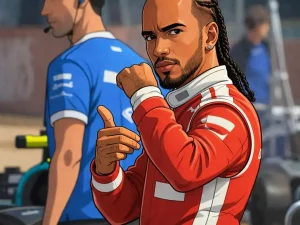
Lewis Hamilton’s 2007 rookie season at McLaren is Marko’s benchmark — and his message is clear: if Hamilton could jump straight into a front-running car and deliver, Hadjar has no excuses.
“Lewis stepped into a top team without any Formula 1 experience,” Marko said in Abu Dhabi. “So why not? Hadjar should be ready. It was the obvious choice.” He added one cautionary note about the 21-year-old: the talent’s not in doubt, but the emotions need managing.
Hadjar’s promotion from Racing Bulls caps a rookie campaign that turned heads early, and for good reason. The Zandvoort podium — a gritty drive to third — was the moment Marko decided the kid was the real thing. The decision wasn’t rubber-stamped overnight, though. It took months for the wider Red Bull machine to align, with Racing Bulls team principal Laurent Mekies and Red Bull CEO Oliver Mintzlaff eventually landing on the same conclusion Marko had reached: move him up.
The expectation game at Red Bull is brutal. In the Verstappen era, the second seat has chewed through promising drivers, with Sergio Perez the only one to turn it into sustained results — and even he wobbled when the car developed away from his sweet spot. Hadjar knows the history and knows he’s walking into the spotlight.
Marko believes his readiness is not just about talent. It’s also about the body of work we didn’t see. There were engine gremlins. A puncture at the wrong time. Strategy calls that could have swung differently. “He was a little unlucky,” Marko noted, suggesting Hadjar’s points tally undersold his year.
Inside Faenza, Mekies has been equally bullish about the trajectory. He talks less about moments and more about the curve — the developmental arc that turns gifted youngsters into complete operators.
“Isack has had an unbelievable first season,” Mekies said. “From where he started in January, he’s made big steps. We’re strong believers not only in raw talent but in the ability to evolve — doing things in the car a few races later that you weren’t doing before. We’ve seen that with Isack. We don’t see this as a landing point. It’s the start of another phase — second year, third year, maybe the fourth. Keep surprising us.”
Hadjar’s take is refreshingly pragmatic. He’s not clinging to any idea that the 2026 Red Bull (he referenced it as the RB22) should bend to him; he wants to help shape it, then adapt to whatever it becomes.
“It’s not the same car at all next year,” he said. “We’re going to get the car we have. I have to adapt to that car, and Max will have to do the same job. If the car goes in one direction, at least I’ll be there to feel the change — and ideally, contribute to that change. I’ve always competed in different cars; I think I’m decent at adapting, so I’m confident.”
That’s a useful mindset in a season where regulations shift again and the development race starts from a fresh baseline. It also hints at why Red Bull picked Hadjar now. He’s quick, yes, but he also listens, self-critiques, and bounces back — traits that tend to matter even more than raw pace when you’re living in the most scrutinised garage in Formula 1.
There’s risk here, of course. Red Bull has been burned before, and Verstappen isn’t exactly an easy reference point. But this isn’t a whim. It’s the final act of a Marko project years in the making, endorsed by the people who will live with the decision day-to-day.
And the Hamilton comparison? It’s deliberately provocative. Hamilton’s 2007 season was a freak of nature — eight podiums in his first eight races, a title fight to the wire. Expecting a photocopy of that would be silly. But Marko’s point stands: the elite don’t ask for soft landings. They show up and make themselves impossible to ignore.
Hadjar has already done that once. Now he gets to try it on the biggest stage in the sport. The door’s open. The room is loud. And there’s nowhere to hide.