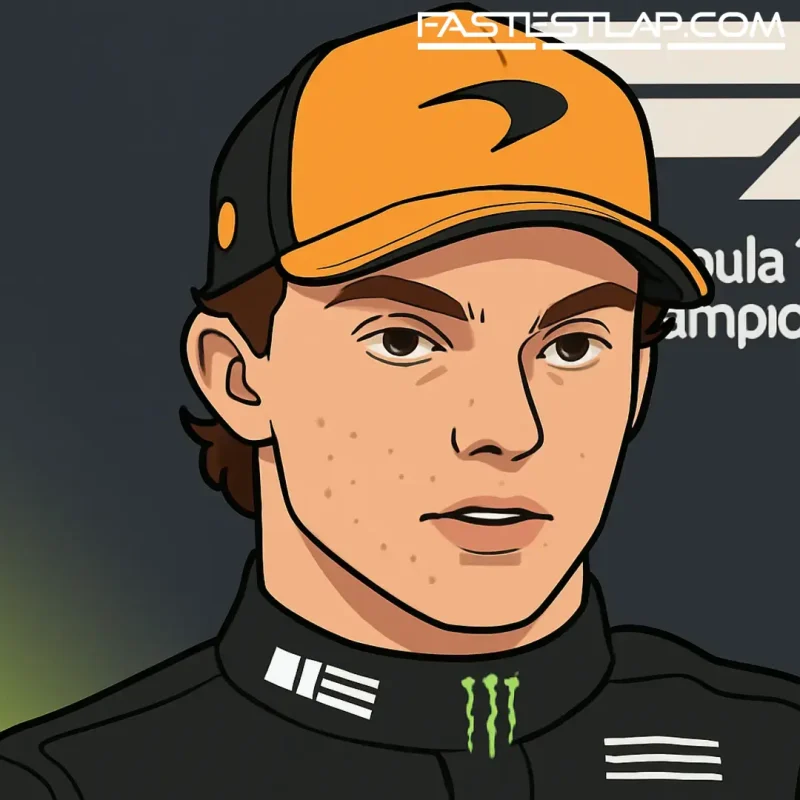
Oscar Piastri: “Headroom” left after title near-miss as McLaren star targets adaptability gains
Oscar Piastri didn’t leave 2025 with the big trophy, but he did leave with a sharper self-audit than most. Beaten to the championship by 13 points by McLaren teammate Lando Norris and shuffled to third by year’s end, the Australian has circled exactly where the margins got away from him — and how he plans to close them.
It was all going to plan after the summer break. Piastri won at Zandvoort, led the standings, and looked every inch a champion-in-waiting. Then came the slide: a clumsy opening-lap exit in Baku, followed by a run of low-grip, awkward weekends where the car wanted something he couldn’t quite give it on demand. Norris, by contrast, found the feel and ran.
Piastri isn’t dressing it up. He called 2025 “by some margin” his best season in Formula 1 — seven wins speak loudly enough — but he’s just as clear that a handful of Sundays exposed a softer edge in his repertoire. Austin and Mexico were the ones he flagged most, races where he said the window for performance narrowed and he didn’t adapt quickly enough. For a driver known for being clinical and low-risk, that’s honest self-critique.
“There’ve been weekends where things just haven’t clicked,” he told media, noting that about 90 percent of the year his approach worked brilliantly; the rest, not so much. The theme is adaptation: different grip profiles, different demands from the car, different conditions. It’s the unglamorous part of a title fight, the micro-adjustments that add up to a season.
What made the dip jarring was the platform he’d built. Piastri was measured all year — typically smart in traffic, ruthless when it mattered, light on errors. That’s why the Baku crash jarred. That’s why the low-grip wobble stood out. And that’s why his assessment lands with credibility: when your baseline is that high, the gaps are easier to see.
The bigger picture for McLaren is still a net positive. They finished with a champion in Norris, a serial winner in Piastri, and a car capable of taking chunks out of every circuit type. Inside that, the intra-team duel was fought on tenths and tire prep and track evolution — the fine print that decides whether you’re guiding the pace or hanging on to it. For stretches, Piastri was the one hauling the benchmark. Down the stretch, Norris found a touch more.
Piastri sounds energised by that rather than bruised. He called this his “most complete” year and talked about the “headroom” left to play with — equal parts frustrating and encouraging. Translation: he knows where the time is, and it’s not in a magic setup trick. It’s in being faster to understand what the car needs when grip is low and confidence is expensive.
That’s the story of most modern title fights. The calendar throws up circuits with polished asphalt and crusty surfaces, chilly evenings and scorching days, aggressive bumps and billiard tables. The drivers who turn those variables into constants usually take the hardware.
If you want the blunt take: Piastri didn’t lose 2025 because he wasn’t quick enough. He lost it because, in a handful of moments when the track moved under his feet, Norris moved with it sooner. The difference was 13 points. That’s one tyre warm-up lap judged better in qualifying here, one caution cleaned up there. It’s not a gulf; it’s a checklist.
So what now? Expect an off-season heavy on simulation, correlation work, and practice at living in uncomfortable corners of the window. Expect a driver who’ll chase adaptability the way he chased his first wins — not with noise, but with method. And expect McLaren to lean into a rivalry that’s already raising both drivers’ ceilings.
Piastri’s 2025 might not have ended with the number he wanted next to his name, but the way he’s talking — and crucially, the way he drove for most of the year — suggests this wasn’t a peak. It was a platform. The headroom he keeps mentioning? That’s the scary bit for everyone else.