Vasseur shrugs off noise around Hamilton: “Don’t tell me we’re doing a good job — tell me where to get faster”
Ferrari’s season ended with a sharp edge to the conversation, not a soft landing. Lewis Hamilton’s first year in red came with a sprint win in China and then a long, stubborn run of frustration — including three Q1 exits to close out the campaign — and plenty of chatter about how the seven-time champion fits inside Maranello. Fred Vasseur has heard the talk. He doesn’t much care for it.
What he does want to hear is criticism — from inside the cockpit.
“I’d be destroyed if my drivers told me we’re doing a good job,” the Ferrari team boss said after the Abu Dhabi finale. “The summary of a driver’s season is always the same: find where we can improve — everywhere.”
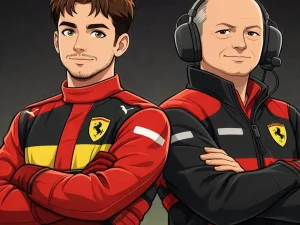
It’s a very Vasseur line: blunt, competitive and just a touch combative. His point is simple. Charles Leclerc and Hamilton aren’t there to hand out compliments, they’re there to drag Ferrari into a better place before next March.
“Charles and Lewis have to put the team on the limit in every single area,” he added. “Simulator, set-up, aero — all of it. That’s their DNA. It’s mine too.”
Ferrari’s 2025 was awkward from the moment the SF-25’s development direction veered away from the 2024 momentum. The car’s sweet spot narrowed, the margins disappeared, and the high-profile arrival of Hamilton only magnified the shortcomings. His year began brightly with that Shanghai sprint win, then the progress ebbed away. The optics didn’t help: Hamilton admitted he’d filed documents with Ferrari suggesting process tweaks — hardly shocking for a driver bringing a decade of Mercedes refinement with him — and the reaction inside and outside the team turned into a weekly temperature check.
Even Ferrari chairman John Elkann’s public nudge for the drivers to “talk less” and focus on driving became a headline in a season that supplied a few too many of them. Vasseur, though, isn’t alarmed by any of it.
“When I saw stories about reports from the drivers and requests for modifications… come on,” he said. “We get a report from the drivers every single race. That’s their life. And we push them just as hard on the driving. There’s nothing magical — just work.”
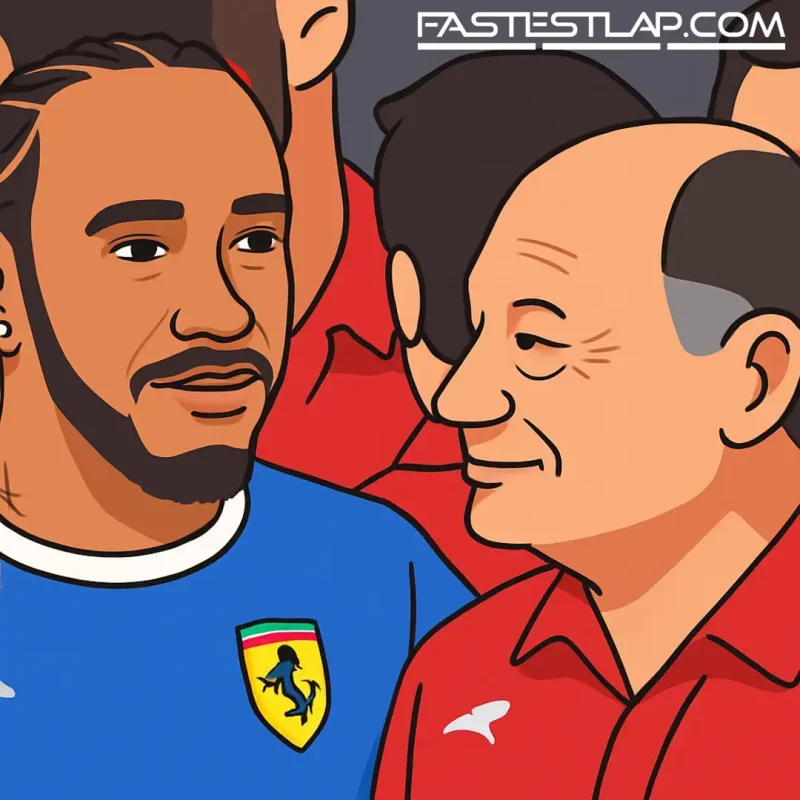
Inside Ferrari, the view is that the Hamilton relationship is healthier than it looks from the grandstands or the social feeds. Matteo Togninalli, head of track engineering, offered the context the outside often lacks.
“For a driver like Lewis changing team after 10 years, it’s very difficult for both sides because every team works a bit differently,” he said in Qatar. “Put that together with the fact we didn’t hit the target of fighting for the championship this year, and frustration builds. From the outside it looks worse than reality. What we’re building with Lewis is extremely positive.”
There’s also a cold sporting truth sitting under the emotion: 2026 is coming fast. With ground-effect going away and a fresh ruleset around the corner, Ferrari (like everyone else) is already living in two worlds, tugged between extracting the last drops from the present and front-loading resource into the future. That naturally stretches development and patience.
For Hamilton, the form sheet wasn’t kind but the veteran’s instinct to critique and calibrate is exactly why Ferrari signed him. You hire the sport’s most decorated driver to lead as much as to pass. That can create friction, sure, but if you’re Vasseur, friction is energy — as long as it’s pointed at the stopwatch.
What about the “luck” factor? Vasseur didn’t hide his view that Hamilton’s tally could have looked very different with a few bounces the other way. Strategy swings, traffic at the wrong moment, yellow flags — the usual dominoes — conspired to turn several promising Saturdays into gritted-teeth Sundays.
But Vasseur’s larger message was that nothing about Hamilton’s voice inside the garage sets off alarm bells. He wants his drivers to demand more. He expects it. If anything, concern would start the moment they stopped.
Last year, Ferrari took the 2024 fight deep — “until the last corner,” as Vasseur likes to repeat — and the internal debrief then sounded a lot like it does now: we can get better everywhere. It’s less a slogan than a policy.
So where does that leave the Scuderia? Somewhere imperfect, impatient and exactly where a team should be if it plans on climbing again. The car needs a wider operating window. Execution needs bite. The Hamilton-Leclerc blend needs miles. All obvious, all fixable.
The outside world will pore over every radio message and body language moment. Inside, Ferrari is leaning into the noise, not away from it. If they’re right, 2025 will read like a transition chapter — and 2026 will be the one that matters.
Until then, don’t expect Hamilton or Leclerc to tell Vasseur he’s doing a good job. That, in Maranello, would be the real crisis.