Komatsu cools the “works team” talk: Toyota’s Haas tie-up is about people, not paint
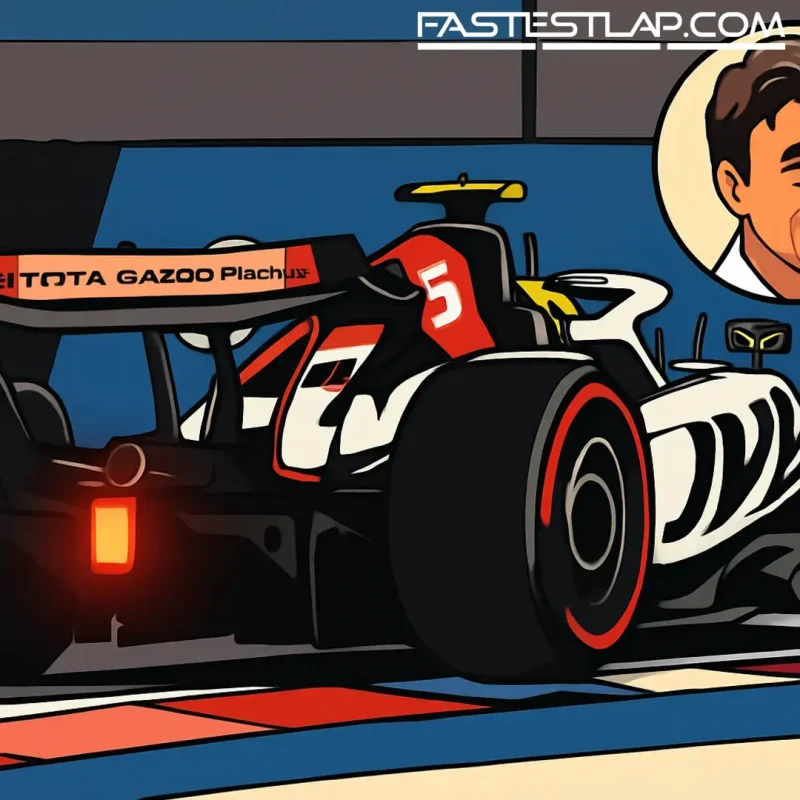
Haas ended 2025 with a new sticker on the nose and a very deliberate message from the pit wall: don’t mistake a title sponsor for a takeover. With MoneyGram off the car after Abu Dhabi, Toyota Gazoo Racing steps in as title partner for 2026, building on the technical tie-up that began late last year. But Ayao Komatsu isn’t entertaining the easy narrative.
“It’s easy for people to say ‘Toyota works team’ or ‘Toyota is going to make an engine,’” the Haas team principal said in Abu Dhabi. “Toyota’s objective is not really branding; Toyota’s objective is to make us competitive, grow people, and make this team competitive together.”
That’s the spine of the project. The Toyota relationship has already underwritten a busy Testing of Previous Cars programme through 2025 — notably putting Toyota-affiliated drivers into Haas machinery — and it’s funding a new simulator scheduled to come online at Banbury in 2026. Next year, the TPC effort hardens into a more structured Driver Development Programme. The headline changes are visible; the intent is internal.
“Even the TPC, we’ve been doing it, but that was the first year,” Komatsu added. “Next year, it’s going to be a bit more structured… everything is going to be more developed.”
The title deal also means the Toyota name will appear in Haas’s official entry. Inevitably, that’s triggered the usual paddock whispers — is this the path to a full works return for Toyota, dormant in F1 since 2009? Is a shareholding next? Those close to the situation won’t rule out the partnership deepening, but there’s no handover in the drawer. Gene Haas remains owner and, by all accounts, has no interest in selling. The line from Komatsu has been steady all season: this is a long-term collaboration with a very specific purpose.
“Between Akio-san [Toyota chairman Akio Toyoda] and myself, it’s totally clear the purpose of this collaboration is really trying to grow people and, through doing that, they will make a competitive organisation,” Komatsu said. “In Formula 1, if somebody wants to train people or throw people into a very competitive, international environment, there’s nothing better.”
That comment tracks with how the partnership actually operates. Ferrari remains Haas’s long-standing technical supplier for power units and gearboxes; there’s complete transparency there, and no toe-treading between Maranello and Cologne. Toyota isn’t walking in with hardware — it’s sending engineers, systems, and structure. The payoff, from Toyota’s side, is speed: F1 forces decision-making at a tempo corporate motorsport rarely matches.
“In the corporate world, certain things take, let’s say, three months to develop; in Formula 1, we sort it in two weeks,” Komatsu said. “For Toyota Motor Corporation, it’s not just for racing. The people they grow, train in this environment will one day, hopefully, be a senior manager or top management in TMC, with an international and competitive mindset. It’s a lot more than, ‘Are they gonna make a PU?’ or ‘Are they gonna be the Toyota works team?’ That’s really not the target.”
Strip away the branding, and the impact at Haas is already measurable. Since Komatsu took over from Guenther Steiner in January 2024, the team’s headcount has climbed from roughly 230 to around 380. The simulator project is a step-change for a team that’s historically operated lean. And the TPC days — 14 of them in 2025 — gave Haas valuable mileage and Toyota a rolling lab for drivers and staff.
What changes in 2026? Not much on the surface, Komatsu insists. The car will carry a new title sponsor. The driver development work will be more formal. The simulator should start earning its keep. Otherwise, it’s incrementalism, not revolution.
“Nothing is going to change overnight,” he said. “Everything is just a gradual step-by-step improvement.”
That may disappoint anyone hoping for a dramatic rebrand and a silver-bullet upgrade. But if you’ve watched Haas long enough, it also makes sense. The team has taken its knocks for being under-resourced; it’s now using Toyota’s heft to attack that exact weakness. If it looks a little unglamorous, well, so does every proper rebuild.
There’s still a tantalising “what if” hanging over the collaboration. If Gene Haas ever did decide to step back, Toyota would be the obvious successor. It’s a neat storyline, and maybe one day it’s the one we write. Today, though, Komatsu’s message is consistent: this is a people project, not a paint job. And in a sport where the biggest gains are usually made Monday to Friday, that might be the most interesting part of all.