First look: F1’s 2026 vision gets real with fresh official renders
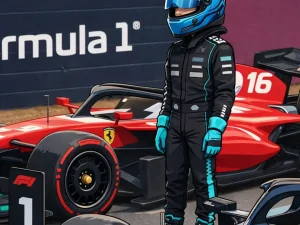
Formula 1 has dropped a new batch of 2026-spec car renders, this time in full F1 livery, and they land a lot closer to what we’ll actually see on track when the sport flips the rulebook. After that 3D‑printed show model the FIA brought to Abu Dhabi, these images feel like the first time we can trace the lines and say: right, that’s the silhouette we’re dealing with.
What jumps out? The proportions. The 2026 car is shorter, narrower and cleaner through the air, with Formula 1 targeting up to a 40% drag reduction. That’s paired with a deliberate cut in overall downforce—somewhere in the 15–30% range as ground-effect reliance is wound back—so expect cornering speeds to dip while straight‑line numbers creep higher. Nimble over nailed-down is the brief.
The magic trick to make all that work is the active aero. Drivers will be able to adjust elements on both front and rear wings on the fly, flipping between settings to balance cornering and straight‑line performance. Think less “set-up sheet” and more “party trick,” pressed several times a lap.
And the old yardstick for racing—DRS—is gone. In its place, Overtake Mode. The principle stays similar: if you’re within a second of the car ahead, you unlock extra deployment to force the issue. But it’s not a flap; it’s power. The electrical side of the power unit does heavier lifting in 2026, and that feeds directly into how a driver can race.
Layered on top is Boost Mode, a second tool that lets drivers spend their battery for either attack or defense whenever they judge it’s worth the trade. Combined with active aero, that hands far more control to the cockpit. The fast drivers won’t just be quicker on the edge, they’ll be better at timing the switches and managing energy when the pressure’s up.
From the angles F1 released—front-on, side profile, rear—the cars look tidier, less bargeboard-y and more purposeful. The front wing appears simpler in concept but more involved in function thanks to its movable sections. The rear view hints at a package that’s designed to punch a smaller hole and shed less turbulent wake. In theory, that should help cars follow more closely through medium-speed sequences, where 2022’s ground-effect era often hit a wall.
The timing of all this matters. With brand-new chassis regulations arriving in lockstep with overhauled power units, pre-season is going to be dense. Expect earlier-than-usual launches and an extended test phase—11 days have been penciled in—so teams and drivers can get on top of the hardware and, just as importantly, the new playbook in the cockpit.
If you’re scoring at home, here’s the shape of what’s coming:
– Active aero at both ends, driver-adjustable during a lap
– Lower drag targets, higher projected top speeds
– Reduced downforce versus 2022–2025 cars, with an eye on “nimbleness”
– DRS out; Overtake Mode in, unlocked within one second
– Boost Mode for battery deployment on demand
– Heavier electrical contribution in the power unit, putting more racecraft in the driver’s hands
There’ll be plenty of nervous energy in design offices between now and the first 2026 launch. The aero map changes, the energy management philosophy changes, and the car’s physical footprint changes. Some will nail the concept early; some will chase it. That’s the fun bit.
For now, the renders do their job: they tell a story of a leaner, more agile F1 car that should move the battleground from “who has the cleanest air” to “who uses their tools the smartest.” And that’s a storyline the sport could use.