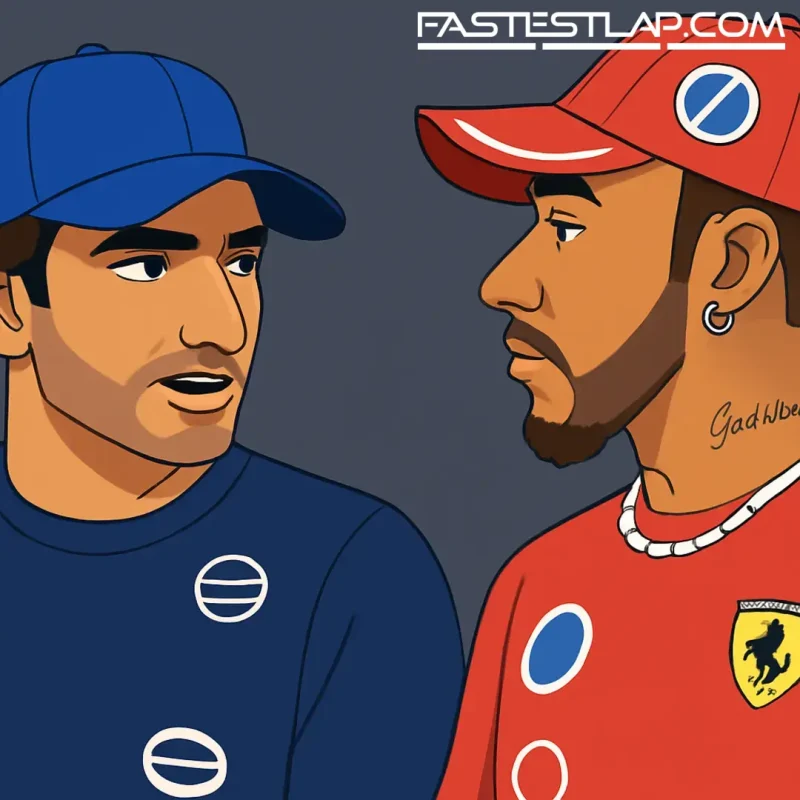
Hamilton and Sainz can’t wait to close the book on F1’s ground‑effect era
By the end of 2025, few in the paddock were still defending the ground‑effect reboot. Lewis Hamilton certainly wasn’t. Carlos Sainz wasn’t either. And if you ask Nico Hülkenberg, well, he’ll give you the shrug emoji version of an answer.
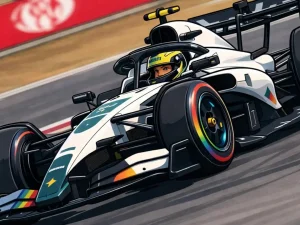
The regulations introduced in 2022 were supposed to bring cars that could follow more closely. They did for a while. Then teams found their downforce, the cars put weight on, and the spectacle ebbed away in the dirty air. As the championship packs up the current rule set and prepares for the 2026 reset, two of the grid’s biggest names are happy to show it the door.
“There’s not a single thing I’ll miss,” Hamilton told reporters during the season’s final stretch, doubling down on a view he’d aired across the late flyaways. The seven-time champion’s last four seasons under ground effect never yielded a title challenge, and while his Ferrari move for 2025 has refreshed the storyline, it hasn’t sweetened his verdict on this generation of machinery.
On the other side of the garage divide, Sainz—now leading Williams’ revival after Hamilton took his Ferrari seat—sounded just as relieved. The Spaniard’s first months with the 2022 cars were a grind as he reprogrammed himself to extract pace from machines that demanded a stiffer, more counterintuitive approach. He adapted, delivered on Sundays, and won races along the way in red, but he never pretended to enjoy the driving style that came with it.
“I had to relearn skills I didn’t think I’d need in F1,” he said. “I got on top of it eventually, but it never felt natural. I’m ready for what’s next—and for a car I can lean on in a way that suits me.”
What’s next is a very different animal. The 2026 chassis rules shrink the cars and trim roughly 30 kilograms, while the sport moves away from DRS trains and into active aerodynamics—front and rear wing elements that change configuration for efficiency and straight‑line punch. The power units take a similarly hard turn: a 50/50 split between electrical energy and an internal combustion engine running on fully sustainable fuel. On paper, that’s a big promise—more nimble cars, less turbulence, better racing—and a far bigger challenge for designers.
Not everyone hated what’s now ending. Sauber’s Nico Hülkenberg, who’s signed on through the Audi works transition for 2026, offered the measured take. Heavy? Yes. Electrifying over a single lap? Also yes. The killer, in his eyes, was how following deteriorated this year after teams sealed up the airflow to claw back performance. “It became very, very difficult to race closely,” he said, “but they were insanely quick in qualifying. I didn’t mind them as much as others.”
Hamilton’s stance remains the sharpest. He endured the most bruising spell of his career through the bulk of this era—first in a Mercedes that lost its way, then in a Ferrari he’s still meshing with—and never got a true title shot out of cars that often boxed drivers into rigid setups and razor‑thin operating windows. If 2026 delivers a machine he can hustle with feel rather than formula, don’t expect him to be sentimental about what came before.
Sainz’s perspective is just as telling. His craft has always been about precision and adaptability, but the way he describes this period—“relearning” to be fast—speaks to how far the pendulum swung. At Williams, where the project hinges on a confident lead driver and a car that’s predictable lap to lap, a lighter, livelier 2026 ruleset can’t arrive soon enough.
The intrigue now shifts to the clean sheet. Smaller cars should widen the driving envelope. Active aero—deployed both for attack and efficiency—ought to cut the dependence on turbulent air and the straight‑line gimmicks fans love to hate. And with power units leaning heavily on electrical deployment, energy management will matter as much as tyre management once did.
Teams, of course, will push the edges and the FIA will be busy with the sandpaper. That’s the sport. But for Hamilton and Sainz—two drivers with very different 2025 jerseys and very similar scars from the last four seasons—the mood is clear. Thanks for the memories. Let’s move on.