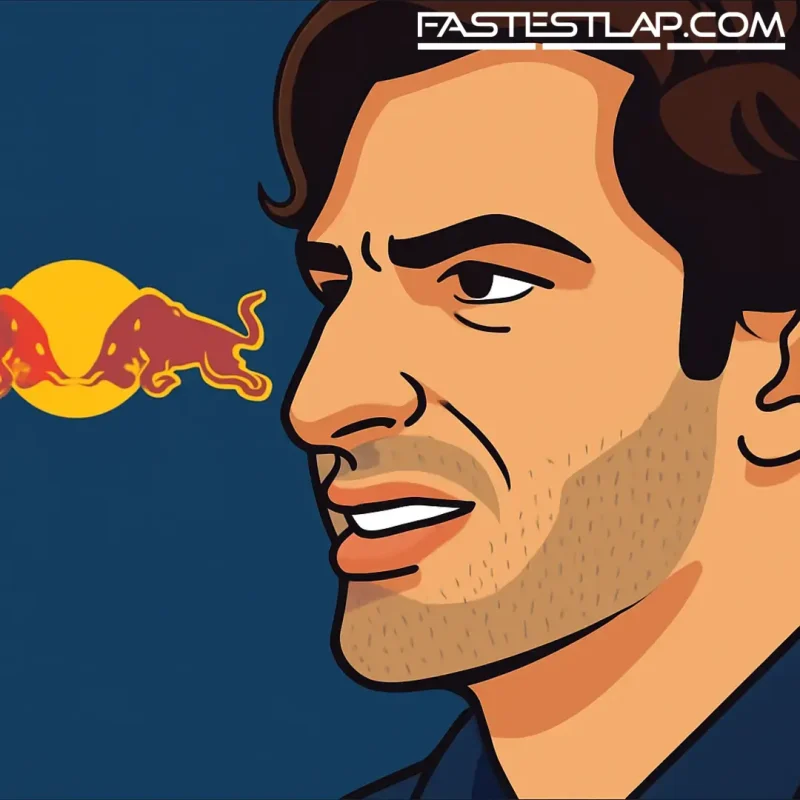
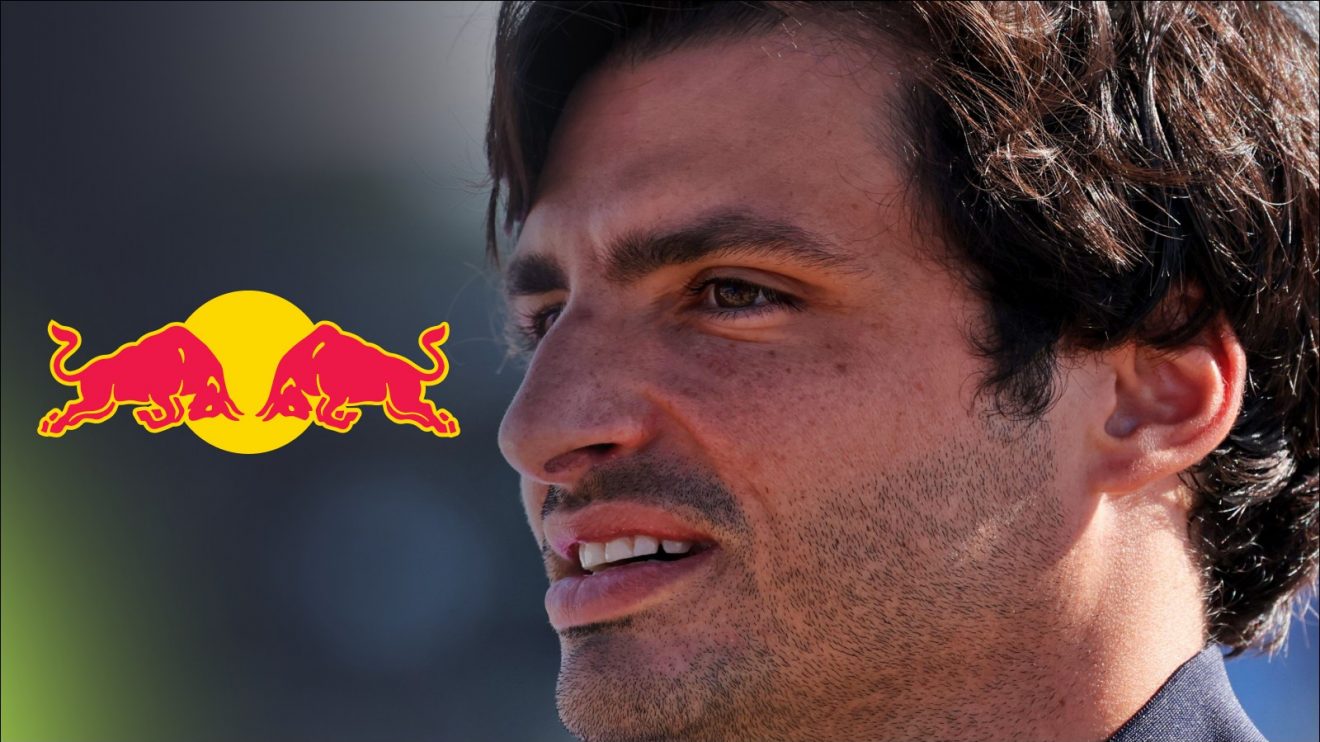
Williams’ Carlos Sainz pictured at the 2025 British Grand Prix, a Red Bull logo peeking over his shoulder — a neat visual for a debate that just won’t die: did Red Bull miss their chance?
[
]
Jacques Villeneuve certainly thinks so. The 1997 World Champion has been banging the drum all season: Sainz has a habit of lifting every team he steps into. And if there’s one thing Red Bull’s Verstappen-era juggernaut has intermittently lacked, it’s a true second spear to press both Max and the car.
The history is well-trodden. Sainz and Verstappen came up together at Toro Rosso, and the atmosphere — drivers and fathers included — got tense enough that Red Bull’s then-powerbroker Helmut Marko kept the pair apart when the big seat opened. When Ferrari cut Sainz loose in favour of Lewis Hamilton, Red Bull again looked elsewhere.
Marko, never one to varnish, later called the Toro Rosso dynamic “toxic” and argued the choice at the time was obvious. Sainz didn’t share the view. He’s said repeatedly the rivalry was hard but healthy, and that today he and Max get along: if anything, he reckons they’d form the nastiest one-two punch on the grid.
The irony? Sainz has spent 2025 proving his point. Williams jumped from ninth last year to a robust fifth in the Constructors’ standings, with Sainz banking two podiums — including a P3 in Baku, Williams’ first full-race podium since 2017. That’s not just a step forward; that’s a renovation.
Villeneuve sees a pattern. “Everywhere Carlos has gone, the team got better,” he said on the High Performance Podcast. He puts it down to the Spaniard’s method: deeply engaged with the car, relentless with the details, and willing to adapt his driving to diagnose problems rather than complain about them. In Villeneuve’s world, that separates the elite from the merely fast.
It’s also where he links Sainz with Verstappen. Modern drivers, he argues, can drown in data — sifting for answers without knowing the right questions. Max, to his eye, is “old-school”: feel first, data second. Villeneuve places Sainz in that same camp. It’s not that they ignore telemetry; it’s that they use it as a tool, not a crutch.
Inside Grove, the Sainz effect has been tangible. The Williams was slippery and fussy early in the year, and Sainz was behind his teammate at times on raw pace. But as the updates began to land and the operating window widened, the 30-year-old found rhythm — and pulled the package along with him. The net result was both drivers faster, but Sainz benefiting most from a car he’d helped shape. That’s exactly the kind of development grunt Red Bull has wanted more consistently from its second seat since the early Verstappen–Perez honeymoon ended.
Of course, this isn’t a fairy tale universe. Red Bull didn’t sign Sainz, and the political weather in Milton Keynes always matters. The Verstappen–Sainz dynamic in its Toro Rosso chapter was combustible enough that Red Bull chose institutional peace over potential fireworks. You can debate the wisdom, but you can’t question the logic.
Fast-forward to now: Verstappen is partnered by Isack Hadjar, and the reigning champions are betting on youth alongside their sure thing. Sainz, meanwhile, is staying at Williams, where the project looks serious rather than sentimental. He’s already delivered two trophies for the cabinet and, just as crucially, a raised floor for the entire program.
So did Red Bull miss a trick? Results will have their say next year. If Hadjar beds in quickly and Verstappen keeps slicing through Sundays, this conversation fades into the background noise. But if Williams keeps climbing and Sainz keeps nicking big results — and whisper it, pushing the development race in directions Red Bull can feel — then the what-if will linger.
Sainz has never been the loudest star. He’s the driver who turns up, interrogates the car, and leaves the garage a little smarter than he found it. That’s catnip for an engineering group. It’s also why Villeneuve’s admiration isn’t just nostalgia — it’s a nod to the modern F1 reality that raw speed is only half the story. The rest is the grind.
One last thought: Verstappen vs Sainz, in equal machinery, now, without the noise of 2015? That would be worth the price of admission alone. For now, though, we’re left with a different kind of intrigue — two parallel paths, one of them blue and white, the other navy and neon, converging only on Sundays. And a feeling, shared in certain corners of the paddock, that Red Bull chose comfort over chaos. It might win them the title anyway. It might also have cost us a hell of a contest.