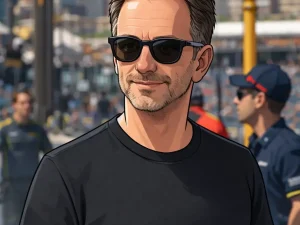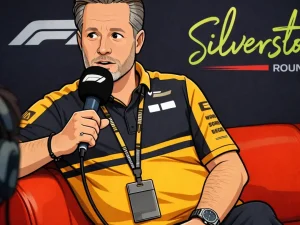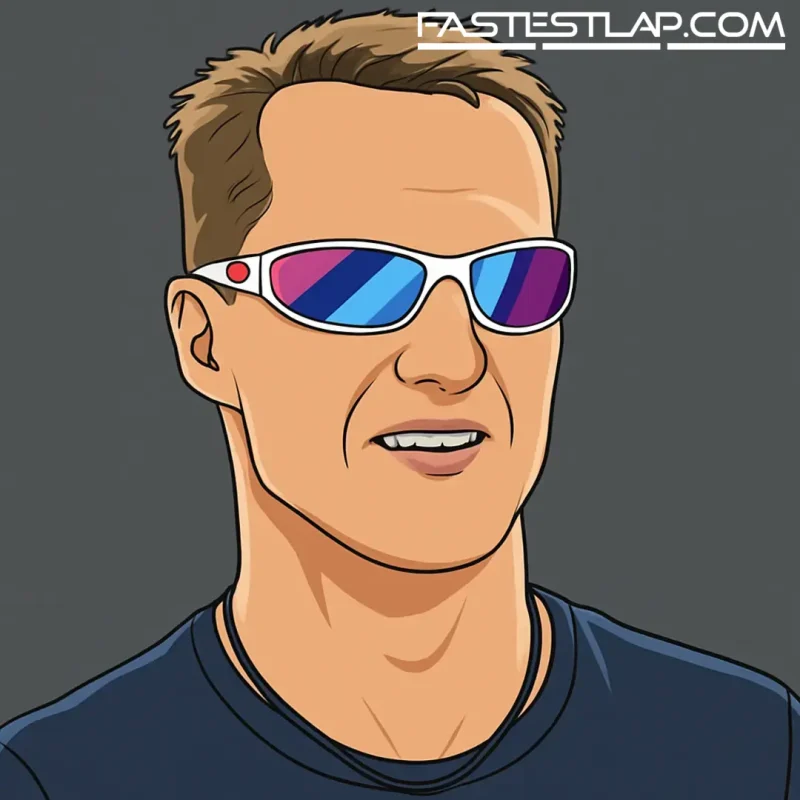
Andy Wilman still tells the story with a grin: the night Michael Schumacher “borrowed” an Italian hotel bar and finally got to be just another guy ordering a beer.
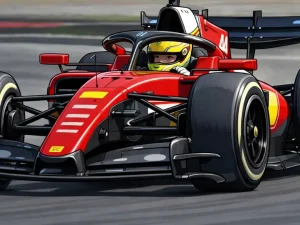
The former Top Gear and Grand Tour showrunner was in Tuscany around the turn of the millennium, shooting a BBC programme about speed. Ferrari were pounding around Mugello. Schumacher was days away from jetting to Japan to finish the job and deliver the title that Maranello had been craving. It was peak red‑ballcap era: Italy in love with its adopted superstar, and Schumacher living the sort of celebrity where dinner often meant room service and a quiet phone call home.
Wilman had lined up an interview for the show. Sabine Kehm, then part of Schumacher’s inner circle, gave them a tight window after testing. The plan: film back at Michael’s hotel. The complication: a busy business-bar full of people who weren’t about to stop chatting just because a TV crew turned up.
“So I go to the manager and ask if we can close the bar,” Wilman recalled on the Midweek F1 podcast. “At first it’s a flat no. Then we say, ‘It’s for Michael Schumacher… who’s staying with you.’ Suddenly it’s very Basil Fawlty — he ushers everyone out, locks the doors, and we’re in.”
In the hush of an empty bar, Schumacher was candid. He talked about Mika Häkkinen — the two-time World Champion who’d pushed him so hard — and admitted the Finn was “often faster.” He addressed the infamous clash with Jacques Villeneuve at Jerez in 1997. He was relaxed, generous with his time, and clear on the record.
Then the clocks ticked past the scheduled half-hour, and beyond. Kehm gave the wrap-up. The crew started packing. And Schumacher didn’t move.
“How long does this bar stay shut?” he asked, according to Wilman. The answer — as long as the crew were “still working” — unlocked a small rebellion. “I’ll have a beer then,” Schumacher said, and he did. Another followed.
In a country where he couldn’t sit in public for long without a crowd forming, this was a rare pocket of normal. “In Italy, I can’t go anywhere,” Wilman remembered him saying. “I have dinner in my room, ring my wife, and that’s it. Now I can be in a bar.”
The day had already been threaded with the kind of F1 side plots you only appreciate years later. As Wilman tells it, filming at Mugello was supposed to be free of Bernie Ecclestone’s fees if a single team was testing. Then another car rolled out: a last‑minute Sauber run for a teenage Kimi Räikkönen. The kid with the provisional super licence would go on to become the 2007 World Champion. That afternoon, he also cost the BBC an extra cheque.
The postscript to the interview was pure paddock politics. Back in the edit, Wilman wanted to cut Schumacher’s comments against archive footage of the Villeneuve collision. Ecclestone initially blocked it — “old news, son” — before relenting on one condition: a fax from Schumacher approving the use. Willi Weber, then Schumacher’s manager, duly asked the man himself. The answer: he’d given the interview, he wasn’t keen to watch it back, but he’d sign. Fax sent. Deal done.
Two and a half decades on, those snapshots are part of the Schumacher folklore: the relentless competitor who could be disarmingly direct, the megastar who cherished a quiet beer behind a locked door.
Wilman’s own soft spot for Michael is clear. Yet when he’s pressed on his favourite Top Gear F1 cameo, the answer swerves. It’s Sebastian Vettel in 2011 — the four-time World Champion who, as it turned out, could kill under studio lights, too. Vettel’s pitch‑perfect Nigel Mansell impression, apparently learned from Adrian Newey, stunned the team who’d expected a stiff German stereotype. He was quick in the show’s “Reasonably‑Priced Car,” too: a 1:44.0 in the Suzuki Liana, good enough for fourth on the final board topped by Daniel Ricciardo.
Schumacher himself would later pop up on Top Gear in one of the show’s most talked-about gags, but that Mugello memory cuts closer to the bone. It’s a reminder that the seven-time World Champion, who defined an era and set the template so many have chased since, also had nights where the biggest thrill wasn’t a new front wing or a lap at Suzuka. It was a freshly poured beer in a bar nobody else could walk into. For once, not even Italy could get to him. And he loved it.