Red Bull without Horner, Newey and Marko: a superteam unspooled, and the real test starts now
For two decades, Red Bull didn’t just win. It imposed itself on Formula 1 with a swagger that made the paddock look and sound different. The music in the garage, the brazen Energy Station, the left‑field driver calls, the political needle. It was an empire built on one relentless idea: disrupt. Now the disruptors have left the building.
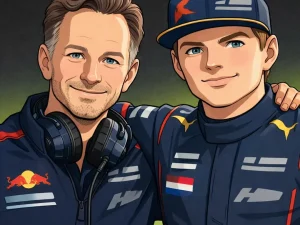
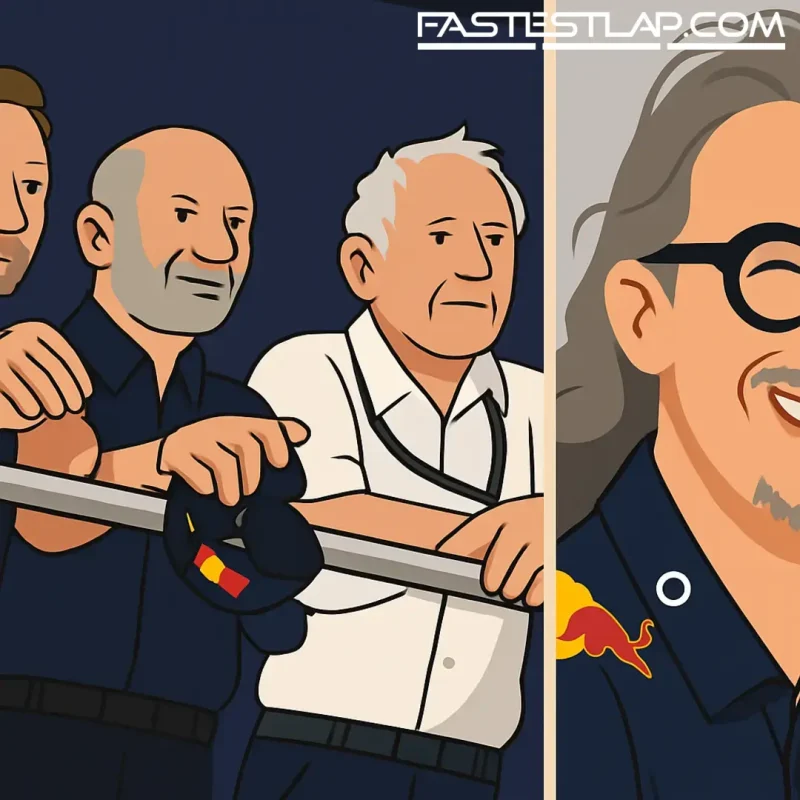
Christian Horner, Adrian Newey and Helmut Marko are gone. The names that turned a rescued Jaguar into a serial winner have been replaced by a quieter, more corporate structure led on the ground by Laurent Mekies and, above him, Red Bull GmbH’s Oliver Mintzlaff. The old momentum carried deep into 2025; the real audit of what Red Bull still is begins in 2026.
It’s worth remembering how deliberate the original project was. Dietrich Mateschitz didn’t buy a team to fit in. He bought Jaguar in late 2004, empowered Marko, and took a bet on a young team boss in Horner. David Coulthard walked in the door with credibility and a phone full of contacts. Within 12 months, Red Bull had prised Newey from McLaren. Rob Marshall, Jonathan Wheatley, Peter Prodromou followed. The car got better, the culture got sharper, and by 2010 Sebastian Vettel started stacking titles. Even during the Mercedes hybrid years, Red Bull remained a live threat: chassis and aero always there, engine finally sorted when they jumped to Honda in 2019. Verstappen’s rise finished the loop.
The fracture arrived after Mateschitz’s death in 2022. Power in Salzburg reorganised. Red Bull GmbH moved to a triumvirate model, with Mintzlaff taking charge of projects and investments. The team still dominated on track, but internally the ground shifted. Wheatley exited to Sauber/Audi for 2025. Newey chose a new challenge at Aston Martin. Will Courtenay peeled off to McLaren. The RB20 stayed mighty, yet the temperature went up: an internal investigation into Horner’s conduct, Jos Verstappen sniping, a sudden civil war despite a quick car.
By mid‑2025, the last pillars fell. Verstappen’s frustrations surfaced early, the RB21 looked quick but brittle, and two rough home weekends tore the bandage off. Mintzlaff pulled the lever: Horner out, Red Bull’s marketing and comms pulled back under Austria’s roof, Mekies promoted from Racing Bulls to run the F1 team and act as CEO across the companies. Marko, who’d long resisted a Horner-centric structure, outlasted his own recruit by months before stepping aside himself.
If the back half of 2025 felt like a reset in the right direction, it was a nuanced one. Mekies brought a calm, engineering-first tone that clearly played well at Milton Keynes and with Verstappen. But the updates that steadied the RB21 were greenlit under Horner. Early-season fumbles in the pits—rare under Wheatley—were tidied up. It was a stabilisation, not a reinvention.
The reinvention lands with the 2026 regulations. This is Pierre Waché’s car concept, end to end, the first born without Newey’s eye anywhere near the drawing board. Waché’s talent isn’t in question—his fingerprints are all over the fearsome RB19—but 2026 compresses a lot of jeopardy into one box: new chassis rules, new aero sensitivities, and Red Bull Powertrains stepping out as a fully-fledged works partner. The brain trust around Waché (Craig Skinner, Enrico Balbo, Paul Monaghan) is strong. The question is whether it’s strong enough without the north star that guided Red Bull through three different eras of rulemaking.
There’s another shift—less visible, potentially just as significant. Horner’s Red Bull fought for inches. Protests, pressure, opportunism; it was an energy that grated on rivals and often yielded points when logic said it shouldn’t. Mekies’ tone is different: more corporate, more conciliatory. That might be healthier for a dressing room that’s had its share of public drama. It might also leave edges unsharpened. Late in Abu Dhabi last year, the team had a chance to gamble with Verstappen on a stop that could have disrupted McLaren; they banked a clean win instead. Respectable? Sure. Red Bull-ish? Not exactly.
Mintzlaff’s imprint is everywhere. He made the big calls, he wants less noise, and he’s signalled that the authority line runs to Salzburg. That’s a stark departure from the Mateschitz era, when the F1 team was largely trusted to run itself. The upside is clarity. The risk is removing intangible ingredients that you can’t simply recruit for.
So what now? The expectation around Red Bull is a weight of its own. Ferrari live under it every year. McLaren have the car but learned in 2025 how easy it is to fumble when the margins get tight. Red Bull’s senior core—the four people most associated with its modern identity—have exited. The people who remain are good enough to win on talent alone. Whether they’ll win on instinct when the fight gets ugly is the unknown.
It took time for the old Red Bull to form into something ferocious. It’ll take time for this one to either find that same snap or settle into a different groove. The next few months won’t deliver a verdict, but they’ll reveal something Red Bull hasn’t had to show in years: who they are when the scaffolding of the past is finally gone.