Coulthard picks Verstappen over Hamilton in fantasy showdown — but crowns Senna as the ultimate
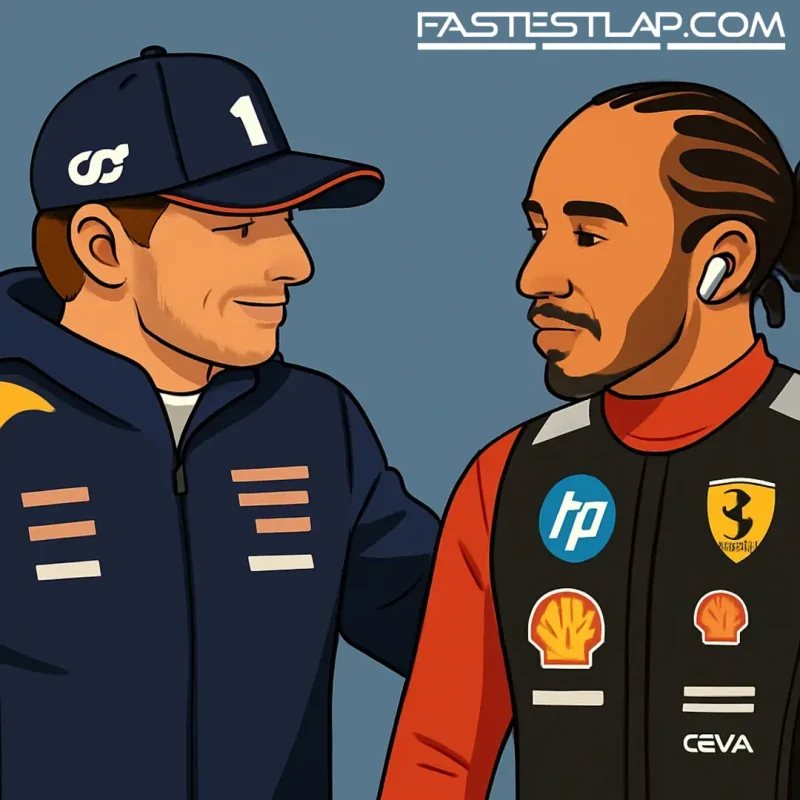
Max or Lewis? Ask that question in any paddock queue and you’ll be there a while. David Coulthard didn’t get that luxury. On the Red Flags podcast, the 13-time grand prix winner was pushed into a straight choice between the two modern heavyweights — and he leaned Red Bull.
“I’m going to go with Max,” Coulthard said, after a bracket-style run-off that left him staring at a final four of Ayrton Senna, Michael Schumacher, Lewis Hamilton and Max Verstappen. No hedging, but not without context.
For Coulthard, it’s partly about evolution. Each generation should go faster, go cleaner, go deeper into the data. Verstappen, he argued, is the product of that curve — razor-sharp, unsentimental, and still climbing. He also praised the Dutchman’s no-frills demeanor: when Verstappen’s unhappy, he says so; when he’s content, you know it. There’s no theatre, just edges.
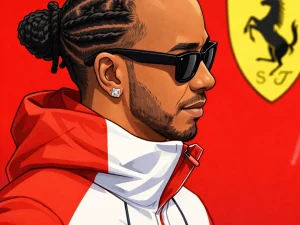
Hamilton? The respect was clear. Seven titles, the sport’s statistical giant, now wearing Ferrari red in 2025. But Coulthard wondered aloud whether Lewis is still operating at absolute peak. He pointed to the simple arbiters — the stopwatch and the chequered flag — and to recent inter-team yardsticks, noting Hamilton didn’t always land on the right side of his intra-garage duels in recent seasons and now finds himself measured against Charles Leclerc at Ferrari. It wasn’t a takedown; it was a racer’s cold read.
“The outright speed is maybe not there with Lewis anymore,” he said, before immediately adding the caveat: “You’ve got to give him so much respect. With Max, it still feels like he’s developing.”
There was a nod to the sim generation, too. Verstappen grew up with high-fidelity tools Hamilton didn’t have in karting’s early-2000s ecosystem. Useful? Of course. Decisive? Not by itself. Coulthard framed it as an era thing — you work with the tools you’re born into. In Verstappen’s case, that also meant being forged by two racing parents. Jos Verstappen’s career near-misses and Sophie Kumpen’s karting pedigree are well-told parts of the Max myth, but Coulthard didn’t mind retelling them to make the point: this was a project that produced not just speed, but an athlete built for the modern grind.
And yet, after all that, Verstappen still didn’t top Coulthard’s personal list. That honor went to Senna.
This is where the Scot switches from analyst to witness. Coulthard replaced Senna at Williams after Imola 1994 and saw the afterglow of the aura up close — the magnetism in a room, the intensity, the forcefield. He described sensing Senna’s presence before spotting him, the kind of thing that sounds romantic until you realize how many who were there say the same.
“Of the four, Lewis is arguably the least controversial on track, which should be acknowledged,” Coulthard said, “but having worked with Senna… there was something there. Based on my personal experience: Ayrton Senna.”
It’s a tidy snapshot of where F1’s greatest-of-all-time debate sits in 2025. Hamilton, now at Ferrari, is chasing fresh history at 40; Verstappen, still in his twenties with Red Bull, is busy writing his. Schumacher’s records remain a reference point even as they’ve been broken. And Senna — with fewer titles than any of the above — refuses to fade, precisely because greatness isn’t just arithmetic. Sometimes it’s a presence that rearranges a room.
Coulthard’s pick of Verstappen over Hamilton for a hypothetical head-to-head won’t end the argument. It’s not meant to. But coming from a driver who raced against Schumacher, succeeded Senna at Williams, and has watched both Verstappen and Hamilton build empires in real time, the read carries weight.
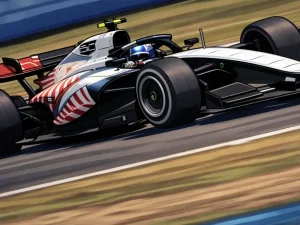
At Silverstone this year, Ferrari red and Red Bull blue went wheel-to-wheel again, a live-action reminder that hypotheticals are fun but the sport still answers to the lap chart. As Coulthard said, it’s the stopwatch and the flag that decide things. The rest of us will keep debating — happily — in the gaps between.