Coulthard: Keep the ‘papaya rules’ — but take team orders out of the engineers’ hands
McLaren’s two-car knife fight worked. Lando Norris and Oscar Piastri spent 2025 trading wins, trading paint on occasion, and somehow kept the peace. Credit the “papaya rules” — that internal code of fairness and risk management — for letting both drivers race without turning the garage into a bonfire.
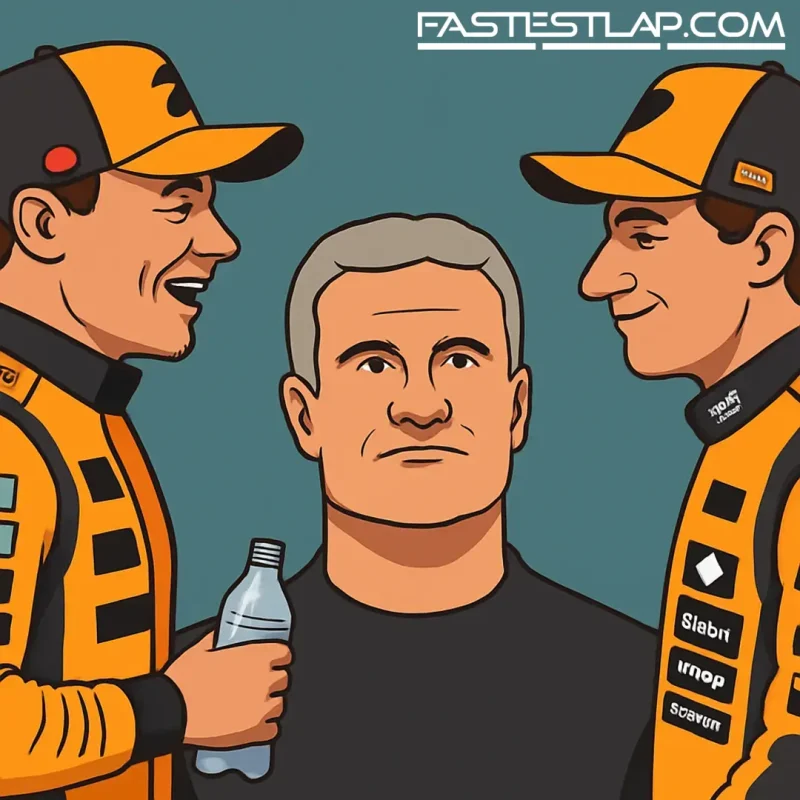
David Coulthard, who knows a thing or two about McLaren politics, is largely a fan of the approach. He’d just make one tweak: if there’s a “hold position” or “don’t race” call, it shouldn’t come from the race engineer.
“The bond between driver and engineer has to be absolute,” Coulthard said on the Red Flags podcast. He likened it to being “in the trenches” together; when the whistle blows, you go forward side by side. “When they do give ‘Move over’ or ‘Don’t race’ type instructions, that should come from the team principal or the sporting director. It should not come from the race engineer.”
That’s not a shot at McLaren’s decision-making so much as a guardrail for the most important relationship on a race weekend. Coulthard’s point is clear: Norris should feel Will Joseph is fighting for him, and Piastri should feel the same about Tom Stallard. Any order that curtails that fight should arrive from higher up the chain, not via the trusted voice that’s in your ear every lap.
It’s an old McLaren habit, he added. Back in Coulthard’s day, he says it was team manager Dave Ryan who delivered those messages when the call was to work with Mika Häkkinen or Kimi Räikkönen. “I always believed my engineers would do everything to get the advantage my way,” he said.
The Norris–Piastri dynamic didn’t require much heavy-handedness in 2025, which is partly why it’s been compelling. McLaren didn’t designate a number one, didn’t lock the garage doors, and didn’t kill the racing. What it did do was step in at the margins: a “hold station” when traffic and weather were getting sketchy in Australia; no reversal after Norris muscled past Piastri on lap one in Singapore, followed by some well-publicised “consequences” for the champ at the next round. The internet screamed favouritism, as it always does. Piastri, to his credit, publicly shrugged it off and said the treatment felt even.
The numbers behind the tension were real enough. Both drivers were in the title frame and often taking points off each other while Red Bull reapplied pressure in the second half. McLaren kept faith with its policy. It wasn’t perfect, but the season didn’t collapse into acrimony either. Norris edged the head-to-head across the year; Piastri was never far away.
Coulthard, a multiple Grand Prix winner and former McLaren title protagonist, sees that as a feature, not a bug. “It’s a credit to McLaren they’ve had these intra-team battles over the decades,” he said. “They genuinely just want the best drivers and then try and manage them somehow.” He points to a long-team culture of equal machinery, plus a leadership group — Zak Brown, Andrea Stella, and the technical heft of Rob Marshall and Peter Prodromou — that has rebuilt a winning environment. “They’ve built this winning culture again, and it’s beautiful to observe.”
There’s a Ferrari comparison in there too. Coulthard recalled being shown a Maranello contract that openly made him number two to Michael Schumacher. That was a hard no. Others signed on and won plenty of races doing it, but McLaren historically took the different path: put two alphas in the same car, live with the sparks, and try to be clever about how you manage the fire.
Looking ahead, little is likely to change inside Woking’s glass walls. The driver pairing is set, the car’s trajectory is strong, and the rules reset for 2026 is looming large. The team will stick to its free-to-race script — unless, as ever, circumstances demand otherwise.
Coulthard’s suggestion wouldn’t move the goalposts so much as protect the heartbeat. Keep the “papaya rules,” keep the leash loose, but when the tough calls arrive, let them come from the pit wall’s top step. That way, when Joseph tells Norris to push three tenths for the next five laps, or Stallard walks Piastri through a tyre phase, there’s no second-guessing whose interests are being served.
McLaren’s been walking a tightrope and making it look like a catwalk. One small procedural tweak might make the balancing act even steadier — without dulling the edge that’s made Norris vs Piastri the most intriguing intra-team rivalry on the grid.