Aston Martin quietly confident it knows where the 2026 AMR will bite hardest
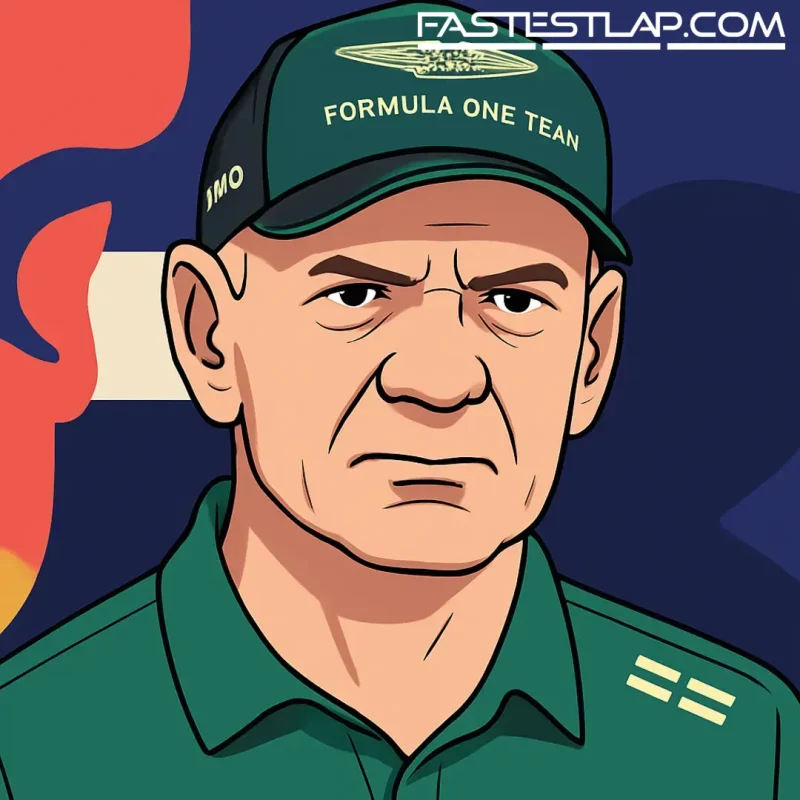
Adrian Newey in green still takes a second to process. The most decorated designer of the modern era now fronting Aston Martin’s F1 effort is a visual that does a lot of heavy lifting for the team’s 2026 narrative: big brains, big hires, big promises. But there’s also a hint of steel behind the smile. The group in Silverstone doesn’t want to overplay its hand.
That much was clear as Aston’s chief trackside officer Mike Krack laid out, in guarded terms, how the team views the first year of F1’s new ruleset. No grand predictions, no chest-beating—just a quietly confident assertion that Aston already has a pretty solid map of where the AMR’s strengths will show up.
“We’ve got a good handle on which circuits should suit us and which might not,” Krack said. The subtext: they’ve built an aerodynamic platform with a specific character, and they know how it will couple with the 2026 ecosystem—more electrical deployment, active aero doing the heavy lifting, and stricter limits on what you can spend and when you can spend it.
That 2026 ecosystem is the great reset. With F1 shifting away from the ground-effect dominance of this regulation cycle and toward moveable wings paired with beefed-up hybrid power, the field could stretch out before it compresses. The cars will demand different compromises. The sims and wind tunnels are telling teams broadly similar things: top-speed tracks will look different, braking phases will change, corner speeds will shuffle. The chassis–power unit handshake becomes a handshake and a dance.
Aston’s build-up has been years in the making. The investment run-up at Silverstone—new wind tunnel, new campus, new toys—wasn’t just vanity. It’s already enabled Newey, now steering the project from the team principal’s chair, and Enrico Cardile, the incoming chief technical officer, to shape a car around the toolkit rather than fight it. Add the factory Honda power unit arriving in 2026 and you’ve got a package that at least looks coherent on paper.
That’s why the paddock keeps reaching for the “dark horse” label. But the better-informed voices are a touch cooler. This is still a young project, even with an all-star cast. Integrating a new leadership structure, a new PU partnership and a new aero philosophy under one roof rarely delivers perfection straight out of the box. Think more progressive curve than instant classic.
Krack’s tone backs that up. He didn’t pretend the car will be a Swiss Army knife. He did argue that execution will matter more than ever. “On weekends where the car isn’t naturally in its window, you still need to scrape every point you can,” he said. “The lap-time gaps might be tiny, but the position swings won’t be. Middle of the midfield to front of the midfield can be a handful of tenths.”
That’s the volatility teams are bracing for. With active aero changing how you generate downforce and drag across a lap, and with energy deployment profiles rewriting the playbook for attack and defense, the margin for operational error shrinks. Get your tyre prep wrong by a degree, or misjudge your energy usage by a corner, and your Sunday slides away. Conversely, nail a setup when the car isn’t the star and you’re robbing points off your direct rivals. That’s how seasons are built.
It’s also why Aston’s internal 2026 targets, as understood in paddock circles, are more pragmatic than sensational. Early competitiveness should be there, but the proper measure might be how the second half of the season looks once the new structure beds in and the development cadence settles. The team knows which weekends will put wind in its sails, and which will feel like pushing a piano uphill. What it won’t do is publish that list.
“You won’t get me to name circuits,” Krack smiled. Fair enough. It’s pre-season soon, and the real answers arrive once the out-laps do.
The headline pieces are in place. Newey, Cardile, Honda. A wind tunnel that finally speaks the same language as the rest of the factory. And a car crafted for a ruleset designed to both compress and expose. The temptation is to buy the hype. The smarter play is to watch how Aston handles the scruffy weekends when top-five isn’t on raw pace. If they turn those into sevens and eights with ruthless consistency, the dark-horse tag won’t be needed for long.