Alpine’s Nielsen pours cold water on a 2009-style shock for F1’s 2026 reset: “Everyone knows the trick now”
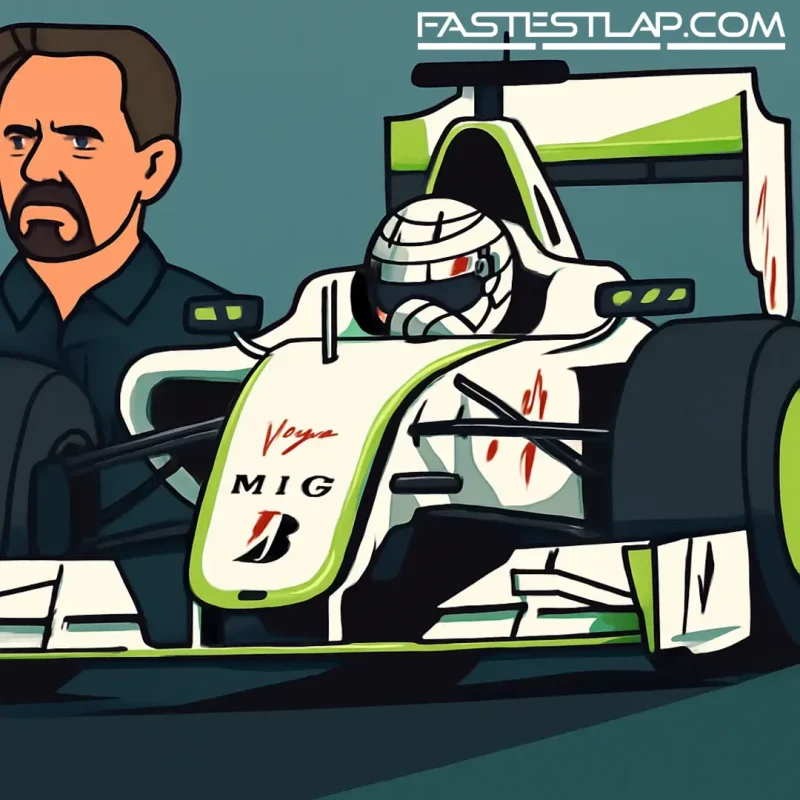
The last time Formula 1 rewrote the rulebook as radically as it will for 2026, Brawn GP turned a winter of uncertainty into a springtime stomp and walked away with both titles. Alpine managing director Steve Nielsen doesn’t see history repeating quite so neatly.
Speaking to media in Abu Dhabi, Nielsen acknowledged the romance of a Brawn-style ambush when the new chassis and power unit regulations land in 2026, but argued the sport has closed the loopholes that once allowed a year’s head start to snowball into a championship.
“When Brawn did that in 2009, it was unusual,” he said. “Honda essentially took the hit for a whole year and put a car on the track that was one year ahead of most. People were switching over at the end of the summer back then, so they genuinely had six months’ head start. We all know the trick now.”
Back then, the trick was simple and ruthless: sacrifice the present to own the future. Honda stopped developing its 2008 car early, poured everything into the new rules, then exited the sport. The rebranded Brawn GP emerged with the infamous double diffuser and a package so sorted that Jenson Button won six of the first seven races. Red Bull and McLaren reeled them in later, but the damage was done.
Fast-forward to 2026, and Nielsen believes the guardrails now in place blunt any attempt to re-run that playbook. Teams were prevented from working on 2026 projects before New Year’s Day 2025, specifically to stop a vast private head start. And while outfits have understandably switched focus early this season, they’ve largely done so together.
“Although we’ve swapped over very early, others have also done similar,” Nielsen said. “I don’t think anybody’s developed their car right up to today unless they’re fighting for the championship. Is a Brawn-style shock possible? I suppose it is, but the trick that gets you there is well known.”
The subtext is clear. In an era of cost caps, wind tunnel/CFD limits and tighter governance, outlier gains are harder to hide and harder to hold. The 2026 clean-sheet regs will still shuffle the deck — they always do — but the cards are more evenly dealt than they were 16 years ago.
That doesn’t mean the pecking order is locked. With both chassis and engines changing in tandem, integration will be everything. Get the packaging wrong and you’re chasing your tail until summer. Nail it, and you could bank a lot of early points before the field converges. The question isn’t whether someone will start strong — someone always does — it’s whether anyone can start untouchable.
Alpine, for its part, is trying to be part of that early conversation. The Enstone team will roll out its A526 three days before the first pre-season shakedown at the Circuit de Barcelona-Catalunya on January 26, offering the first real clues about its design intent under the new rules. The team’s trajectory through 2025 has put a premium on getting 2026 right, and Nielsen’s comments hint at a group that’s pushed chips onto the future without assuming everyone else stayed at the table.
There’s also a dose of reality in his tone. The Brawn fairytale worked because so few saw it coming — and fewer still had the freedom to react fast enough. In 2026, everybody’s watching the same ball. If there’s a surprise lurking, it’s more likely to be surgical than seismic.
That doesn’t kill the intrigue. It just changes it. The early laps of 2026 won’t be about spotting a unicorn; they’ll be about measuring who’s blended the new aero and power rules best, who’s found the smartest compromises, and which teams can develop out of their teething issues quickest. In other words: the same brutal, fascinating arms race — only rebooted.
Brawn 2.0? Don’t bet your house on it. But the first team that shows up in Barcelona with a car that looks planted, efficient and easy on its tyres is going to feel very 2009 for a few weekends. After that, as ever, the real work begins.