Häkkinen on Schumacher, karaoke and a Fiorano advantage that “really pissed me off”
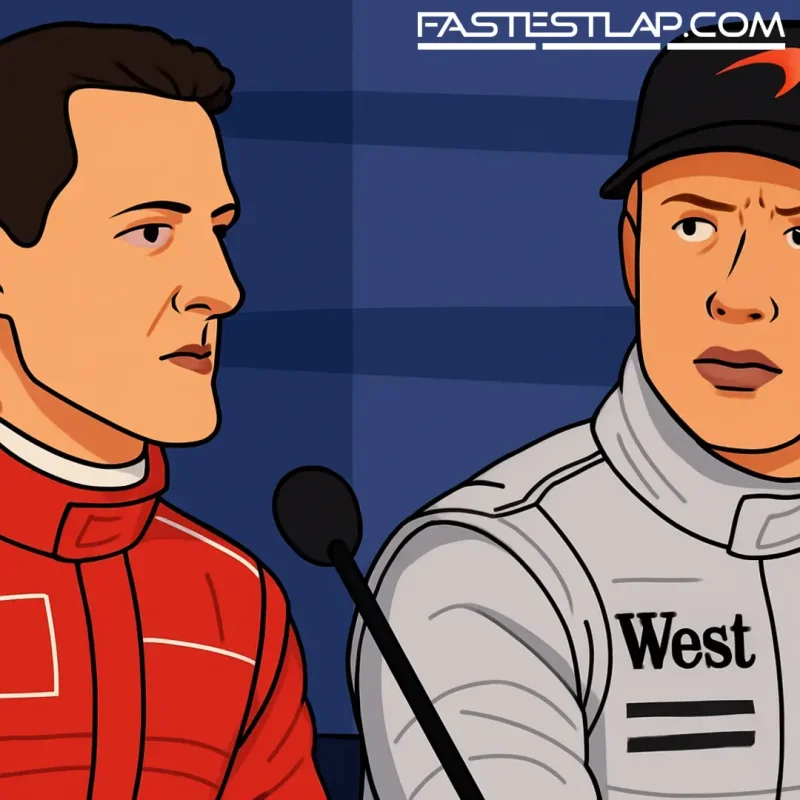
Mika Häkkinen still remembers the knock on the motorhome door at Suzuka in ’98. Title in the bag, beer already on ice, and every driver and mechanic drifting toward those wood-panelled karaoke huts inside the circuit’s hotel complex. Before any of that, Michael Schumacher came over to look him in the eye.
“It was a great fight in ’98,” Häkkinen recalled on the High Performance podcast. Schumacher congratulated him. No drama, no caveats. But there was a message under the handshake: enjoy it now—because I’ll be back.
Häkkinen knew it. He’d known Schumacher since karting. If there was a chance to win, Michael wouldn’t lift. If he lost, and lost fair, he’d be gracious—and then go straight back to work. That was the bit that lingered for Häkkinen as the karaoke started up. The game wasn’t over.
And in late-’90s Formula 1, “going straight back to work” meant one thing at Ferrari: Fiorano.
“That really pissed me off,” Häkkinen admitted. Ferrari had its own test track and the freedom to use it. Morning to evening, sunshine more often than not, stop only to swap a driver or a gearbox. If Schumacher or his teammate got tired, a test driver climbed in and the program rolled on—software, set-up, reliability, the lot.
McLaren didn’t have that. Häkkinen paints the picture with a racer’s irritation. Silverstone days that started at 10, stopped for lunch, and finished at five. Rain on a Tuesday—of course—just as you needed slick-running. It wasn’t about whether it was fair; it was just the reality of the era.
“I knew that Michael lost, and they knew they weren’t good enough,” Häkkinen said of 1998. “But they knew that way, what they were doing in their program, they will get there.”
He wasn’t wrong about the trajectory. Häkkinen doubled up in 1999—his second and final crown—holding off the tide for one more season. From 2000, Ferrari and Schumacher reached the summit and stayed there, stringing together five straight World Championships and redefining domination in the sport.
What Häkkinen’s story does, though, is remind you how visceral that arms race felt from the cockpit. The lap time was one thing. The grind was another. While McLaren waited for the circuit gates to open and the drizzle to pass, Ferrari were running endless laps a world away, problems ironed out by sheer mileage. In a pre-restriction age, mileage was lap time.
There’s a human beat to it, too. Häkkinen’s version of Suzuka night is endearingly normal: a couple of beers, a singalong, the relief of a season’s fight easing off the shoulders. Schumacher’s is exactly what you’d expect: a handshake, a nod, and a plan. Back to Maranello. Back to Fiorano. Back to work.
It didn’t make Häkkinen resentful so much as razor-focused. He understood the scale of the advantage and the inevitability of what was coming. It fuelled him for 1999. He knew he’d see Schumacher again and he did—relentless, prepared, utterly uncompromising, backed by a machine fine-tuned in Ferrari’s own backyard.
Häkkinen doesn’t dwell on whether it should have been different. He shrugs it off: that’s how it was. But the edge in his voice when he talks about Fiorano tells its own story about how championships are really won. Not just on Sundays, but in the miles that no one sees, between eight in the morning and eight at night, when a rival is still pounding around a private track and you’re watching rain speckle the visor at Silverstone, waiting for lunch to end.
Call it the unseen lap time—Schumacher and Ferrari had it. And in the end, it wrote the next chapter.