Midweek F1 brief: Alonso vs Herbert revisited, Verstappen shuts down switch talk, and a few old scores resurface
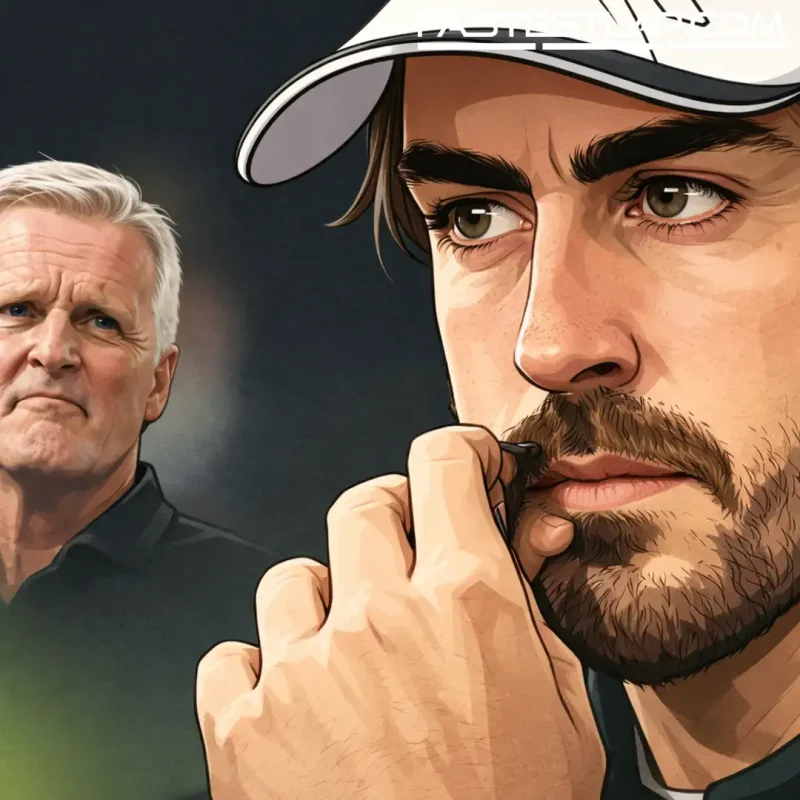
Some clips never die in this sport. Johnny Herbert’s live TV run-in with Fernando Alonso is one of them, and nearly a decade on, it’s still setting tongues wagging. The former Sky F1 pundit has been back on the topic, recalling that Bahrain 2016 moment when Alonso strolled into shot and confronted him after Herbert had suggested the Spaniard should call it a day. Alonso’s answer — the now-viral “No” — landed like a hammer, and the exchange quickly became folklore in the paddock.
Herbert says the saga didn’t end there. Fast-forward to 2024 and another awkward encounter followed months after Herbert, serving as an FIA steward, was part of the panel that handed Alonso a controversial penalty in Australia. Different year, different context, same tension. It’s a reminder that the paddock’s long memory doesn’t soften with time — especially not with competitors as sharp-elbowed as Alonso.
Max Verstappen, meanwhile, isn’t giving anyone much to feed on in the silly-season stakes. The four-time world champion has ruled out a move away from Red Bull “at this point in time,” cooling speculation ahead of the next rules reset. He’s contracted through 2028 and, despite all the familiar whispers about performance clauses and flirtations with Mercedes, he reiterated his intention to see the project through. The subtext is clear: stability still sells when you’ve built a winning machine, and the 2026 engine era is too big a bet to place with anyone else right now.
If Verstappen gently waved away the noise, Juan Pablo Montoya swatted it. The Colombian has taken issue with Sergio Perez’s recent criticisms of Red Bull, after the Mexican’s winless 2024 and subsequent exit. In Montoya’s view, it’s a simple equation: when you join a team built around a title-chasing driver in his pomp, you know the ecosystem you’re stepping into. Perez sat out 2025 and is slated to return with Cadillac in 2026, and while there’s sympathy around the paddock for the pressure cooker he lived in, Montoya’s stance reflects a pretty widespread racer’s logic: top teams are unforgiving; that’s the bargain.
Mika Häkkinen chimed in this week with a little nostalgia and a lot of honesty. The two-time world champion admitted he was “really pissed off” during his title fights with Michael Schumacher over what he saw as Ferrari’s decisive testing advantage at the time. The Scuderia’s access to Fiorano, its private test track, was a long-running thorn during that era. Häkkinen versus Schumacher was properly gladiatorial, but the Finn’s point underscores why the sport reined in testing so dramatically in the years that followed. When one team can pound round its own circuit at will, the arms race gets lopsided quickly.
There was a more sobering line, too: former Williams and Jaguar driver Antonio Pizzonia was arrested in Texas last weekend and has since been released. The Brazilian made 20 Formula 1 starts between 2003 and 2005. Details remain sparse beyond his own account that the incident stemmed from defending his son at a kart track — a messy story from a corner of the racing world that usually doesn’t make international headlines.
Back to that Alonso-Herbert flashpoint for a second, because it’s one of those episodes that explains why F1’s human theatre is as compelling as the lap times. Drivers don’t forget who questioned them, pundits don’t forget the ones who bit back, and when roles shift — commentator to steward, driver to legend — the dynamic only gets more layered. It’s also why Alonso, still bristling with competitive edge years later, remains such a box-office character. You can argue about where his limits are on track; you can’t argue about his presence off it.
And as for Verstappen, the message is the same one he’s been delivering with cold consistency since 2021: less noise, more wins. Red Bull want continuity into the new rules cycle, he wants the car and the accountability he already has, and the rest of the field will have to pry the champion away by force rather than rumour. That’s the state of play as the sport edges toward another reset — the kind that tempts big-name musical chairs but often rewards the teams that already know exactly who they are.
In short: old moments, new reminders. The sport keeps moving, but the characters don’t change much. That’s why we watch.