Peter Bayer doesn’t sound overly nostalgic for the DRS era, but he’s not pretending the 2026 replacement will be a simple swap, either. If anything, the Racing Bulls boss is bracing everyone for a season where the driver’s workload spikes again — not because the cars will suddenly be undriveable, but because the decision-making will be constant and consequential.
With Formula 1’s 2026 rules bringing a near 50/50 split between internal combustion power and electrical energy, the hybrid side stops being something you lean on strategically and becomes something you live inside, lap after lap. Layer on top the new movable aerodynamics — straight-line mode, cornering mode — plus a push-to-pass style boost that’s available in combat, and you’ve got a cockpit that’s less “push when you’re in range” and more “choose your own compromise”.
Bayer’s point is blunt: the complexity isn’t coming, it’s already here. “You have straight-line mode and cornering mode, then you have this push-to-pass button that allows you to draw more energy when you’re within a second,” he said on the Backstage Boxengasse podcast. “And of course, you have to manage all that.”
The interesting part is what he says next — and it’s where the 2026 regulations quietly tighten the screws. Drivers, Bayer noted, must still drive the car independently. In other words: don’t expect teams to automate the hard bits or to pre-program a perfect pattern of deployment and aero switching. What will separate drivers early on might not be bravery on the brakes, but how quickly they build a mental model of when to spend and when to bank, and how little time they waste second-guessing it.
That’s a proper change from what became routine under DRS. Yes, there was always nuance — when to deploy battery, when to hold it to defend, where to harvest without bleeding lap time — but the overtaking “trigger” was often binary. Be within a second, open the flap, commit. The 2026 concept, at least as Bayer frames it, is more granular: do you hit boost now, or do you lift earlier, recharge cleanly, and try again at a different corner sequence or the next long straight? Multiply that by every battle, every stint, and every time you’re managing a car that can be efficient in a straight line without paying the same aero penalty in corners — if you use it properly.
Racing Bulls is heading into this reset with a pairing that should make the learning curve a storyline all on its own. Liam Lawson remains in the seat after doing enough across the back end of 2025 to see off Yuki Tsunoda, who has dropped back into a reserve role. Alongside him is Arvid Lindblad, the only newcomer on the 2026 grid, arriving after Isack Hadjar’s promotion to the senior Red Bull team.
Bayer insists his drivers are taking it on the chin in the best possible way. They’re “primarily happy that they get to drive in Formula 1,” he joked, and that happiness has reduced the “grumbling”. But even he doesn’t try to sell 2026 as a painless transition. The systems are complex, and you don’t get to outsource that complexity to code.
For Lawson, there’s also a neat sub-plot: he’s already looking outside F1 for an edge. Speaking to talkSPORT, he said he plans to lean more on fellow New Zealander Nick Cassidy — a proven race winner in Formula E — specifically for energy management advice. “He’s probably the best at it, honestly,” Lawson said, pointing to how closely he’s watched Cassidy’s races and how valuable that skillset could be now that F1’s electrical side has been pushed to the centre of performance.
It’s a revealing admission, and not one you’d have heard quite as openly a couple of years ago. In 2026, the line between “driving well” and “operating the car well” is going to blur, and drivers who treat the hybrid tools as part of racecraft — not an extra job — may find time where others lose it.
Lindblad, meanwhile, walks into that environment with the additional pressure of being the grid’s lone rookie. He steps up after a single season in Formula 2, where three wins carried him to sixth in the standings. He arrived with the points needed for an FIA Super Licence via a Formula Regional Oceania title earlier in the year, and required a dispensation because he didn’t meet the age criteria until August. Red Bull’s talent pipeline doesn’t tend to do gentle introductions, and Lindblad’s is about as sharp-edged as they come.
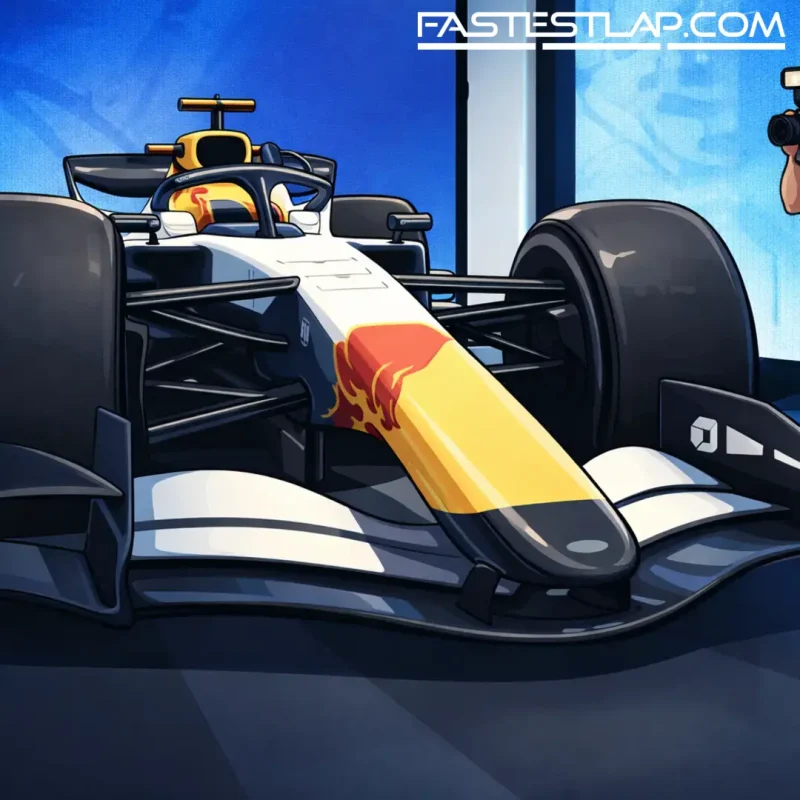
All of this is happening as Racing Bulls rolls out the VCARB03, revealed at an event with Ford and still dressed in the predominantly white look the team has carried since rebranding from AlphaTauri. The car itself will start answering the real questions soon enough: the first proper taste comes in Barcelona next week during a five-day closed-doors test beginning January 26, with teams permitted to run on any three of the five days. After that, pre-season testing proper follows in Bahrain next month, where teams get six days of running.
There’s a competitive baseline here, too. Racing Bulls comes into 2026 off a season that matched its best-ever Constructors’ Championship result — sixth — and it did it with a year that was hardly smooth. Lawson scored 38 of the team’s 92 points after moving to Faenza following two early-season races with Red Bull. His start after replacing Sergio Perez was, by his own experience, brutal: he struggled in the RB21, then needed time again to settle into Racing Bulls. A breakthrough around Monaco, rolled out from Austria, changed the shape of his season and arguably his career.
Now the slate is wiped clean again — for everyone, not just him. Bayer’s warning isn’t really a warning at all; it’s a reminder that 2026 won’t simply reward the fastest package in clean air. It’s going to reward drivers who can keep their heads up while their thumbs, toggles and timing decisions are doing more work than they used to. In a sport that loves to talk about “driver influence” in the abstract, F1’s new hybrid-and-aero cocktail might finally put it back in the driver’s hands — and make them earn it.