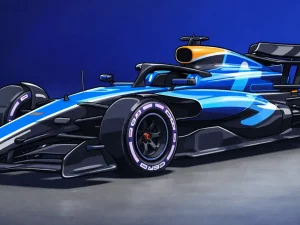
Williams have spent the first proper week of F1 2026 doing something no team ever wants to be doing in public: explaining why their new car didn’t make it to the track.
The FW48 was the only machine missing from the five-day Barcelona shakedown, leaving James Vowles and his staff with the awkward optics of starting a regulation reset on the sidelines while rivals banked early mileage. But Vowles insists the uncomfortable moment is already paying back — not in lap count, but in a ruthless audit of how Grove now builds, moves and signs off a modern F1 car.
The headline reason for missing Barcelona was simple: parts production slipped and the car couldn’t be completed in time. The more revealing detail is what Williams chose to do next. Vowles says they could have forced it — “we could have made it” — but only by turning the whole early-season plan inside out, compromising spares, components and the update pipeline stretching through Bahrain, Melbourne and beyond. In other words: show up for a cold, damp shakedown, risk arriving in the real tests underprepared, and gain “zero points” in return.
So Williams stayed in Grove, launched the FW48 virtually, and turned the Barcelona window into an internal programme built around its virtual tools. Alex Albon and Carlos Sainz were drafted into a heavy simulator workload, with the team leaning on virtual track testing and — more significantly, in Vowles’ telling — a driver-in-loop simulator running a correlated Mercedes HPP package.
That’s not just box-ticking. 2026 is going to punish anyone who treats energy deployment and recovery as something you tidy up in March. Vowles was candid that the drivers need to “play around with energy management” until it’s second nature, and he sounded notably relaxed about that side of the new-world workload — precisely because Williams have been grinding through it every day in the simulator.
The bigger anxiety, he admits, is the old-fashioned bit: the moment the FW48 finally rolls onto a real circuit and the team discovers whether the aerodynamic platform and vehicle dynamics behave like the models promised. Vowles put “characterisation” at the very top of his Bahrain to-do list. Simulation, rig work, correlation packages — all useful, but none of it replaces the first hard truth of a new car on real tyres over real kerbs.
If there’s a sting in missing Barcelona, it’s that this correlation step is now time-compressed. Bahrain will have six days of collective testing across two tests, but Williams are effectively starting three days behind the field. Vowles’ view is that if the car does what it should, the catch-up is manageable; if it doesn’t, the penalty isn’t just a slower week — it’s the risk of burning precious development bandwidth chasing a wrong turn while everyone else moves on.
There’s an intriguing political undercurrent here too, because Williams’ situation is not that of a start-up trying to integrate an unfamiliar power unit. Vowles talked up Mercedes’ track record in regulation changes and sounded confident about integration, stressing that Williams’ long embed with Mercedes — including running the Mercedes gearbox — gives them a different baseline to some rivals.
Even so, he didn’t pretend Williams can simply draft off Brackley’s mileage. Mercedes’ own cars have already piled on significant running, and customer teams like Alpine and McLaren contributed meaningful data as well. Vowles’ stance is that Williams don’t want to “lean on the hard work” of Mercedes, but the reality is that being plugged into a supplier that’s already learned a lot is an obvious cushion when your own car hasn’t yet turned a wheel in anger. He also flagged the practical integration chores that come with a fresh era: stressing cooling, optimising it, and the work required to get on top of the new TAG-700 ECU.
What makes this episode more interesting is the way Vowles frames it as a useful failure rather than a simple miss. He openly described Williams as finding “where all the weaknesses are” — system, process, structure, communication, and even the mundane logistics of moving parts around the business. The implication is that Grove’s rebuild isn’t just about wind tunnels and simulators; it’s about becoming a team that can execute on time, repeatedly, under pressure.
And he’s not sugar-coating how that lesson arrived. Williams pushed too hard based on an internal assessment that said the programme was “very, very tough, but achievable.” It wasn’t. The upside, Vowles argues, is that it hurt enough to force genuine change rather than another round of “we’ll fix it later”. His message was blunt: “This will never happen again,” because they’re going to dig into every issue until it’s properly resolved.
The timing matters because Williams aren’t talking like a team content with midfield stability anymore. They finished fifth in the Constructors’ Championship in 2025, and Vowles acknowledged the next step — from fifth to fourth — is “exponentially more difficult” than the progress already made. Missing Barcelona doesn’t kill that ambition, but it does make the opening phase of 2026 less forgiving. If Williams want to turn 2025 into a “new established baseline”, they can’t afford an early-season development stumble.
Off-track, though, there’s a parallel story that helps explain why Vowles is willing to take reputational heat for a strategic call. Williams’ commercial momentum is clearly accelerating. Over the past week alone the team confirmed or extended deals with Kraken, Sparco, Wilkinson Sword, Anthropic, BNY and Barclays, alongside title partner Atlassian. Vowles tied that interest directly to the credibility of the project — sponsors buying into a “stage by stage” journey, not a single test day in Barcelona.
That may be the most telling part of his defence. Williams don’t want to be judged on whether they made a shakedown; they want to be judged on whether they’re now building an organisation that can fight forward under the 2026 rules. Bahrain will deliver the first on-track verdict on the FW48, but Grove’s bigger test is whether this bruising miss becomes a footnote — or an omen.