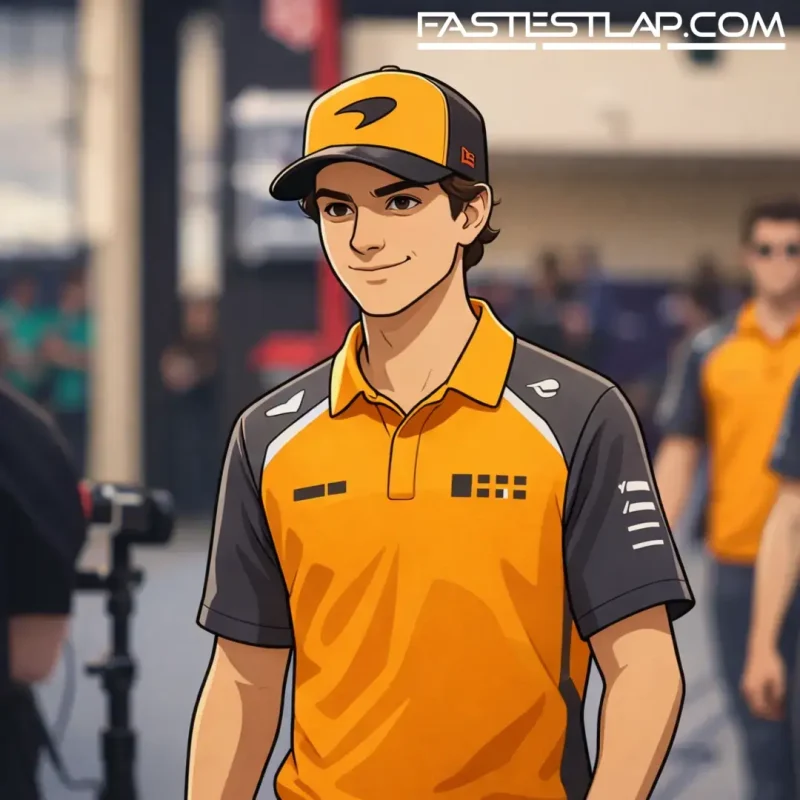
Oscar Piastri isn’t pretending McLaren’s much-discussed “papaya rules” were a problem-free masterstroke in 2025. But as the team heads into the reset of 2026, he’s making it clear he’d rather see the framework sharpened than scrapped — fewer grey areas, fewer self-inflicted messes, and ideally less noise from the outside.
McLaren’s internal racing guidelines, designed to keep Lando Norris and Piastri from taking points off each other in the most literal way possible, have sat under a harsh spotlight for two seasons. Last year’s title fight between the two never really boiled over into open hostility — a collision in Canada and a Singapore first-lap clash were as spicy as it got — and that, in the paddock’s eyes, was both the point and the problem.
The point: keep the car intact, keep the campaign clean, and don’t let two fast drivers sink a season with one misjudged lunge. The problem: the team repeatedly found itself spending energy policing scenarios it hadn’t quite anticipated, with fans and rival teams quick to interpret every instruction as evidence of favouritism.
Singapore, in particular, lingered. Norris went for an assertive move on lap one, there was contact, and Piastri was unimpressed enough to question it on the radio. McLaren didn’t ask Norris to hand anything back. Then there was Monza, where a slow Norris pitstop dropped him behind Piastri; despite Piastri simply inheriting the position through the normal churn of a race, he was told to swap back — and did.
If you’re looking for the moments that fuelled the “McLaren picks a side” narrative, they’re right there: similar-looking incidents, different outcomes. Even if the internal logic made sense at the time, the external optics were always going to be brutal.
Team principal Andrea Stella, speaking at a pre-season event at the McLaren Technology Centre, said McLaren has reviewed its “racing principles” over the winter and found room to streamline how it operates when its two drivers end up on the same piece of track.
The fundamentals, he insisted, aren’t changing: fairness, integrity, equal opportunity, sportsmanship. McLaren still believes it largely got the calls right. What it wants to remove is the administrative drag — the volume of work and debate created by trying to choreograph intra-team racing in real time across a season.
That’s where Piastri is firmly on board. He expects the rules to “look different” in 2026, and he doesn’t frame that as a philosophical U-turn so much as a practical clean-up job.
“For me, streamlining is a wise decision to make,” he said, admitting McLaren “probably caused some headaches for ourselves that we didn’t need” last year.
It’s a telling line. Because the clearest takeaway from 2025 wasn’t that the papaya rules stopped Norris and Piastri from racing — it’s that they sometimes made McLaren’s life harder than the on-track fight did. The mechanics of being “fair” can become its own trap if you’re constantly defining fairness mid-season.
Piastri also pushed back, again, on the idea he was ever knowingly treated as the secondary driver. With Norris eventually coming out on top in their title fight, suspicion from the grandstands was inevitable, but Piastri said he never doubted the team’s intentions — even if he concedes not every situation was handled perfectly.
He’s realistic enough to admit elite sport doesn’t offer clean endings where everyone agrees the refereeing was impeccable. In Formula 1, that’s doubly true when the “referees” are your own pitwall, juggling a team result and two individual ambitions.
What’s easy to forget in the noise around the rules is that Piastri’s title bid ultimately didn’t fall apart because of one radio message or one Monza swap. He had the upper hand for a large chunk of the year — he’d been McLaren’s standout performer through the first half of 2025 — and then his momentum faded after the Dutch Grand Prix. A 34-point lead drained away, and both Norris and Max Verstappen moved ahead in the final third of the season.
Piastri doesn’t shy away from that. He describes the lessons from 2025 as both confidence-boosting and, at times, unpleasant. He pointed to challenges — technical and driving-related — that cropped up late in the season in places like Mexico and Austin, issues that simply hadn’t tested him in the same way earlier in the year.
There’s a maturity to how he’s framing it: not trauma, not melodrama, just the acknowledgement that championship campaigns expose every weak seam, especially when the pressure stretches across an “eventful” run of races. The emphasis, from both driver and team, is on not standing still — refining racecraft procedures, yes, but also performance processes and tyre management.
The psychological reset mattered too. Piastri said the off-season gave him space to stop fixating on how 2025 ended and appreciate the broader shape of his progress since arriving in F1 in 2023. Time back in Australia, away from the paddock’s constant hum, helped him recalibrate.
He also hinted at a new kind of attention back home — more recognition, more feedback on how he conducts himself. Piastri is proud of that reputation, but he’s blunt about the priority: he’s not here to be liked, he’s here to win a world championship.
That edge is likely to be useful in 2026. The regulations are different, the cars are different, and — crucially for McLaren — the usual assumptions about pecking order and operational habits are going to be tested again. Piastri says the goal now is applying what he learned across his first three seasons to a new generation of machinery, identifying what matters most as early as possible. He referenced initial running in Barcelona and a developing picture in Bahrain, which suggests McLaren is treating this as a fast-moving adaptation race rather than a slow burn.
As for the papaya rules, don’t expect a free-for-all. McLaren isn’t interested in becoming the sport’s morality tale about letting two quick drivers throw away a championship with one optimistic apex. But the message from both Stella and Piastri is that the team wants less friction in the system — fewer situations where the rulebook becomes the story.
In a year of wholesale change, that might be the most important upgrade McLaren can make: not to the car, but to the way it manages the moments when two title-level drivers inevitably meet on track.