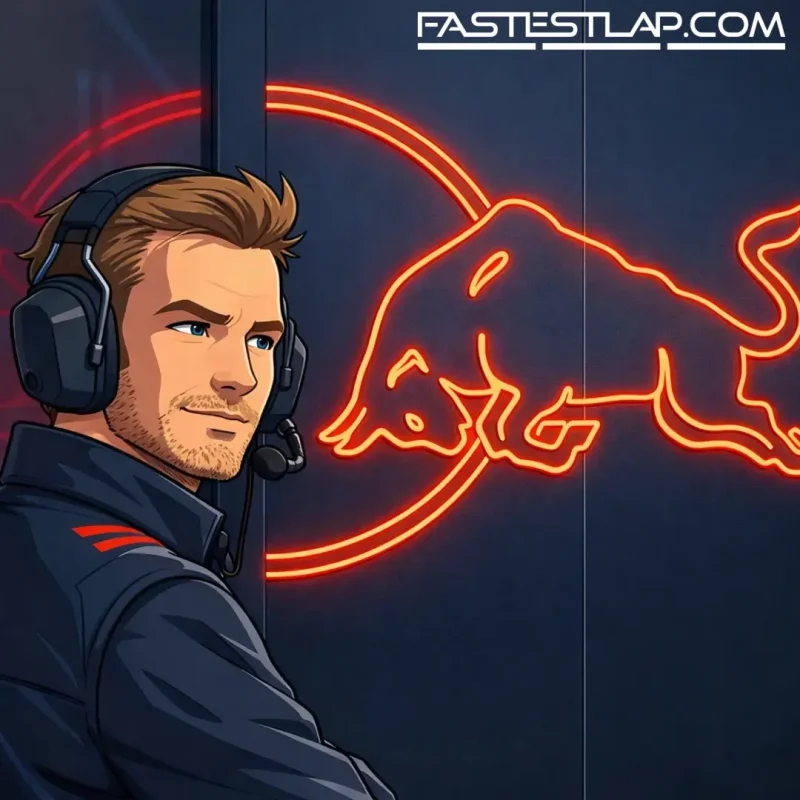
Red Bull’s winter has acquired a familiar tone: quiet exits, sealed lips, and a management group determined to make it crystal clear that the post-Horner era will be run on its own terms.
Four senior figures from the team’s administrative side have left the Milton Keynes operation ahead of the 2026 season, with the changes centred on marketing, communications and human resources. The timing matters. These departures are understood to have followed a company address in which staff were again given assurances about stability in the wake of last year’s upheaval — upheaval that culminated in Christian Horner being removed in July 2025 and the earlier dismissal of two senior administrative directors.
According to sources familiar with the situation, the individuals leaving were not given specific reasons for the decision to part ways. That, in itself, is becoming part of the story: Red Bull isn’t just changing personnel, it’s changing how it draws the lines of power and loyalty.
The four departing staff are Joanna Fleet, the Human Resources director for Red Bull Racing and Red Bull Technology, who had been with the organisation since 2013; Julia George, the director of partnerships since 2022; Simon Smith-Wright, group marketing director since December 2024; and Alice Hedworth, a senior communications manager who joined in mid-2021.
Hedworth will be the name most familiar to the paddock-watching public. She built a following during her time as Sergio Perez’s press officer and has been closely involved with Laurent Mekies over the past six months. In an environment where the most visible roles are often reduced to “media duties” from the outside, insiders know those jobs sit right on the fault line between sporting performance, internal politics and message discipline. When a team reshapes its communications leadership, it’s rarely cosmetic.
These moves also appear connected — culturally, if not explicitly — to the earlier firings of Oliver Hughes (group chief marketing and commercial officer) and Paul Smith (group communications director) after the 2025 British Grand Prix. Both were seen as close to Horner, and Red Bull’s recent decisions suggest a consistent theme: remove the remnants of the previous structure and build a new one without old alliances embedded in key operational departments.
The common thread is that all four took up their posts during Horner’s tenure. That doesn’t automatically make any of them “Horner people” in the simplistic way fans tend to frame it, but it does place them inside a network of decision-making that a new regime would naturally want to audit — and, evidently, to rewire.
Mekies’ role in Red Bull’s reshaped leadership has been one of the biggest subplots as the sport braces for the 2026 rules reset. The team’s competitive credibility doesn’t hinge on the marketing floor, but the efficiency of a front-running organisation absolutely relies on a stable, trusted machine around the race team. Red Bull’s success has always been built on sharp departments that talk to each other quickly, solve problems without drama, and keep distractions outside the fence. Right now, the optics are the opposite: a series of exits that extend beyond the pit wall.
Then there’s Helmut Marko, who stepped down in December 2025. Officially, it was his decision. Unofficially, sources indicate he may have been on the verge of being pushed out anyway. If that’s accurate, it frames the current departures less as isolated HR churn and more as the continuation of an internal reset that started at the very top and is now moving through the layers beneath.
A Red Bull spokesperson declined to comment beyond confirming the four departures.
For the wider paddock, it’s another reminder that Red Bull is still in the middle of defining what it wants to be without the leadership personalities that shaped it for two decades. That process isn’t always neat, and it rarely happens without collateral change. The question for 2026 isn’t whether Red Bull can replace good people — it can — but whether it can do it while keeping the organisation’s famous clarity of purpose intact.
Because in modern F1, especially heading into a new regulatory era, the smallest instability in the background can become tomorrow’s distraction in the garage. Red Bull’s rivals will be watching that as closely as any lap time.