The paddock hasn’t even properly settled into 2026-spec life yet and the sport’s new reality is already showing itself: everything is in motion, and not always in the clean, linear way teams like to present.
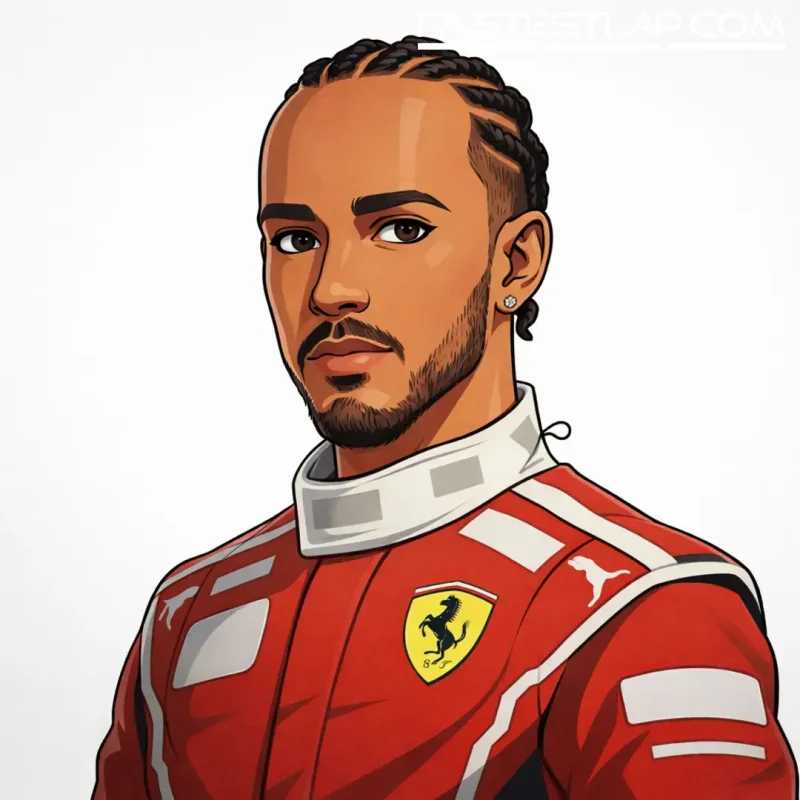
Start with Lewis Hamilton. Ferrari’s newest headline act has split with manager Marc Hynes ahead of the 2026 season, a tidy bit of personal housekeeping that suddenly looks a lot more political when you consider where Hynes is headed next. He’s understood to be moving towards a role with Cadillac as it prepares for its first season on the grid.
In isolation, driver-manager changes are rarely worth more than a paragraph — F1 careers are full of reshuffles, particularly when a driver changes teams and the commercial landscape shifts with them. But this one lands with a thud because it intersects directly with Cadillac’s arrival and with the increasingly blurred lines between “management”, “advisory”, and “team-facing” roles in modern F1.
Hynes had rejoined Hamilton’s inner circle ahead of 2025. He also manages Zhou Guanyu, now a Cadillac reserve. Those connections aren’t scandalous; they’re just the sort of overlapping network the sport runs on. Still, once a key figure in Hamilton’s camp is Cadillac-bound, the cleanest option for everyone is separation. Ferrari won’t want even the perception of information drifting towards a brand-new rival, and Cadillac will want its senior people fully aligned, not viewed through the prism of a Ferrari star’s orbit.
It’s also a reminder that Cadillac isn’t treating this like a soft launch. The newest team on the block is already pulling in familiar faces and tightening its structure in public view. That matters, because in 2026 — with new cars, new power units, and a grid that’s going to have to relearn its own pecking order — credibility is a currency as valuable as lap time.
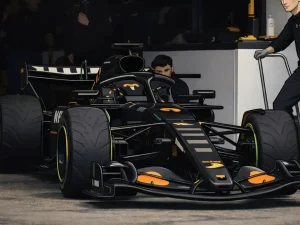
While Hamilton’s off-track reshuffle is neat and decisive, Williams’ approach has been… more theatrical. The team has gone to unusual lengths to keep the FW48’s suspension details under wraps, to the extent that elements of the suspension arms were simply absent from the car as presented at its launch. That’s not common practice, even in an era where teams are allergic to giving away anything for free.
It’s now been confirmed Williams has adopted a split approach between pushrod and pullrod suspension on the new car — a choice that immediately invites questions about packaging priorities and aerodynamic intent under the 2026 ruleset. The fact they didn’t want the full geometry photographed tells you they believe there’s real value in the concept, or at least that it’s distinctive enough to attract attention from rivals’ cameras and CAD departments.
There’s a fine line here. Secrecy can be a flex — “we’ve found something” — but it can also be a signal of vulnerability, a team acutely aware it needs early performance and can’t afford to gift anyone a shortcut. Either way, Williams is acting like a team that expects interest in its work, which isn’t the worst place to be if you’re trying to claw your way back towards the sharp end.
Up front, the reigning world champion is doing what champions always do: publicly focusing on what he isn’t yet. Lando Norris has been frank that, even after winning his maiden title last season, he’s still looking at Max Verstappen and seeing qualities he wants to add to his own game.
That’s not false modesty. Norris won the 2025 championship by two points in Abu Dhabi — the kind of margin that leaves a driver simultaneously validated and irritated. When you win that tightly, you know you can do it again. You also know you were one poorly timed yellow flag, one slightly off weekend, one small lapse in judgement from losing it.
And Verstappen remains the measuring stick in the areas that separate the great from the merely quick: the relentlessness in messy races, the insistence on turning compromised days into damage limitation, the clarity in wheel-to-wheel moments when the car isn’t giving you everything. Norris saying it out loud isn’t a sign of insecurity; it’s a sign he understands how quickly a champion can become yesterday’s story in F1.
All of which brings us to the big unknown hovering over Aston Martin — and, by extension, over Adrian Newey’s first proper crack at an Aston-built 2026 car. The AMR26 raised eyebrows when it appeared at last week’s shakedown in Barcelona, but even the cleverest chassis concept is only as potent as the power unit it’s wrapped around. Honda’s 2026 engine programme is the question nobody at Aston can convincingly answer yet.
Koji Watanabe, the president of Honda Racing Corporation, admitted last month that “not everything is going well” with development. That’s a rare public window into a normally sealed process, and paddocks don’t treat those admissions as throwaway lines. In an all-new engine formula year, “not everything” can cover a frightening range: weight targets, thermal efficiency, deployment characteristics, reliability — the unglamorous details that decide whether a car is a weapon or an exercise in frustration.
Newey, never one to sugar-coat inconvenient realities, has also revealed Aston Martin effectively started four months behind its competitors on AMR26 development. The team even missed a chunk of its allotted running at the Barcelona pre-season test, taking to the track for only two of the permitted three days.
That’s the sort of double hit — time lost on the car, uncertainty on the power unit — that makes a season feel long before it’s begun. Newey can out-think most of the pit lane, but he can’t conjure dyno hours that never happened, and Alonso and Stroll can’t drive around a power deficit if the Honda unit doesn’t land where it needs to.
This is the uncomfortable truth of the 2026 reset: the sport isn’t just changing; it’s rebalancing. Cadillac is arriving with intent and hiring power. Ferrari is tightening its perimeter around Hamilton. Williams is hiding its homework like it actually expects rivals to copy it. The reigning champion is openly studying the guy he narrowly beat. And Aston Martin has the most famous designer in the business paired with an engine programme admitting it’s not yet where it must be.
In February, none of this wins you points. But it does tell you who’s calm, who’s scrambling, and who’s trying to manufacture momentum before the first proper lap of the new era is even on the board.