Oscar Piastri’s first proper taste of Formula 1’s 2026 machinery in Barcelona did what weeks of paddock chatter couldn’t: it put some of the wilder “this won’t even feel like F1” theories back in their box.
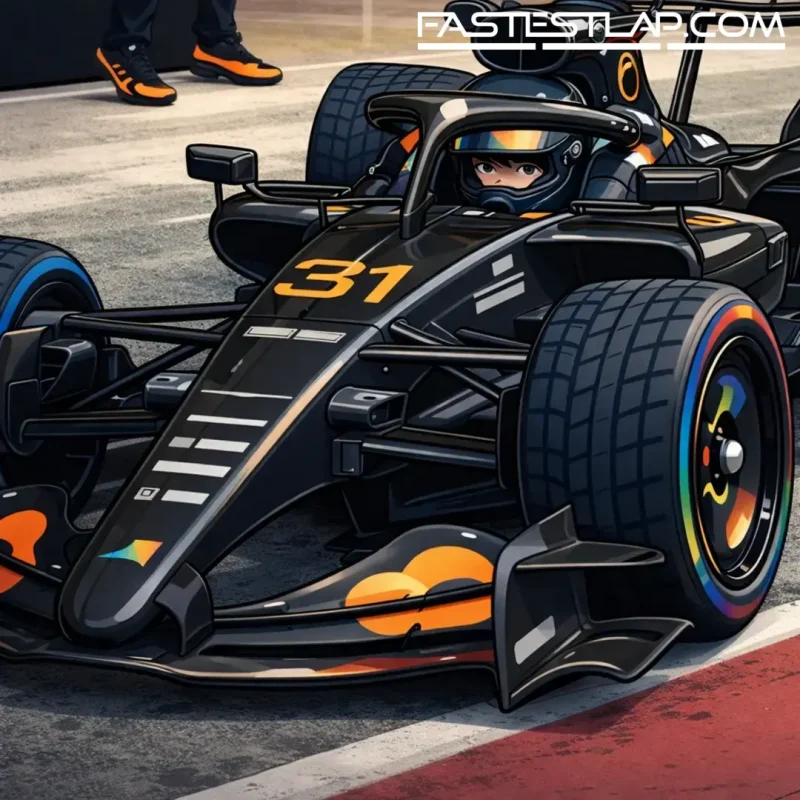
Yes, the new-generation cars look different. Smaller and lighter was always the sales pitch, and from the cockpit Piastri says that comes through immediately — a narrower front wing in your eyeline, a car that appears more “nimble” in the way it places itself on track. But the broader point he kept circling back to after running McLaren’s MCL40 was more reassuring than revelatory: it still behaves like a Formula 1 car ought to.
That matters because the run-up to this rules reset has been unusually noisy. Power unit changes, active aerodynamics, and the new 50/50 split between electric power and biofuel have made the sport’s next step feel like a leap into the unknown. Drivers haven’t exactly been lining up to sell it, either — Max Verstappen labelled the 2026 engine direction “very bad” back in 2023, while Lance Stroll recently called the new regulations “a bit sad” from a driving perspective. Even within McLaren, reigning world champion Lando Norris has flagged energy management as the looming headache for everyone involved.
Piastri isn’t pretending those concerns were invented. The differences are real, and some of the anticipated pain points are already there. Where his take diverges is in the severity: the challenges exist, but they aren’t as alien as the pre-season doom-mongering suggested.
The first adjustment is almost mundane. The sound is a little different — enough to register straight away, not enough to make you feel like you’ve been dropped into a different category. After that, it’s the way the power is delivered and, crucially, the context around it.
Out of slower corners, Piastri describes having more power than last year, paired with less aerodynamic help and narrower tyres — less rubber actually working on the track surface. That combination is going to shape how drivers attack traction zones and how comfortable they are leaning on the rear. It’s the kind of change that doesn’t just alter lap time; it alters trust. You can already hear the subtext in Piastri’s phrasing: there’s speed there, but you’ll have to be smarter about how you access it.
And then comes the mental rewiring. Lift-and-coast isn’t new in F1, but the reason for doing it is shifting. Piastri talked about “clipping” and managing energy in a way that forces drivers to recalibrate instinct — not learning a completely new skill, as he put it, but learning a new logic behind familiar techniques. Anyone who’s spent time listening to drivers explain modern F1 will recognise that as the point where frustration can creep in: when what you’ve trained yourself to do for performance is suddenly constrained by what you need to do for deployment.
Still, Piastri’s bottom line was telling. Even with the new habits and the new compromises, “it still feels quick.” That’s a simple sentence, but it’s probably the one F1 wanted to hear after months of people wondering whether 2026 would feel like an engineering exercise more than a racing category.
Where his comments got more interesting was on the aerodynamic shift in character. The ground-effect era demanded a fairly specific approach — the cars generated huge performance when run low, and that effect ramped up dramatically at speed. Piastri’s description of it as “almost exponential” captures why those cars could feel so locked-in in certain phases and so awkward in others, particularly on corner entry when the platform wasn’t doing exactly what you wanted.
Now, with a move back toward more “over body” aero, he’s feeling a fundamentally different response. That doesn’t mean easier; it means different, and potentially with more leeway in how you manage the car’s behaviour into corners. It’s early days — he’s only had three days of running — but his sense is that the defining traits of the 2026 cars will diverge quickly from what the current generation conditioned drivers to expect.
Then there’s the other big curiosity: the racing toolset. DRS is gone, replaced by an ‘Overtake Mode’ that provides an electrical boost when a driver is within one second of the car ahead. In theory, it’s a cleaner idea — less gimmickry in the aero, more emphasis on energy usage and timing. In practice, it’s going to live or die on how the speed deltas look at the end of straights and how predictable those deltas are for the driver being attacked.
Piastri didn’t pretend Barcelona testing offered a definitive answer. He did get close to a couple of cars and completed one overtake, but he was candid that it may have been helped along by courtesy from the other driver. His hunch is that the speed differences could be a touch bigger than what DRS typically produced, but he’s not expecting “dangerous scenarios” where cars are arriving at wildly different speeds.
What he is expecting is a layer of strategic messiness — in a good way. Overtake Mode will change how drivers harvest energy, when they deploy it, and how they defend, and Piastri expects “curveballs” as everyone works out the optimal patterns. That’s the part worth watching: whether the new system creates more authentic battles or just shifts the old DRS choreography into a new set of buttons and battery targets.
For now, the verdict is provisional, as it has to be. The first real answers won’t come until Melbourne, when the cars are in anger and nobody’s doing anyone any favours. But after Barcelona, one thing seems clear: the 2026 car may ask different questions, yet it’s not trying to be something other than Formula 1.