The last quiet week before Bahrain testing is rarely actually quiet — it just shifts the noise from lap times to interpretation. Everyone’s trying to read intent from bodywork shadows, and this year’s early paddock theatre has a very 2026 flavour: suspension geometry that makes rival bosses wince, aero concepts that look like they’ve been drawn with a different set of rules in mind, and a couple of drivers making it clear they’re not interested in the narratives other people want to write for them.
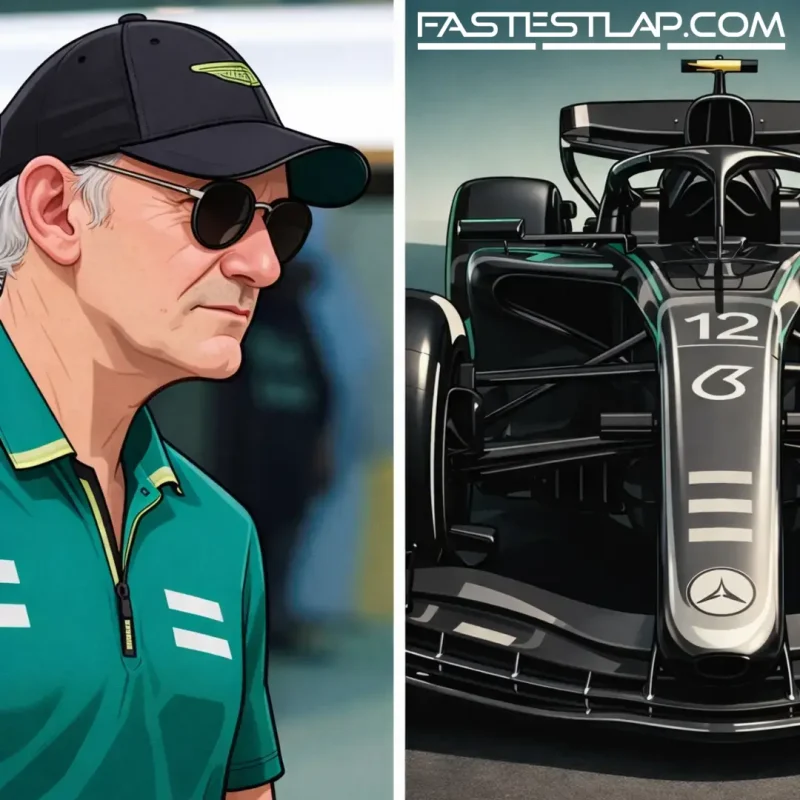
Aston Martin’s AMR26 has obliged the gossip machine in the most reliable way possible: by putting something on the car that forces other smart people to stop, squint, and ask whether it’s genius or grief. The Barcelona running gave the first proper look at what the team’s first Newey-era challenger is trying to be, and it didn’t take long before the suspension layout became the talking point.
James Vowles’ reaction was telling not because it was loud, but because it was the kind of candid, slightly pained admiration you only hear when a team principal knows exactly how many problems a “clever” solution can cause back at the factory. Calling the wishbone arrangement “very extreme” — and adding that he “wouldn’t want to be the designer for that one” — lands somewhere between compliment and warning. It’s an acknowledgement that Aston has gone after a performance window that might be huge, but might also be brutally narrow. In a regulation reset season, that’s the fine line between stealing a march and spending three months trying to make the tyres behave.
Across the pitlane rumour mill, Mercedes is being talked about with a different kind of confidence — the sort that always grows in the absence of hard data. Juan Pablo Montoya has suggested the W17 has three to four seconds still in reserve, essentially implying the car’s current public pace is a feint.
Take the number with the appropriate pinch of paddock salt — “seconds in hand” is one of those evergreen winter claims that tends to evaporate once the fuel loads and engine modes stop being theoretical — but the underlying point matters: Mercedes is widely being treated as the reference heading into this new era. When a team carries that tag, everything it does becomes part performance and part messaging. If the W17 looks composed early, rivals assume there’s more to come. If it looks edgy, rivals tell themselves Mercedes will “switch it on” later anyway. Either way, the baseline assumption is strength, and that’s a psychological advantage as much as a technical one.
The same dynamic is playing out around one of the more visually distinctive concepts we’ve seen so far: Mercedes’ enlarged “mousehole”, which Gary Anderson memorably described as a “rathole”. It’s the kind of solution that invites copycat questions immediately, not because everyone’s convinced it’s the answer, but because nobody can afford to ignore the possibility that it is.
Which brings McLaren into view. As the reigning double champions, they’re in a slightly awkward winter position: expected to respond, expected to innovate, expected to show they’ve got their own ideas — yet also expected not to overreact to something that might turn out to be a dead end. If Mercedes has found a valuable aero trade, the pressure on McLaren isn’t just to replicate it; it’s to prove they can beat it with their own interpretation, or decide quickly enough that it isn’t worth following down that particular tunnel.
Away from the cars, Max Verstappen has done what Verstappen often does in pre-season: removed oxygen from a storyline before it can properly ignite. He’s been pointedly clear that chasing the seven-title benchmark held by Michael Schumacher and Lewis Hamilton isn’t on his agenda, despite acknowledging the parallels people like to draw.
It’s a neat bit of framing from a driver heading into 2026 with a fifth crown in sight while still not yet 30. The sport loves a tally chase because it’s easy to package; drivers tend to prefer something they can control on a Sunday afternoon. Verstappen’s message is basically: don’t turn my career into your counting exercise. Whether you believe him or not, it also has the effect of shifting the focus back to the immediate job — which is exactly where a driver wants it when the regulations have just moved the goalposts.
Then there’s Haas, offering a rare moment of straight talk. Ayao Komatsu admitting the team “expected more” from Esteban Ocon in 2025 is not the kind of public evaluation many bosses volunteer unless they feel the standard has to be reset. Ocon is a grand prix winner, so the expectations — internally and externally — are never going to be modest. But Komatsu’s comments also carried a second message: that Ocon’s integration has improved, and that there’s genuine hope heading into 2026.
Read that as both reassurance and pressure. Haas clearly wants the upside version of Ocon — the one who can drag points out of messy weekends — and 2026 is exactly the kind of year where that matters. With cars and pecking orders in flux, opportunists tend to get rewarded. But in a grid that never stops compressing, “not meeting expectations” can become a very short-term label.
So, yes: it’s still the lull before Bahrain. But the shape of the early narrative is already familiar. Aston Martin has brought the kind of technical daring that makes rivals twitch. Mercedes is being spoken about as the team with cards still up its sleeve. McLaren is watching and weighing whether to follow, counter, or ignore. Verstappen is refusing to play along with the sport’s favourite numbers game. And Haas is drawing a line under last year before the new one starts.
Testing will tell us little — and everything — as usual. But the intriguing part is that this time, the clues aren’t just in the lap times. They’re in how bold teams are willing to be when nobody yet knows where the performance ceiling really sits.