Audi has turned up to Bahrain with something it clearly wants people to notice.
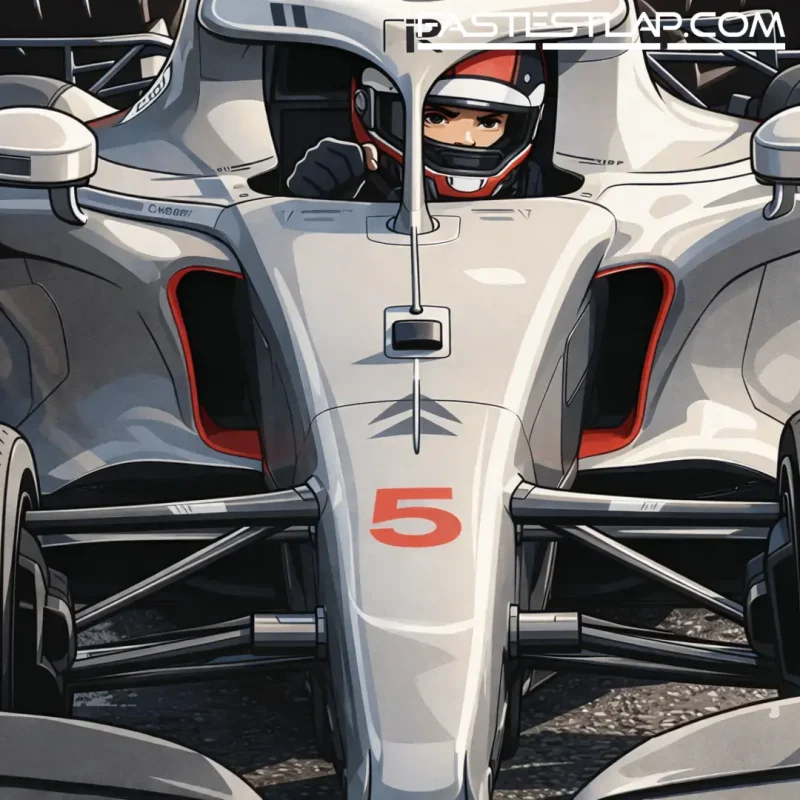
When the R26 rolled out for the opening morning of the second pre-season test, the biggest talking point wasn’t a lap time or a run plan — it was bodywork. Audi’s brought a B-spec package to Sakhir and the standout is a radically reworked sidepod concept, switching to narrow, vertical inlets that instantly change the car’s profile compared to what it ran at last month’s Barcelona shakedown.
On first glance it’s the kind of solution that invites comparison with the recent past. The vertical, pared-back intake treatment will remind plenty in the paddock of Mercedes’ famous “zero-pod” swing in 2022 — the sort of bold aerodynamic bet that dominated the early ground-effect era’s visual language and, for Mercedes at least, came with a painful learning curve before it eventually moved back towards more conventional architecture.
Audi’s interpretation isn’t a carbon copy, but it’s in the same family: a visibly tightened sidepod face, with the inlet presented more as a vertical slot than a broad mouth. Whether that’s an attempt to open up the flanks for cleaner airflow management, a response to what the team learned in Barcelona, or simply the first public step of an intended development path, it’s a meaningful change to arrive with at this stage. Big sidepod reworks are not “try it for a morning” items — they cascade into cooling layouts, internal packaging, and the aerodynamic map the team is trying to build for the start of the season.
Gabriel Bortoleto handled the early running on Wednesday morning, with Nico Hülkenberg due to take over in the afternoon. For Audi, the driver split is fairly secondary to the immediate priority: put mileage on this specification and understand whether the concept behaves consistently in Bahrain’s conditions. The team left Barcelona needing exactly that.
Audi’s shakedown in Spain was, by modern testing standards, relatively muted. Bortoleto lost a chunk of time on the opening morning there due to what the team described as a “technical issue”, and the knock-on effect was a reduced overall lap count across the three permitted days. Only Cadillac and Aston Martin — the latter running just two days — ended up with fewer laps logged.
That’s why this Bahrain outing feels like more than just the usual early-season theatre of new paint and long runs. When a team comes out of its first proper pre-season mileage slightly on the back foot, the temptation is to focus on reliability and correlation, keep the car stable, and bank data. Audi’s decision to arrive with an eye-catching B-spec suggests it’s trying to do both at once: recover lost time and accelerate understanding of where performance is going to come from on this platform.
Hülkenberg hinted as much recently when he spoke positively about what Barcelona did give the team — direction. That word carries weight in February, especially for a project still in the phase where it’s not just chasing tenths, but building a consistent engineering narrative: what does the car want, what’s sensitive, what’s robust, and what’s a dead end.
Bahrain will provide a far sterner reference than a shakedown. Different track surface, different wind profile, more representative long-run work — and, crucially, more eyes on the car, more cameras, more rival engineers taking photos from every conceivable angle the moment it’s parked. The sidepods are an obvious focal point, but what matters to Audi is the chain reaction: how the cooling behaves, what it does to balance across fuel loads, whether it opens up setup options or closes them down.
And this is where the Mercedes parallel is more cautionary than romantic. The “zero-pod” era was proof that a daring concept can be logical in theory and still be brutally difficult to optimise in the real world. It’s also proof that abandoning a visually extreme idea isn’t an admission of failure so much as a decision about development efficiency. If Audi’s philosophy here is genuinely different from Barcelona, Bahrain’s data will decide quickly whether it’s a fork in the road or simply the next step along the same one.
For now, Audi has achieved the first objective: it’s made the paddock look up. The second objective is harder — turning a dramatic silhouette into a car that runs cleanly, runs reliably, and gives its drivers the stable platform they’ll need when the stopwatch starts to matter.