Bahrain testing always spits out a familiar cocktail of noise and nuance — lap-time bravado, sandbag suspicion, and the odd throwaway quote that turns into a week-long debate. But the first proper shakedown of the 2026 cars has also made one thing plain: this new era isn’t just a reset in performance, it’s a reset in how drivers actually *do* the job. Starts, energy deployment, even which gear you take for Turn 1 — it’s all on the table, and some of it is already heading for politics.
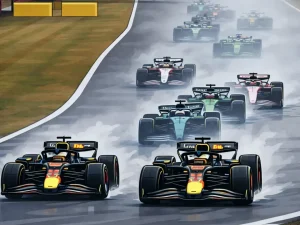
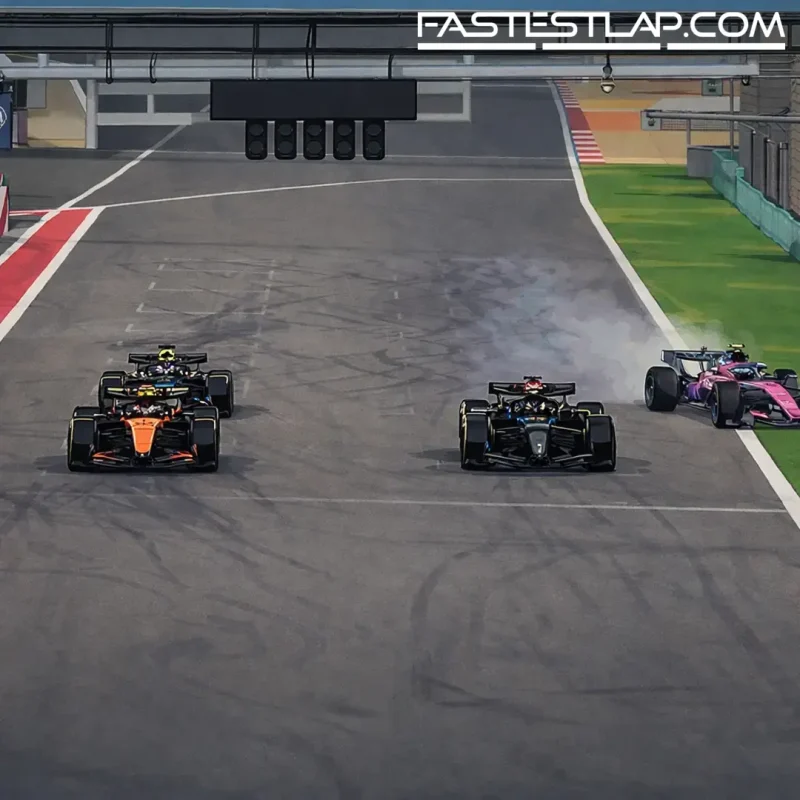
The most immediate flashpoint is the one nobody really wants to see explode on race weekend: safety at the start. McLaren boss Andrea Stella and Oscar Piastri have both been among the voices pushing the point that launching these cars cleanly is more complicated than what came before. That’s not a complaint dressed up as a concern; it’s a straight read of what the new package is demanding from drivers in those first few metres.
With the 2026 generation, the launch procedure is more involved — and in Bahrain it’s been apparent that the margin for a messy getaway has grown. It’s not hard to imagine why teams are wary: add a more complex launch to a packed grid and you’ve increased variability in who gets off the line, and in what shape. That’s how you end up with concertina effects and awkward closing speeds before the field even reaches the braking zone.
Those concerns are now set to be aired at the next F1 Commission meeting, and the language coming out of the paddock suggests tweaks could be pushed through in time for Melbourne if the appetite is there. Nobody wants a season-opener defined by a start procedure that’s still effectively in beta.
If that’s the structural worry, then the early competitive chatter has gone in a more familiar direction: Lewis Hamilton and a headline-grabbing race simulation.
According to Sky’s Ted Kravitz, Hamilton was the fastest of the lot on his race run on the final day of the first Bahrain test. That’s the kind of detail that matters more than a low-fuel lap because it’s closer to the business end of a Sunday — temperatures, tyre behaviour over a stint, consistency through traffic management, and the driver’s ability to live with a car when it’s no longer masked by fresh rubber.
It also lands at an interesting time, because this is exactly the phase of the year where the paddock starts building its assumptions. A strong race sim doesn’t win you anything in February, but it *does* shape how rivals talk about you in March. And it feeds a specific narrative: that Hamilton’s adaptation to the 2026 machinery is further along than some expected.
Elsewhere at Mercedes, George Russell has been doing what experienced drivers do in a regulation shift: separating the broad concept from the annoying reality. He pushed back on Max Verstappen’s “Formula E on steroids” jab, but he’s also flagged a very tangible irritation — the way the new demands are changing corners you thought you knew.
Russell’s example was Bahrain’s Turn 1, previously a third-gear corner, now something he says requires first gear “to please the turbo”. That’s not just a throwaway moan about drivability. Corners dropping into first gear change the whole character of an entry: engine response, rear stability, traction phase, even how aggressively you can attack a car ahead without cooking your exit. Multiply that across a season and you’ve got a meaningful shift in how drivers manage races, particularly in dirty air or while protecting tyres.
Verstappen, meanwhile, has emerged as the sharpest critic of what the new rules require in terms of battery management techniques — the kind of lift-and-coast and energy juggling that can make a driver feel like they’re negotiating with the car rather than simply driving it. He hasn’t exactly disguised his lack of enthusiasm, and he didn’t rule out the notion that this new reality could ultimately drive him out of Formula 1.
Martin Brundle’s response has been the inevitable counterweight: every generation of great driver has had to add new disciplines to the job description, and this is just the latest. That’s true — and it’s also the sort of argument that tends to land differently depending on whether you’re currently enjoying the car underneath you.
There’s a wider point here too. Drivers don’t object to complexity in itself; they object to complexity that feels like it’s diluting the competitive instinct. If energy management becomes the dominant lens through which races are driven, then you’re not just changing lap time — you’re changing what “racing” looks like, and that’s a line the sport has to tread carefully.
As if the on-track adaptation storylines weren’t enough, the first test has also served up the beginnings of a technical-political subplot: Mercedes’ engine and a grey area around compression ratio testing. It’s the kind of detail that only becomes front-page news when someone hints at a protest — so it mattered when Ferrari team boss Fred Vasseur moved to pour cold water on that.
Vasseur has insisted Ferrari won’t be lodging a protest in Melbourne if things remain as they are. What Ferrari wants, he said, is clarity. In paddock terms, that’s a loaded word: it can mean “we’re fine with it”, or it can mean “we’re fine with it for now, but don’t make us look stupid for not acting”. Either way, it signals Ferrari is playing this carefully — publicly reasonable, privately alert.
Put it all together and Bahrain’s first test has done what it always does: it’s offered just enough evidence to start arguments that will run right up to the first qualifying session of the year. The difference in 2026 is that the arguments aren’t only about who’s quick — they’re about whether the sport’s new machinery is asking the right questions of its drivers, and whether the rule-makers are prepared to respond before those questions get answered the hard way on Sunday.