Andrea Stella doesn’t sound like a man lobbying for a competitive tweak. He sounds like a team boss who’s watched enough awkward launches and half-committed harvest phases in Bahrain to know exactly how quickly “a bit messy” can become “someone’s in trouble”.
With the 2026 cars still fresh out of the wrapping, McLaren’s principal has put three items on the table he wants treated as urgent before the season even gets to Melbourne: the start procedure, the reality of overtaking without DRS, and the knock-on danger of lift-and-coast when cars are running nose-to-tail.
The backdrop is familiar already. The new power units have dropped the MGU-H, and with it the neat little safety net that used to mask turbo lag and smooth the whole choreography of getting the car primed for launch. Now, getting everything into the right window for a standing start simply takes longer — and the penalty for not being there is potentially a car that bogs down like it’s in a junior category.
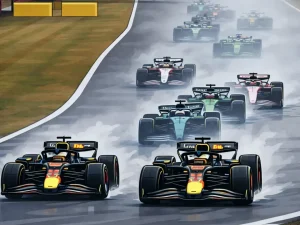
Oscar Piastri has been among the drivers to voice concern that some launches could look uncomfortably “F2-like” — the kind where one car gets away cleanly and the one next to it barely moves. Stella’s point is that this isn’t just untidy; it’s the grid, the most compressed piece of real estate in the sport, and the last place you want unpredictable acceleration profiles.
“When it comes to the race starts, I have three elements that, in terms of racing, I think, deserve quite a lot of attention,” Stella said in Bahrain. He put the start procedure at the top of the list, arguing the FIA and teams need to “play the game of responsibility” with the timings and sequence around the lights, so cars have a fair chance of being ready to go. The emphasis was clear: this is bigger than anyone’s advantage or disadvantage.
That “competitive interests parked” stance lands in the middle of a paddock already poking at who’s found what in the launch phase. George Russell has suggested Ferrari may be able to run higher gears and potentially gain on starts — a line of chatter that has inevitably put the Scuderia in the spotlight. Stella doesn’t bite on that part. If anything, he’s trying to drag the conversation away from finger-pointing and back to process.
But he isn’t stopping at the grid.
The second issue, as Stella sees it, is that overtaking is threatening to become an exercise in patience rather than initiative. DRS is gone. Yes, the cars have moveable front and rear wings now, but crucially they’re not a “following car only” weapon; the ability to switch aero modes is always available. In other words: you don’t get that old, artificially big drag delta that let a faster car convert pressure into a pass.
Stella said McLaren’s drivers have been racing others during the Bahrain test and found it “extremely difficult” to overtake. The new energy boost element — extra deployment available when you’re within a second — isn’t, in his view, a strong enough lever in its current form. It tends to translate into a little more at the end of the straight, if anything, which is rarely where modern F1 overtakes are really earned.
His warning is as blunt as it is obvious: if you can’t pass, you don’t just lose spectacle. You lose a pillar of what makes the category feel like itself.
Then there’s the third concern, and it’s the one that tends to sneak up on everyone until it bites: lift-and-coast and harvesting in traffic.
With electrical power now up to 350kW and battery management expected to be decisive, the risk isn’t just that drivers have to hit numbers — it’s that one car may suddenly lift to harvest at the exact moment the car behind is committed, in dirty air, with closing speed. Stella referenced previous, ugly precedents from the sport’s past to underline the point: these aren’t theoretical scenarios, they’re patterns F1 has seen before and should be actively preventing.
Put the three together and you can see why Stella is pushing urgency. Starts that are harder to execute, overtaking that’s harder to complete, and energy management that encourages unpredictable speed changes in the wake of another car is not a combination any race director should be relaxed about.
There’s an interesting subtext here too: amid the inevitable “are these cars fun?” debate, Stella is effectively drawing a line between driver enjoyment and the sport’s obligations. Lando Norris, McLaren’s reigning world champion, has described the new, low-downforce machinery as “a lot of fun” — largely because they slide more and demand more in the grip-limited phases. Russell called them a step forward, even if he’s not thrilled about having to take Bahrain’s Turn 1 in first gear to keep the turbo happy. Lewis Hamilton and Max Verstappen, meanwhile, haven’t been convinced.
Stella’s take is pragmatic. Yes, there’s enjoyment in cars that move around more and ask more of the driver. But he’s wary of “driving elements” that exist purely to satisfy the power unit’s needs if they come at the cost of clean racing and predictable behaviour.
His proposed route is tellingly unromantic: small adjustments, sensible technical solutions, and a willingness to act quickly. “Simple technical solutions exist,” he said, and expects the topics to be on the agenda at the next F1 Commission meeting. To Stella, it’s “imperative” that any fixes are pushed through in time for Melbourne.
That’s the key word — imperative — because once the season starts, the sport tends to become reactive. Stella’s trying to force it to be proactive for once. The Bahrain test has provided enough evidence, in his mind, that waiting for the first near-miss of the year would be the wrong kind of due diligence.