Oscar Piastri doesn’t sound like a driver searching for excuses in February. If anything, he’s doing the opposite: warning that Formula 1 is sleepwalking into a problem that could decide races — and potentially trigger first-corner chaos — before the season even leaves Australia.
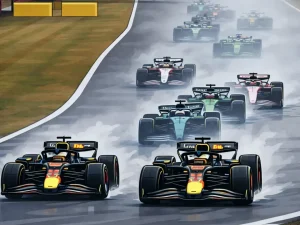
The talk up and down the Bahrain pit lane last week wasn’t about long-run pace or sandbagging. It was about starts. Specifically, the kind of messy, half-stalled launches that can make a modern F1 grid look like a junior formula field when the lights go out.
At the heart of it is the 2026 power unit reset and the removal of the MGU-H. Everyone knew this change would alter how the cars deliver torque and manage energy, but the first proper taste of it in a race-start scenario has clearly rattled the paddock. Without the MGU-H masking turbo lag and smoothing the response at lower revs, getting the car into the right state for launch has become a far more delicate, time-sensitive routine — and one that’s not yet second nature.
Piastri’s point was blunt: the margin between a “good” and “bad” start isn’t a couple of metres any more.
“Everyone’s going to need different things for the start, and to be completely honest with you, I’m not sure any of us know exactly what we need yet,” he said. “I think we’ve probably got rough ideas… It’s just that the difference between a good and bad start last year was you got a bit of wheelspin or you had a bad reaction time.
“This year, it could be effectively like an F2 race where you almost go into anti-stall or something. You’re not just losing five metres or so, you could be losing six or seven spots if it goes wrong.”
That’s the detail worth sitting with. Losing “six or seven” places isn’t just a bad getaway — it’s a race-defining swing, and it’s the kind of swing that doesn’t just punish the driver who fluffs it. It forces everyone behind to react, scatter, take to the edges of the track, and arrive at Turn 1 in a frenzy. On tight, bumpy, low-grip street circuits, you don’t need much imagination to see how that ends.
George Russell, never one to understate a technical inconvenience, described the starts as “not straightforward”. Esteban Ocon labelled turbo lag “a very big topic”. Pierre Gasly went further, practically selling the season opener as must-see TV on the basis that it could be unforgettable — not necessarily for the reasons the sport wants.
What’s striking is how quickly this has shifted from “driver technique” to “systemic issue”. Drivers are used to adapting; it’s the job description. But when multiple teams are discovering that the start procedure itself is now “a pretty complicated process” just to achieve something safe, the sport has to treat it as more than a learning curve.
Piastri wants action before Melbourne, and he’s not hiding the urgency.
“Starts need to be addressed, because, probably as we’ve all seen, it’s a pretty complicated process now to have a safe start, let alone a competitive one,” he said. “So it’s something that we’ll talk about between now and Melbourne, I’m sure.”
The FIA spent time in Bahrain running checks and monitoring systems, and the subject is expected to land on the table at the next F1 Commission meeting. One idea understood to be in the mix is tweaking the start light procedure — potentially by enforcing a minimum time, or shifting the minimum window to reduce the scramble caused by the last car forming up late.
That might sound like administrative tinkering, but it matters in 2026. If the cars require more consistent preparation time for the start sequence — and if the trigger for the clutch bite and engine response is now less forgiving — then the sport can either design a framework that reduces the variability, or let that variability play out live in the most condensed, high-stakes moment of a grand prix.
McLaren’s own world champion, Lando Norris, echoed the concern from the cockpit side. Starts, he said, are “more tricky” because of the turbo effects and “the lack of battery that you have over a lap”, making it “more demanding on the driver to kind of get things right.”
The subtext there is important: if energy deployment is tighter and the launch window more fragile, the driver has fewer tools to rescue a marginal start with a simple override of torque delivery. The car either goes, or it doesn’t — and when it doesn’t, it’s not a gentle loss of momentum, it’s a collapse.
Piastri also flagged overtaking as another area likely to feel different under the new rules. That’s almost an aside in this conversation, but it’s not unrelated. If passing becomes harder and track position becomes more valuable, then the cost of a compromised start multiplies — and the temptation to be aggressive into Turn 1 increases.
There’s a reason teams usually try to keep pre-season alarm bells quiet. This one isn’t staying quiet because it’s not confined to one garage or one engine philosophy. The grid is collectively discovering that the 2026 cars ask more of the driver at the exact moment the sport can least afford instability.
Melbourne’s first start of the new era is coming fast. F1 can either make sure it’s remembered for racing, or risk it being remembered for the wrong kind of spectacle.