The paddock loves to pretend late-February is still the calm before the storm. It isn’t. Not anymore, not with 2026’s new era sitting right on the doorstep and everyone nervously watching for the first domino to fall.
On the eve of the final Bahrain test, the biggest noise isn’t coming from lap times or long-run fuel loads. It’s coming from the meeting rooms.
A Power Unit Advisory Committee gathering scheduled for Wednesday is being framed as more than routine housekeeping. With suggestions still swirling about potential tweaks to the checks — and even the wider framework around compression ratios — there’s a sense this is one of those “quiet” technical discussions that can suddenly become very loud. The timing is what makes teams twitchy: we’re only weeks from the start of a season built around new power units, and any shift this late inevitably creates winners and losers. Even the possibility that one manufacturer could be disproportionately affected is enough to put everyone on edge, because in this cycle you don’t get time back. If your concept is suddenly on the wrong side of a clarification, you’re not talking about a small detour; you’re talking about the direction of a whole programme.
That’s why the industry will treat Wednesday as a tell. Not necessarily for what gets announced, but for what it signals: whether the sport is about to move into a tidying-up phase, or whether we’re still in the era where the rulebook is malleable right up until the cars hit the grid.
Red Bull, meanwhile, is dealing with a very different kind of change — the sort you can’t measure with sensors.
Craig Skinner, the team’s chief designer and one of the key figures behind the 2023 RB19, is set to leave. Red Bull says it’s Skinner’s decision, made ahead of the new season, and the statement is as warm as these things tend to be: appreciation for his contribution, and best wishes.
The timing is awkward, though. Red Bull doesn’t need anyone to remind it how much organisational stability matters at the front. There’s a reason the top teams guard their technical groups like state secrets: not just because of the knowledge inside their heads, but because losing senior figures changes the internal physics of a department. The workflows shift. The decision-making tree subtly rewires. Even if succession planning is immaculate, it’s another variable introduced at precisely the moment teams want fewer of them.
And if you’re looking for the wider theme of this week, it’s that 2026 is pushing on every weak point at once. Regulations. Structures. Talent pipelines. Even tyres.
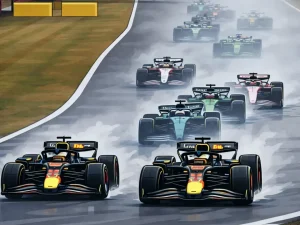
Pirelli, for one, is pressing ahead with wet-weather testing that sounds almost like a prank on paper: a wet tyre test in Bahrain. But Mario Isola has outlined a plan for multiple wet tests through the year, and Bahrain is on the list because the circuit can artificially wet the track. McLaren and Mercedes are due to supply mule cars for the running, pencilled in for February 28 and March 1.
There’s a wider subtext here too: when a rules reset is this big, everyone’s dependency graph expands. Teams rely on Pirelli’s development path. Pirelli relies on teams providing cars and meaningful feedback. Everyone relies on the tests being representative, even when the location is anything but. Artificially watered asphalt under desert skies isn’t Eau Rouge in a downpour, but you take what you can get when the calendar and logistics dictate the opportunity.
Away from the front-line technical battles, the driver market’s quieter currents keep moving.
Alex Dunne has been spotted testing in Formula 2 machinery wearing Alpine Academy branding at Barcelona. The Irish driver, formerly part of McLaren’s junior set-up, left that ladder last season and has been in talks with Alpine over joining its ranks. Those discussions are understood to be agreed in principle, even if not yet signed.
For Alpine, it’s a familiar play: build depth, gather options, and keep feeding Enstone’s future. For Dunne, it’s a reminder of how quickly the ground can shift for juniors. You can be “the next one” until you aren’t, and switching academies is rarely just about a logo on a race suit. It’s about access, alignment, and whether the team you’re tying yourself to has a believable pathway when the time comes to turn potential into a seat.
And then there’s Ferrari — never far from a storyline, even when nobody at Maranello has said a word.
Rob Smedley, speaking on the High Performance podcast, delivered a pretty brutal assessment of a certain type of radio exchange that drivers loathe: the dreaded “we’ll get back to you.” Framing the race engineer as a “head coach” figure, Smedley pointed directly at the importance of immediate, confidence-building responses — and he wasn’t impressed by what he’d heard of Ferrari’s operational style, referencing Lewis Hamilton’s relationship with Riccardo Adami formed last year.
“It pains me when I hear ‘we’ll get back to you.’ This isn’t a call centre,” Smedley said. “The driver is trying to perform at 10/10 while driving at 200mph. Answer him and give him confidence. If you respond like you need to go ask someone else, those tiny moments erode trust, and the relationship becomes tense.”
It’s a line that’ll resonate because it cuts through the faux-mystique. F1’s margins are microscopic, and so are the psychological cues that decide whether a driver commits on entry or leaves themselves a fraction in hand. Everyone talks about systems, structure, and process. But on Sundays, when the car’s dancing and the tyres are falling away, it still comes down to a human voice in your ear — and whether you believe it.
That’s the texture of 2026 already. The cars haven’t even properly landed in anger, and the sport is wrestling with rule nuances, senior departures, artificial rain in the desert, academy reshuffles, and the ever-present question of whether the biggest teams are as sharp operationally as they need to be.
The stopwatch will have its say soon enough. This week, it’s the decisions behind the scenes that are setting the tone.