Lewis Hamilton’s first proper taste of a Ferrari launch in public didn’t just look sharp in Bahrain — it looked like the sort of detail that can shape the early narrative of 2026.
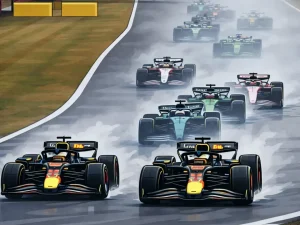
F1’s already twitchy about race starts under the new regulations, to the point it’s trialling a revised procedure amid worries the current set-up could invite messy, potentially dangerous openings to grands prix. Against that backdrop, Thursday morning’s practice start at the end of the session offered a neat little snapshot of why.
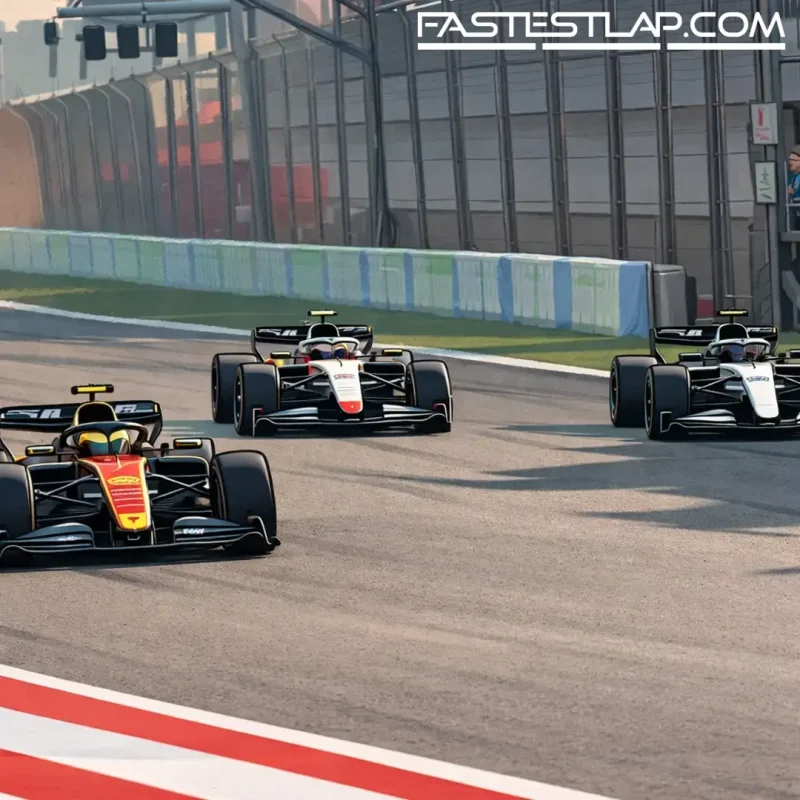
Hamilton lined up behind George Russell with Lando Norris alongside. When the five red lights went out, Russell lit up the rear tyres and the Mercedes stepped sideways. Norris, meanwhile, didn’t move at all. Hamilton did — and emphatically. His Ferrari snapped forward hard enough that he had to dart to the right to avoid Russell as the Mercedes skated across his path. By Turn 1, Hamilton and Oliver Bearman had effectively swarmed past Russell, leaving the Mercedes chasing a moment that had already gone.
It was only a practice start at a test, yes. But there’s an obvious reason it caught people’s attention: launches are rapidly becoming one of the more awkward pressure points of the 2026 package.
The removal of the MGU-H has changed how these power units behave when the driver asks for everything, immediately, from low speed. Without that system’s ability to mask turbo lag through the lower rev range, teams have found the cars are taking longer to settle into the sweet spot for launch. Drivers have been frank in the paddock that it’s not simply a case of “do what you did last year”, because what the car needs — and when it needs it — has shifted.
That’s why the FIA opened the door on Thursday morning for drivers to rehearse starts on the Bahrain grid at the end of both sessions on Thursday, and again on Friday. Russell, Hamilton, Norris and Bearman all took the opportunity.
The second run was the one that raised eyebrows. Russell’s wheelspin and Norris’s non-start were dramatic in different ways, but Hamilton’s getaway was the point: clean, decisive, and visibly quicker than the cars around him. In a pre-season where the sport is actively probing whether starts are too inconsistent under the new rules, a single car making it look straightforward is going to prompt questions — and maybe a bit of envy.
Russell has already been one of the drivers flagging Ferrari as a team to watch when it comes to getting off the line in 2026. His read is that there’s something in Ferrari’s approach to gearing and turbo characteristics that may be making life easier when the lights go out.
“I think Ferrari seems to be able to run higher gears than other manufacturers, which probably suggests they’ve got a smaller turbo than other manufacturers,” Russell said. “So maybe they’re in a slightly easier position for their race starts.”
Ferrari, for its part, isn’t pretending starts are a solved problem across the grid. Charles Leclerc admitted it’s still “tricky” for everyone — but he also didn’t shy away from the idea that Ferrari might be sitting on the right side of the learning curve, with Melbourne now just over two weeks away.
“The start is a very important moment of the race and it’s for sure something that we kept in our mind with this new regulation, in order to be ready for that,” Leclerc said in Bahrain.
“So it’s still tricky as it is, I think for everybody. Maybe we are a bit on the better side of things on that thing and I’m happy that is that way.
“In Australia, it will be as it is in every start – it’s a lot of places to be gained or lost if you have a good one or a bad one. And particularly this year is going to be very tricky.
“If anything, I think we should be on the better side of all the grid.”
The interesting part here isn’t that Ferrari might be quick off the line — teams find little edges everywhere, and they come and go. It’s that this particular edge lands right where F1 is currently most sensitive. If starts are inconsistent and the field is still wrestling with how to consistently hit the correct launch window, the team that’s repeatable from lap one could turn that into real track position before strategy even gets involved.
Hamilton’s move in Bahrain won’t win any trophies. But in a sport that’s debating whether it needs to change the start procedure because the new cars are making launches unpredictable, it was a reminder that someone, somewhere, has already found a cleaner answer than the rest — and that’s usually how the season’s early trends get written.