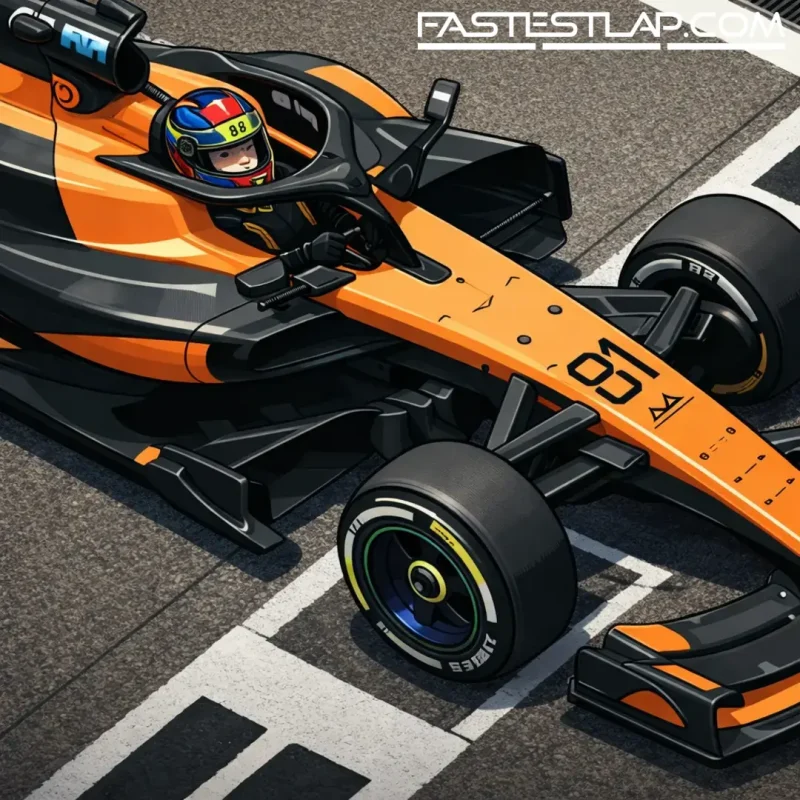
Oscar Piastri didn’t need long in Bahrain testing to land on the same conclusion plenty of drivers quietly muttered in the garages: starting these 2026 cars is no longer a ‘lights out, dump the clutch’ muscle memory exercise. It’s a procedure. A fiddly one. And right now, it’s producing launches that look more like a lottery than a repeatable skill.
Piastri was one of the first to flag the safety angle publicly, alongside McLaren team principal Andrea Stella, warning that the new generation of cars takes longer to get the turbo ready for the launch phase. That’s the sort of detail that can sound abstract until you picture a grid full of cars trying to hit their marks while some are effectively waiting for their power unit to come to them — and others have already committed.
The FIA’s answer in Bahrain was a practical one: trial a revised race start procedure at the end of each test day, using blue flashing lights to warn drivers the sequence is about to begin so they can prep the car in time. From a pure safety standpoint, it seems to have taken the edge off the concern. From a performance standpoint, it’s done little to stop the paddock’s early eyebrow-raising over who’s nailing it — and who isn’t.
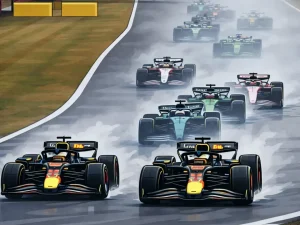
Ferrari, in particular, has kept catching the eye on practice starts. Lewis Hamilton’s day two launch was the sort that makes engineers suddenly look very satisfied with their winter: fifth to first before you’d even finished a sip of coffee. And it wasn’t just the works car looking sharp off the line either — Esteban Ocon, in the Ferrari-powered Haas, also pulled off a notably strong getaway.
Piastri, though, isn’t buying into any neat early narrative that one team has “solved” 2026 starts while everyone else flounders. His read is simpler and, frankly, more believable given how new this all is: the field is still learning the pitfalls, and the consequences of getting it slightly wrong are exaggerated.
“I thought mine yesterday wasn’t too bad,” Piastri said after one of the sessions. “I was last, but I think I passed about four cars as well.”
That small detail is telling. If you can be last off the line and still make up places immediately, the spread of outcomes isn’t just about raw traction or a magical clutch map — it’s about a grid where some drivers are executing a complex sequence cleanly while others fall into one of the traps.
Those traps, Piastri suggests, are everywhere.
“It’s just very random at the moment, and I think we’re all kind of learning what makes a good start, what makes a bad start,” he said. “There’s some pretty big pitfalls you can find if you get yourself in trouble. But even just managing the power and the procedure is kind of one thing, but also just the way we do starts is much more difficult than last year.
“You’ve got a lot of power. The MGU-K kicks in at a certain point. So it’s trickier from every single angle.”
In other words: it’s not one new variable, it’s several — and they’re stacked on top of each other. There’s the pre-launch preparation, the turbo readiness piece, the timing of power delivery, and then the driver’s own execution under pressure. Get one element marginally wrong and the car’s response can look dramatic. Get it right and you look like you’ve found free lap time before Turn 1.
That’s why Piastri expects the wild variance to be a short-lived phase rather than a defining competitive advantage that lasts all year.
“I think what we’re seeing at the moment is people just getting things right and other people getting them very wrong,” he said. “So I think certainly in the first few races, we could see some starts that look a bit like what we have this week. But I think we’ll start to converge, hopefully pretty quickly, if you’re on the bad side of that.”
There’s a second layer to the Bahrain story, too: even with the FIA’s blue-light warning system in place, there’s still chatter — sparked initially by George Russell — that Ferrari may have an inherent edge in how it can approach Turn 1, potentially running higher gears while others are forced into compromises. Russell mentioned taking Turn 1 in first gear in the Mercedes, with Ferrari appearing able to use a higher gear, which he suggested could translate into a better launch phase.
Nothing from testing has decisively disproved that suspicion. But Piastri’s point is a useful reminder that, right now, you can mistake execution for architecture. When the process is this new, the cleanest start might simply belong to the driver-team pairing that’s already done the dull work: drilling the sequence, understanding the MGU-K handover point, and avoiding the “big pitfalls” that turn a decent launch into a messy one.
The more interesting question is what happens when that convergence arrives. If Piastri’s right, the early-season wonkiness could be less about Ferrari having a permanent advantage and more about who bleeds points while they learn. In a regulation reset year, giving away positions before the first braking zone is the kind of self-inflicted damage teams can’t afford — not because it looks bad, but because the midfield is always closer than it appears on paper.
For now, Bahrain has shown two things at once: the FIA has moved quickly to address a genuine safety concern, and the sport is heading into the opening races with one more volatility factor baked in. The 2026 cars will demand a different kind of precision at the start — and the grid won’t all find it at the same time.